Why Madagascar's flora is like nowhere else
After roughly 88 million years alone in the Indian Ocean, one island evolved a plant world found nowhere else on Earth. Here is how that happened, what it produced, and why reading the record now is inseparable from protecting it.
- Madagascar has been an isolated island for roughly 88 million years, since India separated from it (Ali & Aitchison, 2008).
- About 82% of its ~11,516 native vascular plant species are endemic, one of the highest plant-endemism rates on Earth (Antonelli et al., 2022).
- Isolation drove adaptive radiation: whole groups such as the baobabs (7 endemic species, the seventh recognised in 2026) and palms (>95% endemic), and even an entire plant family, the Didiereaceae, evolved here and nowhere else.
- The flora spans five distinct biomes, from perhumid eastern rainforest to a southern spiny desert.
- It is disappearing fast: Madagascar lost about 44% of its forest between 1953 and 2014, and a large share of the endemic flora is threatened (Vieilledent et al., 2018).
Ask why Madagascar's plants are unlike any others and the honest answer is a single word: time. The island has been on its own for tens of millions of years, and life left alone for that long does not stay the same. It drifts, adapts and radiates until the result is a flora that reads, family by family, like a separate experiment in what a plant can be.
The numbers make the point before any of the biology does. Of roughly 11,516 native vascular plant species recognised for Madagascar, about 82 percent grow nowhere else on Earth (Antonelli et al., 2022). That is one of the highest rates of plant endemism measured anywhere. It is not a quirk of geography. It is the outcome of one of the longest uninterrupted experiments in evolution the planet has running.
Native-species and endemism figures: Antonelli et al. (2022) and Callmander et al. (2011). The IsoGentiX dataset counts a wider set of names for the island (native and naturalised); the difference is explained in the note at the foot of this article. How the figures update →
A world set apart, 88 million years ago
Madagascar was once wedged in the middle of the supercontinent Gondwana, pressed between what is now Africa and India. As Gondwana broke up, the Madagascar–India–Antarctica block pulled away from Africa around 160 million years ago, and Madagascar reached roughly its present position off the East African coast by about 120 million years ago. The decisive moment for its plants came later: India tore away and began its long migration north around 88 to 90 million years ago, and from that point Madagascar was a true island, cut off from every other landmass (Ali & Aitchison, 2008).
That date matters because it sets a floor under the age of the isolation. For the whole of the time since, the island's plants have evolved without the constant traffic of species and genes that reshaped the continents. A seed still arrived occasionally, carried on a current, a storm or a bird, but arrivals were rare enough that whatever took hold had room to diversify on its own terms. Isolation on that timescale, ecologists have argued, has made Madagascar a model system for studying how species multiply and diverge (Vences et al., 2009).
Madagascar has been running an 88-million-year experiment in life. Most of the results have never been read.
How isolation writes a new flora
Left alone, a flora does not simply drift; it radiates. A lineage that arrives or survives finds empty ecological space, no established competitors, no familiar predators, and spreads into it, splitting into new forms adapted to every gradient the island offers: from sea level to nearly 2,900 metres, from perhumid eastern slopes drenched by the trade winds to a southern desert that can go months without rain. The result is not a few odd species but whole radiations, groups of dozens or hundreds of related species that exist only here. Three make the case plainly.
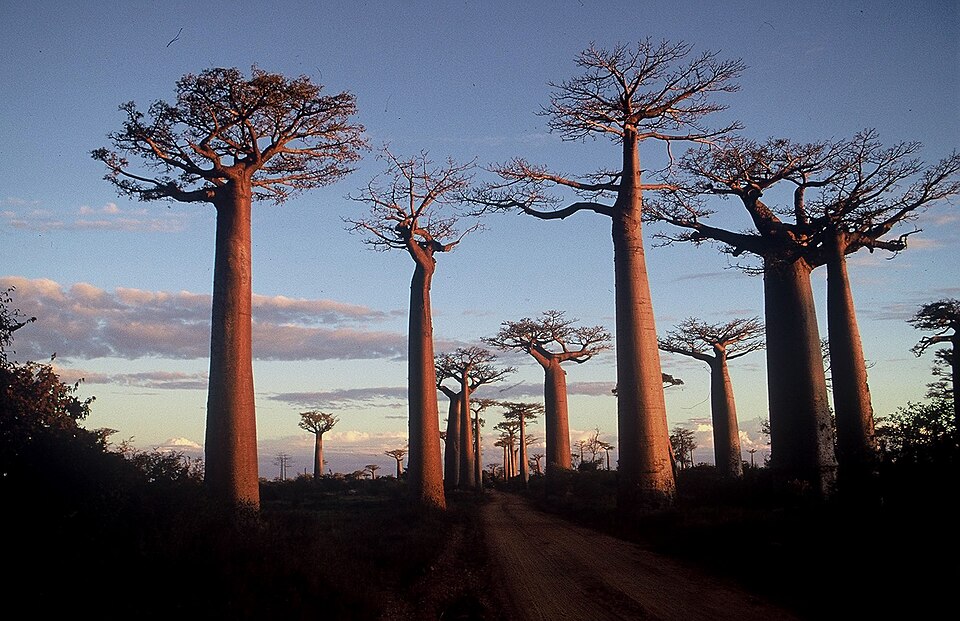
Baobabs
Of the world's nine baobabs, seven species are endemic to Madagascar; two more grow in mainland Africa and Arabia and one in Australia. The seventh, Adansonia bozy, was only recognised in 2026, when genome-scale analysis showed that trees long filed under A. za were a distinct lineage (Karimi et al., 2026). A 2024 study that sequenced the genomes of all living baobabs went further, arguing that the genus originated on Madagascar and spread out from it across the Indian Ocean, making the island not just a stronghold but the cradle of these extraordinary trees (Wan et al., 2024).
Palms
Madagascar has more palm species than the whole of continental Africa. The standard monograph recognised around 170 species with an endemism level above 95 percent (Dransfield & Beentje, 1995), and continued fieldwork has pushed the count higher still. That richness is also a warning: a complete Red List assessment found that 83 percent of Madagascar's endemic palms are threatened with extinction (Rakotoarinivo et al., 2014), among the highest figures for any large plant group anywhere. One of them, the palm Ravenea latisecta, was lost to science for a century before it was found again.
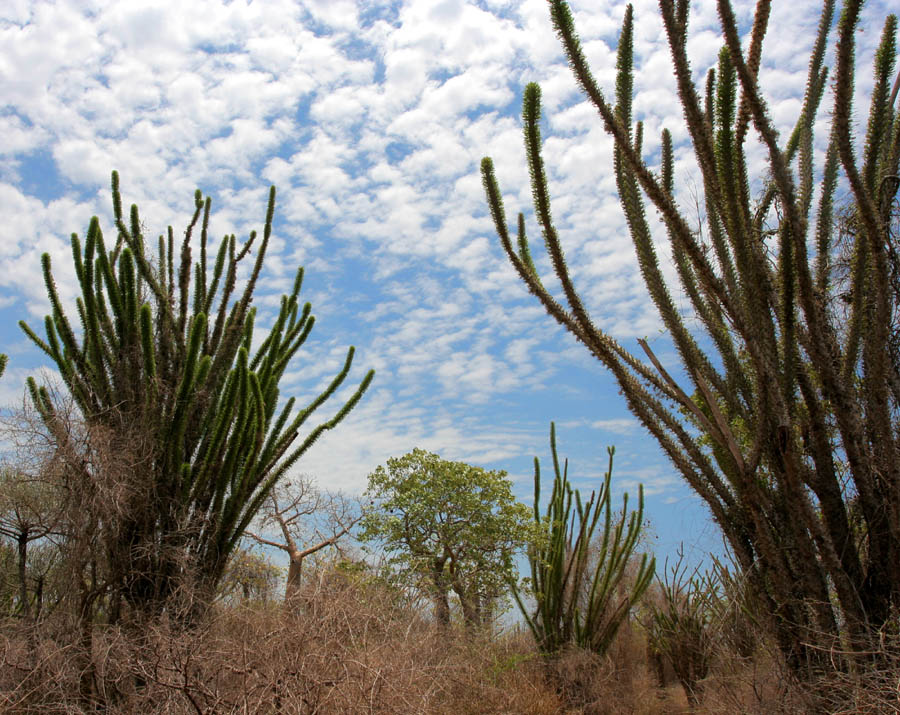
An entire family of its own
In the arid south, the dominant plants belong to the Didiereaceae, the octopus trees and their relatives. Most of the family is confined to Madagascar, part of a spiny-forest flora so distinct that it has no real counterpart anywhere. When isolation runs long enough, it does not just produce new species; it produces new branches of the plant family tree.
Five biomes, five different worlds
The island's diversity is not spread evenly. Five ecologically distinct biomes, each with its own climate, soils and history, have produced their own characteristic plant families. A species adapted to the dripping eastern rainforest would not last a season in the southern spiny desert a few hundred kilometres away.
| Biome | Characteristic plant families | What makes it distinct |
|---|---|---|
| Eastern rainforest | Apocynaceae, Rubiaceae, Myristicaceae | The wettest, most species-rich zone, the green spine of the island |
| Spiny forest (south) | Didiereaceae, Euphorbiaceae, Burseraceae | A drought-adapted flora, including a plant family found nowhere else |
| Dry deciduous forest (west) | Fabaceae, Combretaceae, Malvaceae (baobabs) | Seasonal forests that shed their leaves through the long dry season |
| Highland (central plateau) | Asteraceae, Ericaceae, Poaceae | Cool, high-altitude flora shaped by strong sun and wide temperature swings |
| Coastal & littoral | Rhizophoraceae, Combretaceae | Salt-tolerant plants and mangroves along the shorelines |
Biome divisions follow the floristic regions first mapped by Perrier de la Bâthie and refined since; see Antonelli et al. (2022) for a current synthesis.
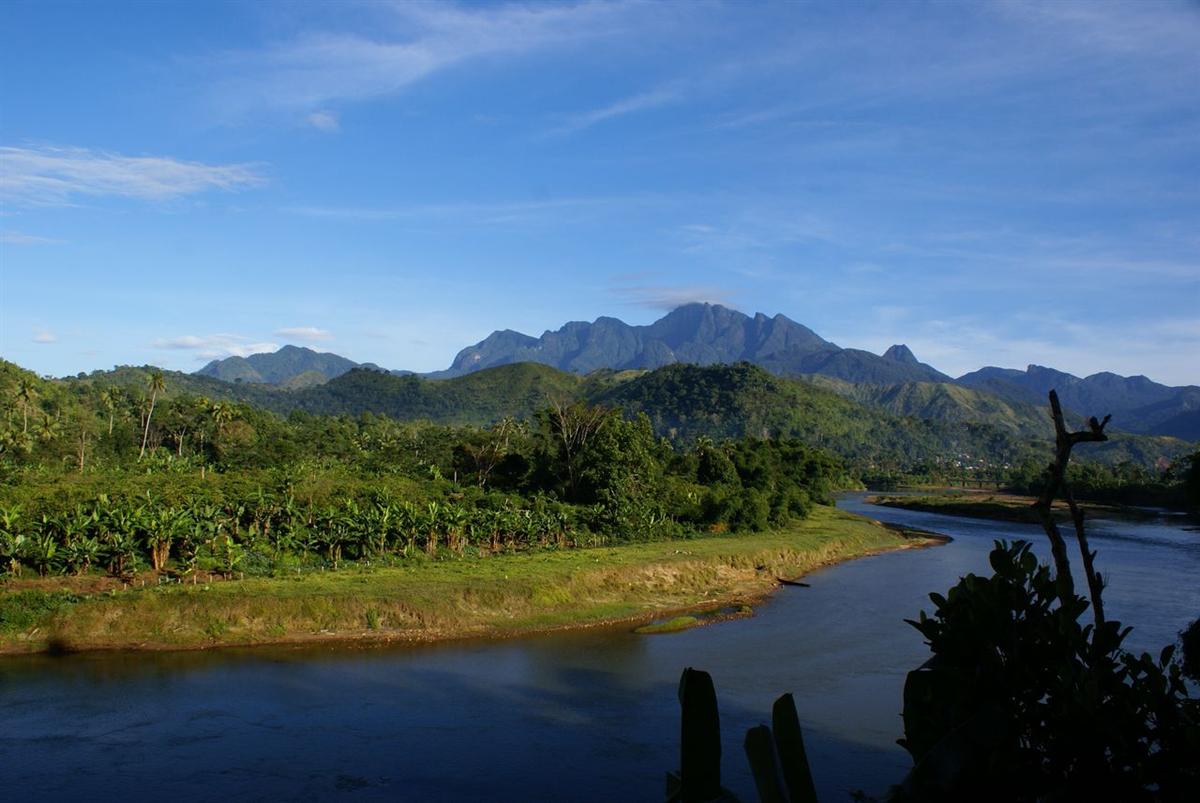
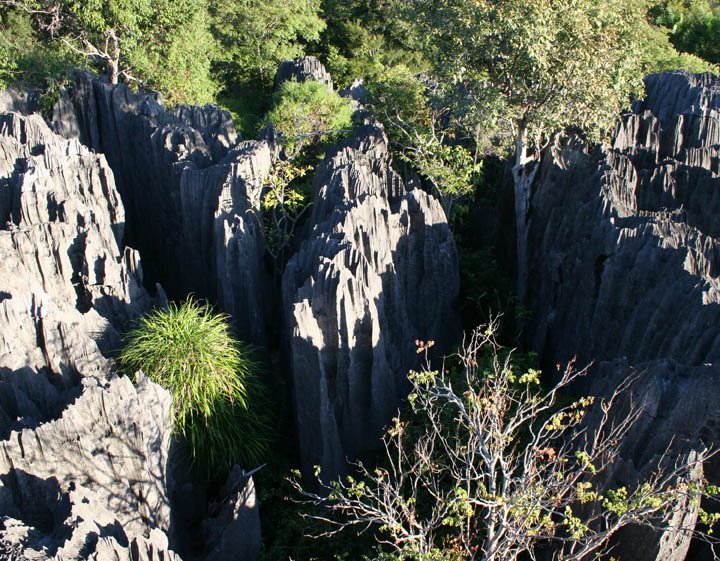
Each of these worlds has its own article in this Knowledge Base, from the eastern rainforest to the limestone tsingy and the metal-rich ultramafic soils that force plants to evolve chemistry found almost nowhere else.
A record two centuries in the making
Madagascar's plants have been documented by botanists for more than two hundred years. Herbaria in Antananarivo, Paris, London, Missouri and Geneva hold hundreds of thousands of specimens between them, and generations of Malagasy and international researchers have built taxonomic knowledge of real depth. The modern reference works, the Catalogue of the Vascular Plants of Madagascar and Kew's World Checklist of Vascular Plants, draw that history together into a single evolving list.
What has been missing is a complete, modern, and accessible view held in the country itself. The knowledge sits scattered across dozens of institutions and languages, much of it reachable only by specialists, and a great deal of it held physically outside Madagascar. Bringing it together, georeferenced and analysable, and returning it in digital form under Malagasy authority, is much of what IsoGentiX does.
1,656 of Madagascar's endemic species have a preserved specimen somewhere in the world but none in any Madagascar institution, and 537 endemics are known from a single preserved specimen anywhere on Earth. Most of those specimens sit in overseas herbaria. Making that record accessible in digital form, close to the people and the country it belongs to, is a matter of both science and sovereignty.
Custody figures are computed from the IsoGentiX Flora dataset (reconciled to the WCVP backbone) and reflect what has so far been digitised and localised.
A closing window
This flora is being read against the clock. Combining six decades of national forest maps with global satellite data, one study found that Madagascar lost around 44 percent of its natural forest between 1953 and 2014, and that by 2014 nearly half of what remained lay within 100 metres of a forest edge, exposed and fragmented (Vieilledent et al., 2018). Forest that fragmented is forest that keeps losing species long after the clearing stops.
The plants pay that bill directly. A large share of Madagascar's endemic flora is now assessed as threatened with extinction (Antonelli et al., 2022), and for some species the historical record may be all there is: plants collected once, in a forest that no longer exists, and never seen again. When a species like that disappears before it has been properly documented, everything it evolved over millions of years goes with it. It cannot be recovered from anywhere else, because it existed nowhere else.
Decoding is protecting
This is why documenting the flora now is not separate from protecting it. A plant that is recorded, named, georeferenced and understood can be assessed for extinction risk, argued for in a management plan, and defended when land use is decided. A plant that exists only as an undated sheet in a distant drawer cannot. To decode Madagascar's living heritage is, in large part, to make sure it is not quietly lost before anyone has understood what was there, and to make sure that when its value is realised, the benefit returns to the nation and the communities that hold it. That is the whole of the IsoGentiX purpose: Decode:Protect.
Common questions
How many plant species are endemic to Madagascar?
Of roughly 11,516 native vascular plant species recognised for the island, about 82 percent, some four in five, are endemic. That is one of the highest rates of plant endemism measured anywhere (Antonelli et al., 2022).
Why is Madagascar's flora so unique?
Because it evolved in isolation. When India separated from Madagascar around 88 million years ago the island was cut off from every other landmass, and its plants radiated on their own into forms, and even whole families, found nowhere else.
How long has Madagascar been isolated?
It pulled away from Africa about 160 million years ago and became a true island when India separated from it roughly 88 to 90 million years ago (Ali & Aitchison, 2008).
How threatened is Madagascar's flora?
A large share of the endemic flora is assessed as threatened with extinction. The island lost around 44 percent of its natural forest between 1953 and 2014, and much of what remains is fragmented (Vieilledent et al., 2018; Antonelli et al., 2022).
Sources and further reading
- Antonelli, A. et al. (2022). Madagascar's extraordinary biodiversity: evolution, distribution, and use. Science, 378(6623), eabf0869. science.org, source for ~11,516 native vascular species, ~82% endemic, and the threatened share.
- Callmander, M.W. et al. (2011). The endemic and non-endemic vascular flora of Madagascar updated. Plant Ecology and Evolution, 144(2), 121–125. plecevo.eu
- Ali, J.R. & Aitchison, J.C. (2008). Gondwana to Asia: plate tectonics, paleogeography and the biological connectivity of the Indian sub-continent from the Middle Jurassic through latest Eocene (166–35 Ma). Earth-Science Reviews, 88(3–4), 145–166. sciencedirect.com, timing of the Madagascar–India separation.
- Vences, M., Wollenberg, K.C., Vieites, D.R. & Lees, D.C. (2009). Madagascar as a model region of species diversification. Trends in Ecology & Evolution, 24(8), 456–465. cell.com
- Wan, J.-N. et al. (2024). The rise of baobab trees in Madagascar. Nature, 629, 1091–1099. nature.com, genomes of all living baobabs; Madagascar as centre of origin.
- Karimi, N. et al. (2026). Phylogenomic analysis of Madagascar's baobabs reveals admixed populations and supports resurrection of a previously described species. TAXON. Open access. onlinelibrary.wiley.com, the 2026 recognition of Adansonia bozy as a seventh Malagasy baobab.
- Dransfield, J. & Beentje, H.J. (1995). The Palms of Madagascar. Royal Botanic Gardens, Kew & the International Palm Society., >95% palm endemism.
- Rakotoarinivo, M. et al. (2014). Comprehensive Red List assessment reveals exceptionally high extinction risk to Madagascar palms. PLOS ONE, 9(7), e103684. journals.plos.org, 83% of endemic palms threatened.
- Vieilledent, G. et al. (2018). Combining global tree cover loss data with historical national forest-cover maps to look at six decades of deforestation and forest fragmentation in Madagascar. Biological Conservation, 222, 189–197. sciencedirect.com
- Govaerts, R. et al. World Checklist of Vascular Plants (WCVP). Royal Botanic Gardens, Kew. powo.science.kew.org, the taxonomic backbone the IsoGentiX figures reconcile to.
- Catalogue of the Vascular Plants of Madagascar. Missouri Botanical Garden, MNHN Paris, Parc de Tsimbazaza and partners. efloras.org