Madagascar's rose periwinkle and the price of a cure
A small pink flower from Madagascar became two of the most important cancer medicines of the twentieth century. The country it came from received nothing. The story is usually told wrong, and the honest version is stronger.
- Catharanthus roseus, the rose periwinkle, is endemic to Madagascar in the wild but spread across the world's tropics as a garden plant centuries ago (Kumar et al., 2021).
- Folk use of the plant against diabetes appears independently across the tropics, including Jamaica and the Ayurvedic tradition in India (Noble, 1990; Kumar et al., 2021).
- Its anti-cancer effect was found by accident in the 1950s: extracts tested for the diabetes claim did nothing to blood sugar but collapsed white blood cell counts in rats (Noble, 1990; Duffin, 2000).
- The alkaloids vinblastine and vincristine became foundation drugs for Hodgkin lymphoma and childhood leukaemia; Eli Lilly brought them to market in the early 1960s (Johnson et al., 1963).
- Five-year survival for childhood acute lymphoblastic leukaemia rose from under 10 percent in the 1960s to 90.4 percent by 2000–2005 (Hunger et al., 2012).
- Madagascar received no share of the proceeds. The law of the day required none; closing that gap is what the CBD (1992) and the Nagoya Protocol (in force 2014) were written to do (CBD Secretariat).
At some point in almost every discussion of who owns nature's chemistry, someone reaches for the rose periwinkle. The shorthand version goes like this: a drug company took a plant from Madagascar, took the traditional knowledge of the people who used it, turned both into blockbuster cancer drugs, and paid nothing. It is a story of theft, told in one breath.
The trouble is that the shorthand version is wrong in most of its details, and people who know the history can dismiss it, and with it the point it was trying to make. That would be a mistake, because the honest version, reconstructed by historians such as Jacqueline Duffin from laboratory records and the recollections of the scientists themselves, carries a subtler and stronger charge. Nobody stole a Malagasy secret. Something else happened, and the something else is precisely the gap in the old legal order that the modern rules on access and benefit-sharing were written to close.
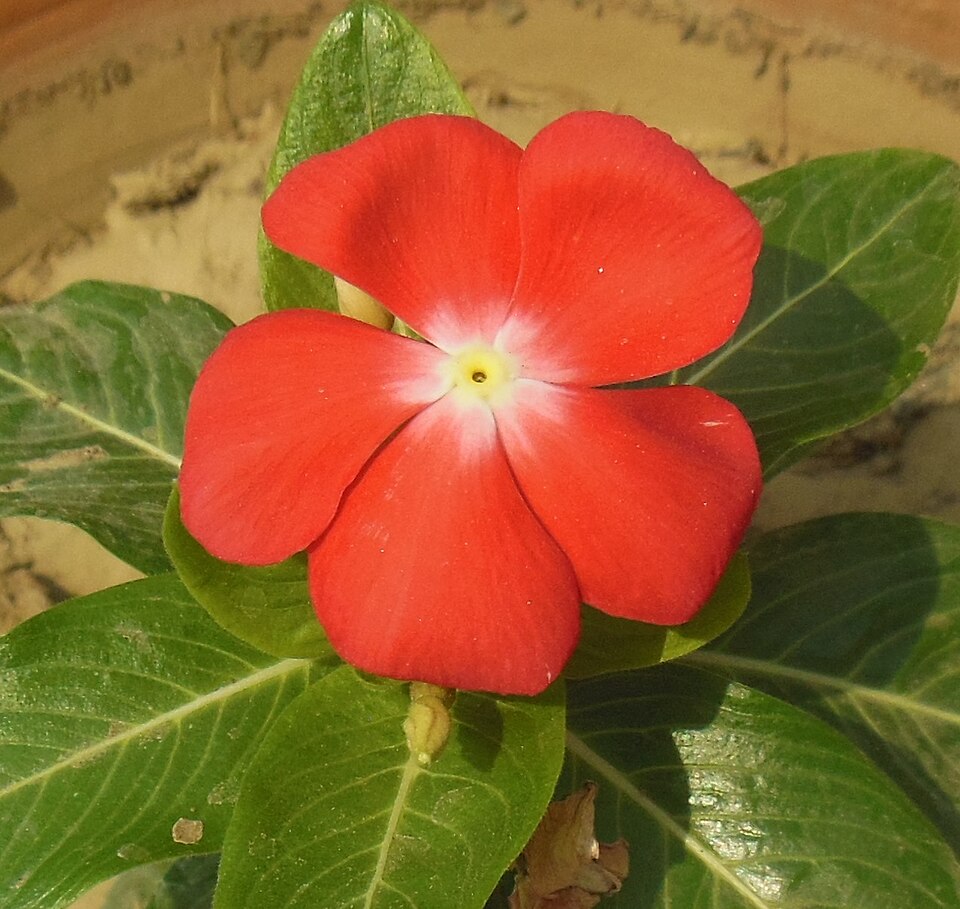
A flower that left home centuries ago
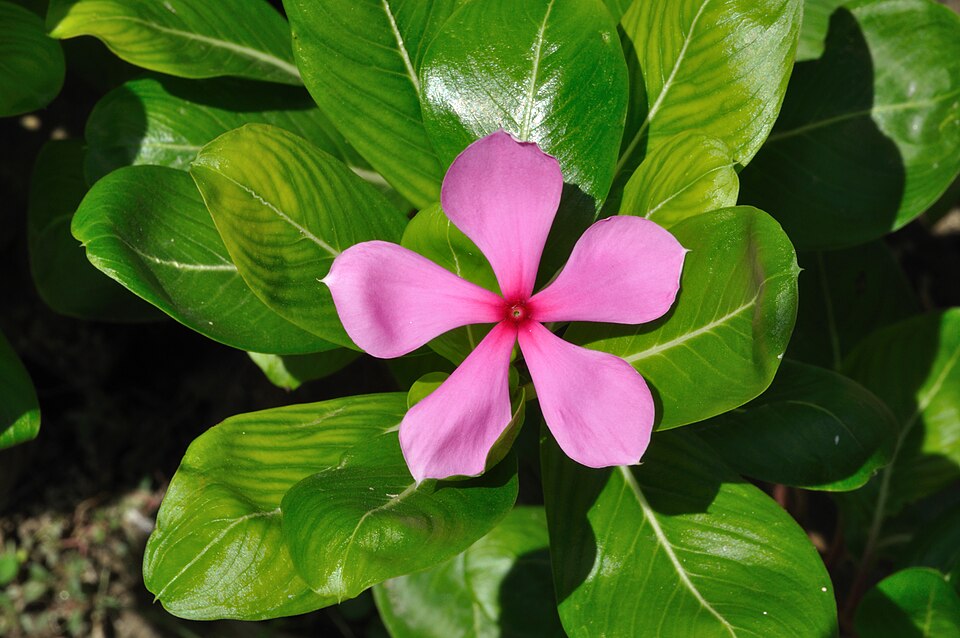
Catharanthus roseus is, in the wild, a plant of Madagascar, one of the island's thousands of endemics. But it is also one of the most travelled plants on Earth. Hardy, drought-tolerant and almost permanently in flower, it was carried around the world as a garden ornamental long before any chemist took an interest, and it naturalised so thoroughly that it now grows as a roadside flower from the Caribbean to South Asia and the Pacific. Botanists class it as a pantropical weed. Most of the people who have ever picked it had no idea it came from Madagascar at all.
Wherever it settled, people found uses for it. Reviews of its ethnobotany record traditional preparations against diabetes, high blood pressure and infection across its adopted range, including a long-standing place in Ayurvedic practice in India (Kumar et al., 2021). The diabetes claim recurs again and again, in communities that had no contact with each other. That independent convergence matters for what came next, because when the laboratory finally came calling, it was the diabetes claim it came to test, and it came to the naturalised plant, not the Malagasy one.
An envelope of leaves from Jamaica
The Canadian half of the story begins, by the account of one of the scientists at its centre, with patients in Jamaica who drank periwinkle-leaf tea to manage their diabetes when insulin was hard to come by. Word of the remedy reached the Toronto physician Clark Noble, of the family famous for its role in insulin's discovery, and leaves were posted to him from Jamaica. He passed them to his brother, Robert Noble, then building a research group at the University of Western Ontario, with the obvious question: does it actually lower blood sugar? (Noble, 1990; Duffin, 2000).
The answer, frustratingly, was no. Given by mouth to rats and rabbits, the extracts did nothing useful to blood glucose. A less curious group might have stopped there. Instead they tried injecting the extracts, and the experiment failed in a far more interesting way.
Two laboratories, one plant
Here the story splits, because the Canadians were not alone. At Eli Lilly in Indianapolis, the natural-products scientist Gordon Svoboda had entered the periwinkle into a large screening programme of plants with reported folk uses, the diabetes reputation of the naturalised plant among the reasons it made the list. Lilly's screen turned up something the small Canadian group could not have seen: periwinkle fractions dramatically extended the survival of mice carrying the P-1534 experimental leukaemia. The two groups learned of each other's work when Noble presented his results at a New York Academy of Sciences meeting in 1958, an awkward encounter that Duffin's history reconstructs in detail, and which ended with the academic group and the corporation proceeding in parallel (Duffin, 2000).
Lilly's chemists went on to isolate a second alkaloid, leurocristine, soon renamed vincristine. Though nearly identical to vinblastine in structure, it behaved differently in patients, and its effect on the acute leukaemias of childhood was, in the words of Lilly's own 1963 report, particularly striking: complete remissions in a disease that until then had killed almost every child it touched (Johnson et al., 1963). Vinblastine found its central role against Hodgkin lymphoma. Both drugs work the way the rats' collapsing white counts hinted they would: they bind tubulin and poison the mitotic spindle, stopping cell division itself.
What the flower did for medicine
It is hard to overstate what followed. Vincristine became a backbone of combination chemotherapy for childhood acute lymphoblastic leukaemia, the most common childhood cancer. In the early 1960s the disease was close to uniformly fatal; well under one child in ten survived five years. By 2000–2005, five-year survival for children and adolescents treated on Children's Oncology Group trials in the United States had reached 90.4 percent (Hunger et al., 2012). That transformation had many parents, from methotrexate to modern risk stratification, but vincristine has been in the regimens from the beginning and remains on the World Health Organization's list of essential medicines. Measured in lives, the rose periwinkle is among the most valuable plants humanity has ever picked up.
Survival figures: Hunger et al. (2012) and the accompanying literature on historical outcomes. Discovery chronology: Noble (1990); Duffin (2000).
What Madagascar received
Eli Lilly commercialised both drugs and they earned very large revenues over the following decades. Madagascar, the only country on Earth where this species evolved, received none of it. Neither did the Jamaican patients whose home remedy started the Canadian work, nor any of the communities across the tropics whose use of the plant had put it on Lilly's screening list.
The uncomfortable and important point is that nothing unlawful happened. Before 1992 the working assumption of international practice was that genetic resources were a common heritage of humankind: seeds, leaves and microbes could be collected anywhere, by anyone, and used freely. No country's consent was needed and no benefit was owed to anyone. The periwinkle case is not a story of a broken rule. It is a story of a missing one.
A flower that exists because Madagascar exists helped turn childhood leukaemia from a death sentence into a curable disease, and the legal order of the day owed Madagascar precisely nothing. That is not a broken rule. It is a missing one.
The story people tell, and the story that happened
Because the case became famous, it also became simplified. The popular telling has prospectors carrying Malagasy traditional knowledge straight to the patent office. The record does not support that: the laboratory leads of the 1950s trace to Jamaica and to folk use of the naturalised plant elsewhere in the tropics, and the discovery itself was a genuine accident, made while chasing a diabetes claim the extracts never substantiated (Noble, 1990; Duffin, 2000). Malagasy communities hold deep and well-documented medicinal plant traditions of their own, as ethnobotanical studies from Agnalazaha to Ambalabe show (Razafindraibe et al., 2013; Rakotoarivelo et al., 2015), but the drug pipeline of the 1950s did not run through them.
Why does the correction matter? Because the simplified story lets the injustice be argued away. If the claim is "Lilly stole Malagasy knowledge", a historian can answer that it did not, and the argument appears settled. The real claim is harder to dismiss: a genetic resource that evolved in one country, and only there, generated immense value for the world, and the country of origin had no standing to consent, to negotiate or to share in the result. Every collector of the era operated on that basis everywhere. The periwinkle simply became the clearest example, and it is cited in the access and benefit-sharing literature to this day for exactly that reason.
The rule the periwinkle wrote
When governments negotiated the Convention on Biological Diversity, agreed at Rio in 1992, the periwinkle was part of the case history in the room. The Convention replaced common heritage with a different principle: states hold sovereign rights over their genetic resources, and access to them should carry fair and equitable sharing of the benefits. The Nagoya Protocol, adopted in 2010 and in force since 12 October 2014, turned that principle into an operating system, built on prior informed consent from the providing country and mutually agreed terms between provider and user (CBD Secretariat).
The system is still being extended to close the periwinkle's modern equivalent: value extracted not from leaves in an envelope but from sequence data in a database. At COP16, parties to the Convention established the Cali Fund, launched in Rome in February 2025, which asks large companies making commercial use of digital sequence information to contribute a portion of their profits or revenues, with half of the fund's resources allocated to the self-identified needs of indigenous peoples and local communities (CBD Secretariat, 2025). The through-line from 1958 to 2025 is one idea: the place a resource comes from, and the people who hold it, have a stake in what it becomes.
What the history demands of us
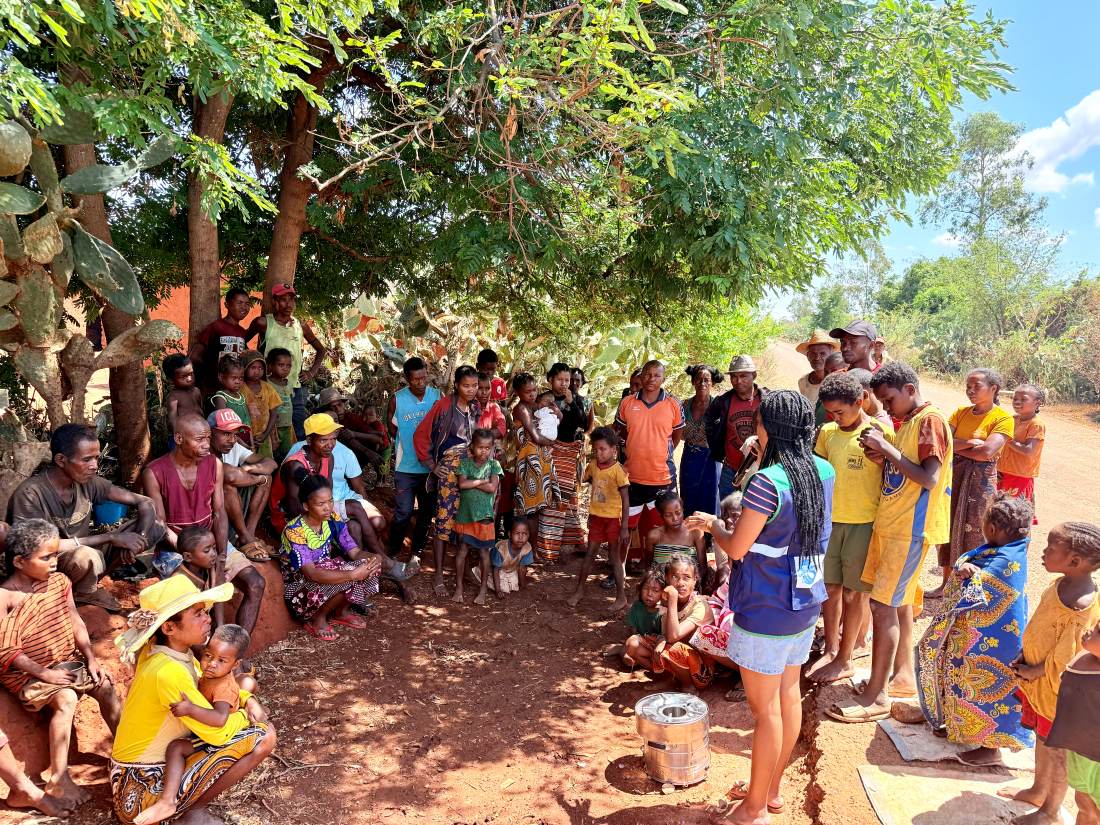
For IsoGentiX, working in the periwinkle's home country, this history is not a footnote. It is the reason the work is designed the way it is. Access is arranged with Madagascar's own authorities under the Nagoya framework. Free, prior and informed consent is the starting condition, not a formality: communities agree to any collection before it happens, understanding what it involves, in their own language and on their own terms. It comes first, always. Every record carries its provenance, so that origin can never again be an open question, and the knowledge itself is returned digitally under national authority, in line with the principle that data about a people's heritage should be governed with and for them (Carroll et al., 2020).
Our mission states the same commitment in plain words: we gather the plant world's data, decode it into knowledge, and enable action that protects our environment and serves its people. The periwinkle shows what "serves its people" failed to mean in the twentieth century. Decode:Protect is what we intend it to mean now.
The rose periwinkle proved that a nation can give the world something priceless and be left with nothing, without a single rule being broken. Writing the missing rule, and then working by it, is the whole point of doing this properly.
Common questions
Did Madagascar benefit from vincristine and vinblastine?
No. The drugs generated large commercial revenues over decades, but Madagascar, the plant's only country of origin, received no share. At the time no share was legally required: the Convention on Biological Diversity, which recognised national sovereignty over genetic resources, did not exist until 1992, and neither it nor the Nagoya Protocol applies retroactively.
Was the discovery based on Malagasy traditional knowledge?
Not directly. The plant is endemic to Madagascar, but it had naturalised across the tropics centuries earlier, and the 1950s laboratory leads came from folk use of the naturalised plant elsewhere: a Jamaican diabetes remedy reached Robert Noble's group in Canada, and Eli Lilly's screening drew on reports of similar use elsewhere in the tropics. The injustice concerns the origin of the genetic resource itself, which is a subtler and stronger point than the popular theft narrative.
Why could Madagascar not claim a share at the time?
Because before 1992 genetic resources were widely treated as a common heritage that anyone could collect and use freely, with no consent needed and no benefit owed. The CBD replaced that position with national sovereignty, and the Nagoya Protocol, in force since 12 October 2014, sets out how prior informed consent and benefit-sharing must work in practice.
What would happen if the periwinkle were discovered today?
A user seeking Madagascar's genetic resources would need the country's prior informed consent and mutually agreed terms, including benefit-sharing, under the Nagoya Protocol. Since 2025 the Cali Fund also asks large companies profiting from digital sequence information to contribute a portion of profits or revenues, with half the fund allocated to indigenous peoples and local communities.
Sources and further reading
- Duffin, J. (2000). Poisoning the spindle: serendipity and discovery of the anti-tumor properties of the Vinca alkaloids. Canadian Bulletin of Medical History, 17(1–2), 155–192. pubmed.ncbi.nlm.nih.gov, the archival history of the Noble–Beer discovery and the parallel Eli Lilly programme.
- Noble, R.L. (1990). The discovery of the vinca alkaloids, chemotherapeutic agents against cancer. Biochemistry and Cell Biology, 68(12), 1344–1351. pubmed.ncbi.nlm.nih.gov, the discoverer's own account, including the Jamaican diabetes lead and the accidental finding.
- Johnson, I.S., Armstrong, J.G., Gorman, M. & Burnett, J.P. (1963). The Vinca alkaloids: a new class of oncolytic agents. Cancer Research, 23(8 Part 1), 1390–1427. aacrjournals.org, Eli Lilly's foundational report, including vincristine's effect in childhood leukaemia.
- Hunger, S.P. et al. (2012). Improved survival for children and adolescents with acute lymphoblastic leukemia between 1990 and 2005: a report from the Children's Oncology Group. Journal of Clinical Oncology, 30(14), 1663–1669. ascopubs.org, source for the 90.4% five-year survival figure.
- Kumar, S., Singh, B. & Singh, R. (2021). Catharanthus roseus (L.) G. Don: a review of its ethnobotany, phytochemistry, ethnopharmacology and toxicities. Journal of Ethnopharmacology, 284, 114647. pubmed.ncbi.nlm.nih.gov, traditional uses, including diabetes, across the plant's adopted range.
- Secretariat of the Convention on Biological Diversity. The Nagoya Protocol on Access and Benefit-sharing. cbd.int/abs, the Protocol's text and status; in force 12 October 2014.
- Secretariat of the Convention on Biological Diversity (2025). The Cali Fund launches in the margins of the resumed session of COP16. cbd.int, the fund for benefit-sharing from digital sequence information, launched February 2025.
- Razafindraibe, M. et al. (2013). Medicinal plants used by women from Agnalazaha littoral forest (southeastern Madagascar). Journal of Ethnobiology and Ethnomedicine, 9, 73. ethnobiomed.biomedcentral.com
- Rakotoarivelo, N. et al. (2015). Medicinal plants used to treat the most frequent diseases encountered in Ambalabe rural community, eastern Madagascar. Journal of Ethnobiology and Ethnomedicine, 11, 68. ethnobiomed.biomedcentral.com, Madagascar's own living medicinal-plant traditions.
- Carroll, S.R. et al. (2020). The CARE Principles for Indigenous Data Governance. Data Science Journal, 19(1), 43. datascience.codata.org