Digital sequence information and the Cali Fund
A genome, once read, becomes data that can be used anywhere on Earth without touching the plant again. That single fact broke the old rules of benefit-sharing. The Cali Fund, born at COP16 in Colombia, is the world's attempt to fix it.
- Digital sequence information (DSI) is the CBD's placeholder term for the digital data read from genetic resources: DNA, RNA and, in wider usage, the protein and metabolomic data derived from them (Scholz et al., 2022).
- DSI escapes the Nagoya Protocol's bilateral logic because that system regulates physical access; a sequence in a public database can be used worldwide with no further access to the organism (Scholz et al., 2022).
- CBD COP15 decision 15/9 (Montreal, December 2022) established a multilateral benefit-sharing mechanism for DSI, including a global fund (CBD, 2022).
- CBD COP16 decision 16/2 (Cali, Colombia, November 2024) created the Cali Fund, launched in February 2025 at the resumed session in Rome (CBD, 2024; CBD, 2025).
- The Fund's published indicative rate for large companies in listed DSI-dependent sectors is 1% of profits or 0.1% of revenue per year (CBD decision 16/2, annex).
- 50% of the Fund's resources are allocated to the self-identified needs of Indigenous peoples and local communities, including women and youth (CBD, 2025).
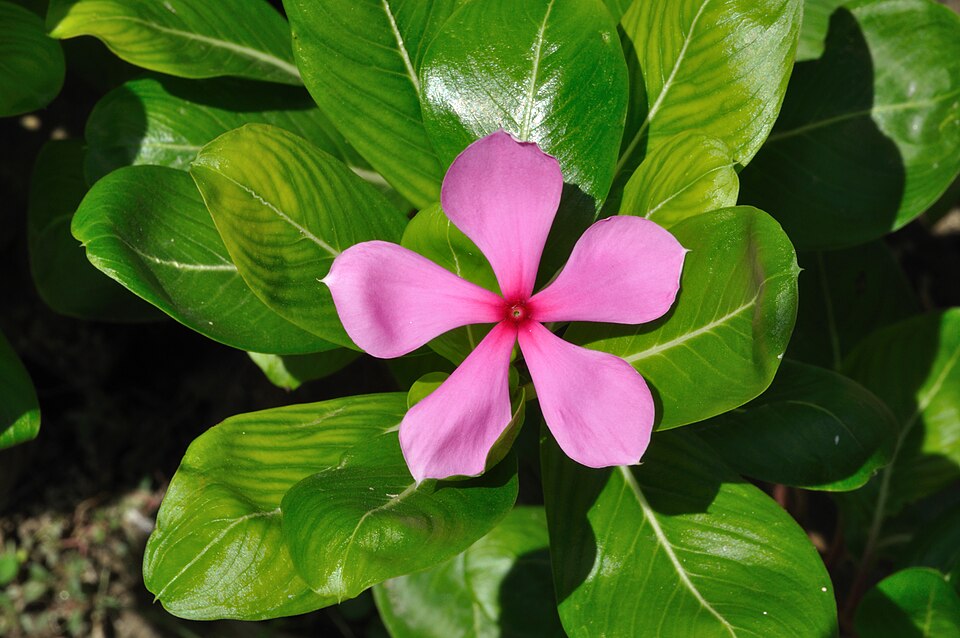
In 1958, if you wanted to study the chemistry of a Madagascar periwinkle, you needed a periwinkle. Someone had to grow it, cut it, dry it, ship it. The plant, or a piece of it, physically moved from one place to another, and every rule the world later built to govern the use of genetic resources assumed that this is how it works. Access meant access to a thing. You could stand at the border and watch it leave.
In 2015, the genome of that same periwinkle, Catharanthus roseus, was published and placed in public repositories (Kellner et al., 2015). From that moment, anyone with an internet connection could download it: every gene behind the alkaloids that became two of the most important cancer drugs of the twentieth century, readable in Boston or Basel or Beijing in the time it takes to open a browser tab. No permit, no shipment, no border. The value had moved from the plant to the data, and the rules had not followed.
This article is about the gap that opened between those two moments, and about the mechanism the world agreed, thirty years into the Convention on Biological Diversity, to close it: the Cali Fund.
What digital sequence information is
Digital sequence information, DSI, is not a scientific term. It is a diplomatic one, a placeholder adopted in CBD negotiations because governments could not agree on a definition, and it has stuck. At its core it means the nucleotide sequences read from DNA and RNA. In the broader usage that dominates the policy debate it stretches further, taking in the protein sequences those genes encode and sometimes the metabolite and other molecular data derived from an organism (Scholz et al., 2022). What all of it has in common is the property that matters: it is information, not material.
Information behaves differently from matter. A leaf can be in one herbarium at a time. A sequence deposited in the International Nucleotide Sequence Database Collaboration, the shared backbone behind GenBank, ENA and DDBJ, is mirrored across continents within days and can be copied without limit at almost no cost. Open deposition is not a loophole someone found; it is a foundation of modern biology, required by journals and funders precisely because science advances when data is shared. Hundreds of millions of sequence records now sit in these databases, and the overwhelming majority of uses made of them are ordinary research: taxonomy, disease surveillance, conservation genetics, the daily comparative work that every biology student learns to do with BLAST.
But some uses are commercial, and valuable. An enzyme mined from a sequence database can end up in a detergent, an industrial process, a drug discovery pipeline. A crop breeder can search thousands of genomes for a disease-resistance gene. Increasingly, artificial intelligence models are trained on sequence data at scale. When any of that generates profit, the question the CBD was built to answer comes back with force: the data came from somewhere, usually from the biodiversity of a particular country and often from the knowledge of particular communities. Does anything flow back?
Why Nagoya could not reach the data
The Nagoya Protocol, adopted in 2010 and in force since 2014, answers that question for physical material, and answers it bilaterally. A researcher or company seeking a genetic resource negotiates with the providing country: prior informed consent, mutually agreed terms, a permit, and a share of benefits flowing back along the same channel the sample travelled out on (see our Nagoya explainer).
The system's logic is a chain of custody, and a chain of custody needs a chain. Digitised sequence data breaks every link. There is no access event to attach consent to, because the user never accesses the organism, only a database. There is no single provider to negotiate with, because a comparative analysis may draw on sequences from ninety countries at once. And there is no practical way to trace one sequence's contribution through a discovery pipeline to a share of one product's revenue. For years the argument circled: many biodiverse countries, watching value compound in databases they did not control, pushed for the data to be brought inside benefit-sharing rules; many scientists warned that bolting bilateral permits onto open databases would strangle the research everyone depends on, including conservation itself (Scholz et al., 2022). Both sides had a point, which is why the argument lasted a decade.
A leaf can be in one herbarium at a time. A sequence can be everywhere at once. The rules were written for the leaf.
The multilateral answer: Montreal, then Cali
The way out was to stop trying to track individual sequences and to share benefits collectively instead. At COP15 in Montreal, in December 2022, the 196 Parties to the CBD adopted decision 15/9, agreeing to establish a multilateral mechanism for sharing benefits from the use of DSI, including a global fund, as part of the Kunming-Montreal Global Biodiversity Framework (CBD, 2022). The principle was settled; the machinery was not.
Two years of negotiation later, at COP16 in Cali, Colombia, decision 16/2 built the machine. It set out how the mechanism works and created the fund, named for the city, and the Cali Fund was formally launched in February 2025 at the resumed session of COP16 in Rome, administered by the UN Multi-Partner Trust Fund Office with UNDP and UNEP, with the CBD Secretariat hosting its secretariat (CBD, 2024; CBD, 2025).
Who is expected to pay, and how much
The design is deliberately aimed at the top of the market. Decision 16/2 says that large companies in sectors highly dependent on DSI should contribute; it lists pharmaceuticals, nutraceuticals, cosmetics, animal and plant breeding, biotechnology, laboratory equipment associated with the sequencing and use of DSI, and information, scientific and technical services related to DSI, including artificial intelligence (CBD, 2024). Academia, public research institutions and the public databases themselves are explicitly not expected to pay, a boundary the scientific community had argued for throughout (Scholz et al., 2022).
| Element | The Fund's published position |
|---|---|
| Indicative contribution rate | 1% of profits or 0.1% of revenue per year (the company chooses the basis) |
| Who is expected to contribute | Companies in listed DSI-dependent sectors exceeding two of three thresholds, averaged over the preceding three years: total assets of at least US$20m; sales of at least US$50m; profit of at least US$5m |
| Who is not expected to contribute | Academic and public research institutions, and public databases |
| Allocation | 50% of resources to the self-identified needs of Indigenous peoples and local communities, including women and youth; the remainder supports developing countries in implementing the Kunming-Montreal Global Biodiversity Framework |
Figures as published in the annex to CBD decision 16/2 and the Cali Fund's terms of reference (CBD, 2024; UNDP MPTF Office, 2025). They are the Fund's own published indicative figures, quoted here for reference; they are not IsoGentiX terms.
Sources: CBD decisions 15/9 and 16/2; CBD Secretariat launch announcement, February 2025; Cali Fund terms of reference (UNDP MPTF Office, 2025).
Where the money goes
The allocation rule is the most consequential sentence in the whole decision. Half of everything the Fund receives is directed to what the CBD Secretariat describes as the "self-identified needs of indigenous peoples and local communities", including women and youth, either directly or through governments (CBD, 2025). Self-identified is the operative word: the communities define the need, rather than having a project designed elsewhere and delivered to them. The remainder flows to developing countries to support the implementation of the global biodiversity framework, from conservation to the national systems, taxonomy and databases that biodiversity science runs on.
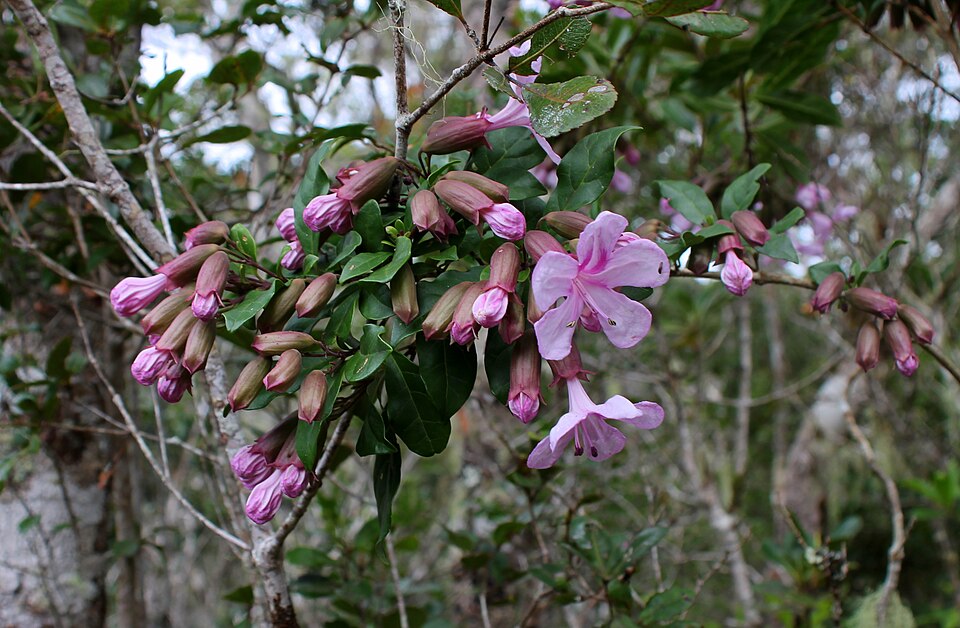
For a megadiverse, low-income country such as Madagascar the intent is plain. Its flora is one of the most distinctive on Earth, with around four in five native plant species found nowhere else (Antonelli et al., 2022), which means sequence data from Madagascar is disproportionately likely to be data that exists nowhere else either. A multilateral fund cannot trace one Malagasy gene to one product, and does not try. It asserts something simpler: the industries that profit from the world's pooled genetic data owe something to the places and peoples that data comes from.
What remains unresolved
It would be false to present the Cali Fund as a finished system. Three open questions matter.
The obligation is an expectation, not yet a law. A COP decision says companies should contribute; it does not, by itself, make them. Whether the indicative rates translate into actual payments at scale depends on corporate decisions and on whether governments write contribution into national law. Early uptake has been slow, and the Fund's credibility will be decided by its receipts, not its design.
The definition is still a placeholder. "Digital sequence information" remains formally undefined, and where its edges lie, whether protein structures, metabolomic profiles or AI models trained on sequences fall inside, is still argued over. The further the term stretches, the larger the contributor base, and the harder the boundary disputes.
The world has more than one rulebook. The CBD is not the only forum claiming jurisdiction over sequence data: the FAO Plant Treaty, the WHO's pandemic instrument and the new high-seas agreement each have their own benefit-sharing arrangements in motion, and researchers have warned that unless these are harmonised, users will face overlapping and contradictory obligations for the same data (Sett et al., 2024).
What this means for how IsoGentiX works
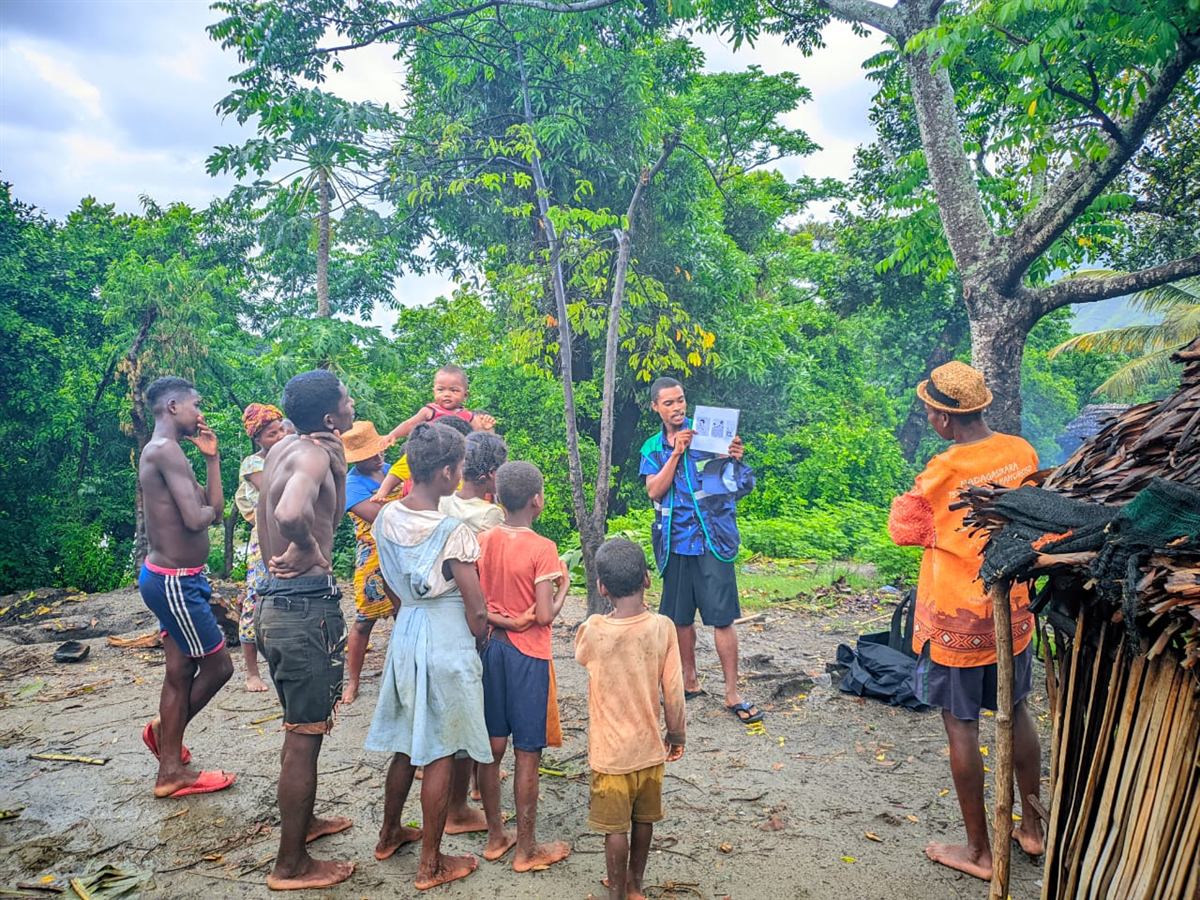
The Cali Fund settles a principle IsoGentiX is built on: benefit must follow the data, not only the specimen. Our work in Madagascar starts before any sequence exists, with consent. Communities agree to any collection before it happens, understanding what it involves, in their own language and on their own terms. It comes first, always. The knowledge we generate is returned digitally under national authority, so that the country whose flora produced the data holds the data. That matters more than it might sound: in the IsoGentiX dataset, 1,656 Madagascar endemics currently have a preserved specimen only outside the country, and 537 endemics are known from a single specimen anywhere on Earth. A century of physical collecting exported the record; the digital era is a chance to repatriate it rather than repeat the pattern at higher speed.
Data governance frameworks developed by Indigenous scholars, notably the CARE principles (collective benefit, authority to control, responsibility, ethics), make the same argument from the community side: open data is not enough if the people the data concerns have no say in its use (Carroll et al., 2020). The Cali Fund is the first global machinery that puts money behind that idea. Our mission is the same idea in one sentence: we gather the plant world's data, decode it into knowledge, and enable action that protects our environment and serves its people. Decode:Protect.
Common questions
What is digital sequence information (DSI)?
It is the placeholder term used under the Convention on Biological Diversity for the digital data read from genetic resources: DNA and RNA sequences, and in wider usage the protein sequences and related data derived from them. Once deposited in public databases, the data can be copied and used anywhere in the world without any further access to the organism it came from.
What is the Cali Fund?
The global fund created by CBD COP16 decision 16/2 in Cali, Colombia, in November 2024, and launched in February 2025. Large companies in DSI-dependent sectors are expected to contribute a share of profits or revenue, and 50 per cent of the Fund's resources are allocated to the self-identified needs of Indigenous peoples and local communities.
How much are companies expected to pay into the Cali Fund?
The Fund's published indicative rate, set out in decision 16/2, is 1 per cent of profits or 0.1 per cent of revenue per year, for large companies in listed sectors that exceed set size thresholds. These are the Fund's own published figures. Academic institutions and public databases are not expected to contribute.
Does the Cali Fund replace the Nagoya Protocol?
No. Nagoya's bilateral system still governs physical access to genetic resources: permits, prior informed consent and mutually agreed terms with the provider country. The Cali Fund adds a multilateral channel for benefits from the use of sequence data, which the bilateral system could never track.
Sources and further reading
- CBD (2022). Decision 15/9: Digital sequence information on genetic resources. Fifteenth meeting of the Conference of the Parties, Montreal. cbd.int, establishes the multilateral mechanism, including a global fund.
- CBD (2024). Decision 16/2: Digital sequence information on genetic resources. Sixteenth meeting of the Conference of the Parties, Cali. cbd.int, creates the Cali Fund; annex sets the indicative rates, sector list and thresholds.
- CBD Secretariat (2025). The Cali Fund launches in the margins of the resumed session of COP16. cbd.int, launch, administration, and the 50% allocation to Indigenous peoples and local communities.
- UNDP Multi-Partner Trust Fund Office (2025). The Cali Fund: Terms of Reference. mptf.undp.org, operational detail on contributions and allocation.
- Scholz, A.H. et al. (2022). Multilateral benefit-sharing from digital sequence information will support both science and biodiversity conservation. Nature Communications, 13, 1086. nature.com, the case for a multilateral solution that keeps databases open.
- Sett, S. et al. (2024). Harmonize rules for digital sequence information benefit-sharing across UN frameworks. Nature Communications, 15, 8745. nature.com, the unresolved problem of overlapping benefit-sharing regimes.
- Kellner, F. et al. (2015). Genome-guided investigation of plant natural product biosynthesis. The Plant Journal, 82(4), 680–692. pubmed.ncbi.nlm.nih.gov, the publicly released Catharanthus roseus genome.
- Duffin, J. (2000). Poisoning the spindle: serendipity and discovery of the anti-tumor properties of the Vinca alkaloids. Canadian Bulletin of Medical History, 17(1–2), 155–192. pubmed.ncbi.nlm.nih.gov, the periwinkle drugs' history.
- Carroll, S.R. et al. (2020). The CARE Principles for Indigenous Data Governance. Data Science Journal, 19(1), 43. datascience.codata.org
- Antonelli, A. et al. (2022). Madagascar's extraordinary biodiversity. Science, 378(6623), eabf0869. science.org, endemism figures for Madagascar's flora.