What the Nagoya Protocol means for access and benefit-sharing
In 1992 the world agreed that a nation's genetic resources belong to that nation. In 2010 it agreed the machinery to make that real: consent before access, terms before collection, benefits shared by agreement. Here is how the system works, where it came from, and where it still falls short.
- The Convention on Biological Diversity (1992) established that states hold sovereign rights over their genetic resources, with access subject to national law (CBD, Article 15).
- The Nagoya Protocol was adopted at COP10 in Nagoya, Japan, in October 2010 and entered into force on 12 October 2014 (CBD Secretariat).
- It has 143 ratifications as of 2026 (CBD Secretariat).
- Its two working instruments are prior informed consent (PIC) and mutually agreed terms (MAT), both required before access, backed by compliance measures in user countries.
- Madagascar signed in 2011, ratified on 3 July 2014, and became a Party when the Protocol entered into force that October (CBD Secretariat).
- At COP16 (2024) the system was extended to digital sequence information through the Cali Fund, launched in February 2025 (CBD decision 16/2).
Strip away the treaty language and the Nagoya Protocol answers one question: who may use a country's genetic resources, and on what terms? A genetic resource is any biological material carrying functional heredity, a seed, a leaf, a root, a microbe in a soil sample, anything a laboratory could grow, sequence or screen. For most of scientific history the answer to the question was: anyone who could get there. Plants left nature-rich countries in collecting boxes and returned, sometimes, as patented products. Nothing obliged anyone to share what came of them.
The Protocol reverses the default. Access now runs through the provider country's own law, and benefit-sharing is negotiated before a single specimen is taken. For a Masters student planning fieldwork, a company screening plant chemistry, or a database holding sequence data, it is the legal architecture within which all of that work now sits. This article sets out where the rules came from, how they operate mechanically, what they mean in Madagascar, and the honest list of what they have not yet fixed.
Ratification count and dates: CBD Secretariat, cbd.int/abs (accessed August 2026). Cali Fund allocation: CBD decision 16/2 and the Secretariat's launch announcement (2025).
Before the rules: the era the periwinkle ended
To understand why the Protocol exists, start with the plant that made the problem impossible to ignore. The rosy periwinkle, Catharanthus roseus, is a Madagascar endemic that had spread through cultivation across the tropics long before anyone asked what its chemistry could do. In the 1950s, researchers investigating its folk use as a diabetes remedy found something unexpected: extracts crashed white blood cell counts in laboratory animals. That accident, followed up in Canada and in parallel by an American pharmaceutical screening programme, yielded vinblastine and vincristine, the alkaloids that transformed treatment of Hodgkin lymphoma and childhood leukaemia (Duffin, 2000).
The drugs earned a great deal of money. Madagascar, the only country whose wild flora had produced the species, received effectively nothing, and no law of the time said it should. The periwinkle became the standard citation for a wider pattern, and by the 1980s provider countries had a word for the pattern: biopiracy. The fuller story, with its complications, is told in the rosy periwinkle case; what matters here is what it did to the politics. When governments met to negotiate a biodiversity convention, the nature-rich countries of the global South arrived with a settled position: no conservation deal without a property deal.
1992: sovereignty first
The Convention on Biological Diversity, opened for signature at the Rio Earth Summit in 1992, rebuilt the legal foundation. Article 15 states that the authority to determine access to genetic resources rests with national governments and is subject to national legislation, and that access, where granted, shall be on mutually agreed terms and subject to prior informed consent. Genetic resources stopped being a common heritage free for the taking and became sovereign property, like minerals or fisheries.
The principle was clear; the practice was not. The CBD told countries they had the right to control access but not how to run the paperwork, and it gave user countries no obligation to check that material arriving in their laboratories had been acquired lawfully. Voluntary guidance followed, the Bonn Guidelines of 2002, but voluntary guidance does not bind a company or a university. Provider countries pressed for a binding instrument, and after six years of negotiation they got one, adopted at the tenth Conference of the Parties in Nagoya, Japan, in October 2010. It entered into force on 12 October 2014, ninety days after the fiftieth ratification (CBD Secretariat).
The Convention decided who owns a nation's genetic heritage. Nagoya decided how anyone else gets to touch it.
How lawful access works
The Protocol operationalises Article 15 through two instruments agreed in advance and in writing, plus a compliance system to make them stick.
Prior informed consent (PIC) is the permission of the provider country, granted by a designated competent national authority before access takes place, on the basis of full information about who wants the material, what they intend to do with it, and where it will go. Where indigenous peoples and local communities hold rights over the resources, or where their traditional knowledge is involved, their own consent is required as well. It is consent in the strong sense: informed, specific and prior, not a signature gathered after the fact.
Mutually agreed terms (MAT) are the contract. They set out permitted uses, any restrictions on transfer to third parties, what happens if research turns commercial, and what flows back. Benefits can be monetary, fees, milestone payments, royalties, or non-monetary, training, shared research results, technology transfer, co-authorship, capacity built in the provider country. The Protocol's annex lists both kinds without fixing amounts; the numbers are for each negotiation.
Compliance is what made Nagoya more than a restatement. Each Party must take measures to ensure that genetic resources used within its jurisdiction were accessed lawfully, designate checkpoints that monitor utilisation, and act when they were not. A permit registered with the ABS Clearing-House becomes an internationally recognised certificate of compliance, a passport for the material that any user country can verify. For the first time, a European or Japanese regulator can ask a company the question Madagascar could never enforce alone: show me your consent.
Madagascar's position
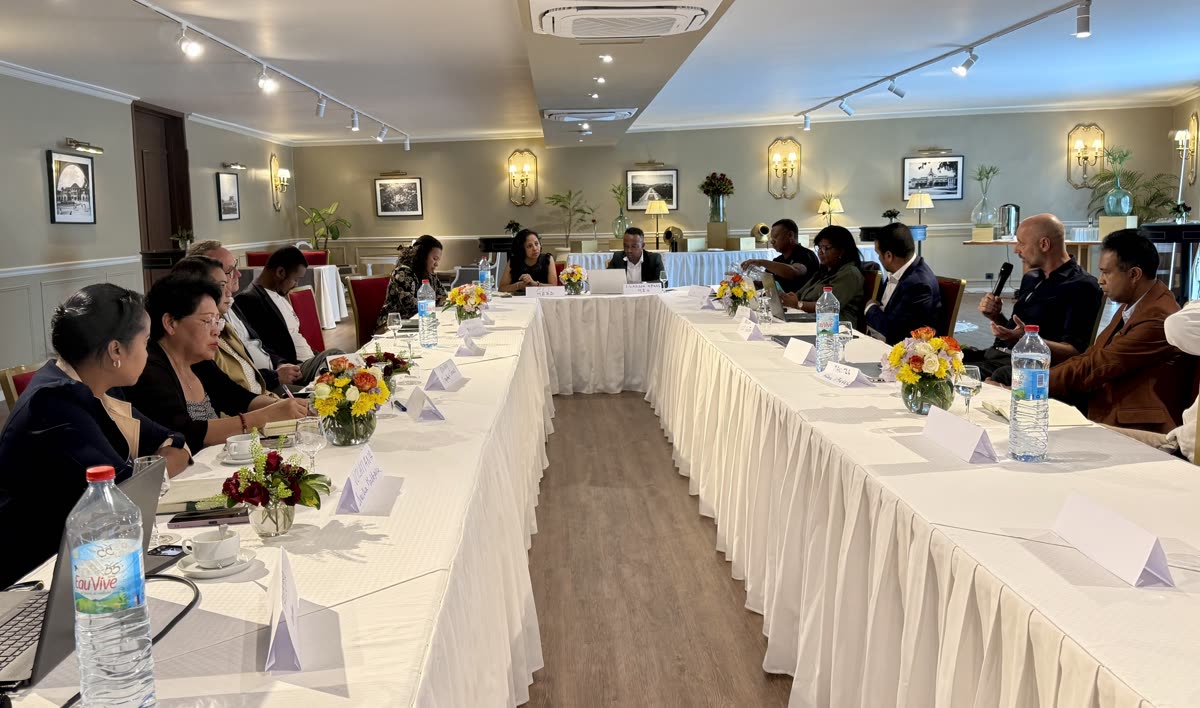
Madagascar has been a Party to the Convention on Biological Diversity since 1996. It signed the Nagoya Protocol on 22 September 2011, ratified it on 3 July 2014, and became a Party on the day the Protocol entered into force, 12 October 2014 (CBD Secretariat). For a country whose flora runs to some 11,500 native species, around four in five of them endemic (Antonelli et al., 2022), the stakes could hardly be higher: almost everything a bioprospector might want from Madagascar exists nowhere else, which means almost every act of access engages the Protocol.
In practice, access runs through the Ministry of Environment and Sustainable Development (MEDD) as the national authority, and through the communities on whose land collection would happen. That second layer matters as much as the first. Documented ethnobotanical surveys show how much knowledge Malagasy communities hold about their own plants, from the women of the Agnalazaha littoral forest in the south-east (Razafindraibe et al., 2013) to the farming villages of Ambalabe in the east (Rakotoarivelo et al., 2015). Where that knowledge guides research, the Protocol requires the community's own consent and a share of the benefit, not merely the state's.
This is where free, prior and informed consent, FPIC, does its work. The IsoGentiX framing of it is deliberately plain: communities agree to any collection before it happens, understanding what it involves, in their own language and on their own terms. It comes first, always. Alongside consent sits data governance: the CARE Principles argue that indigenous data governance means collective benefit, authority to control, responsibility and ethics follow the data itself, wherever it travels (Carroll et al., 2020).
What it means for a researcher
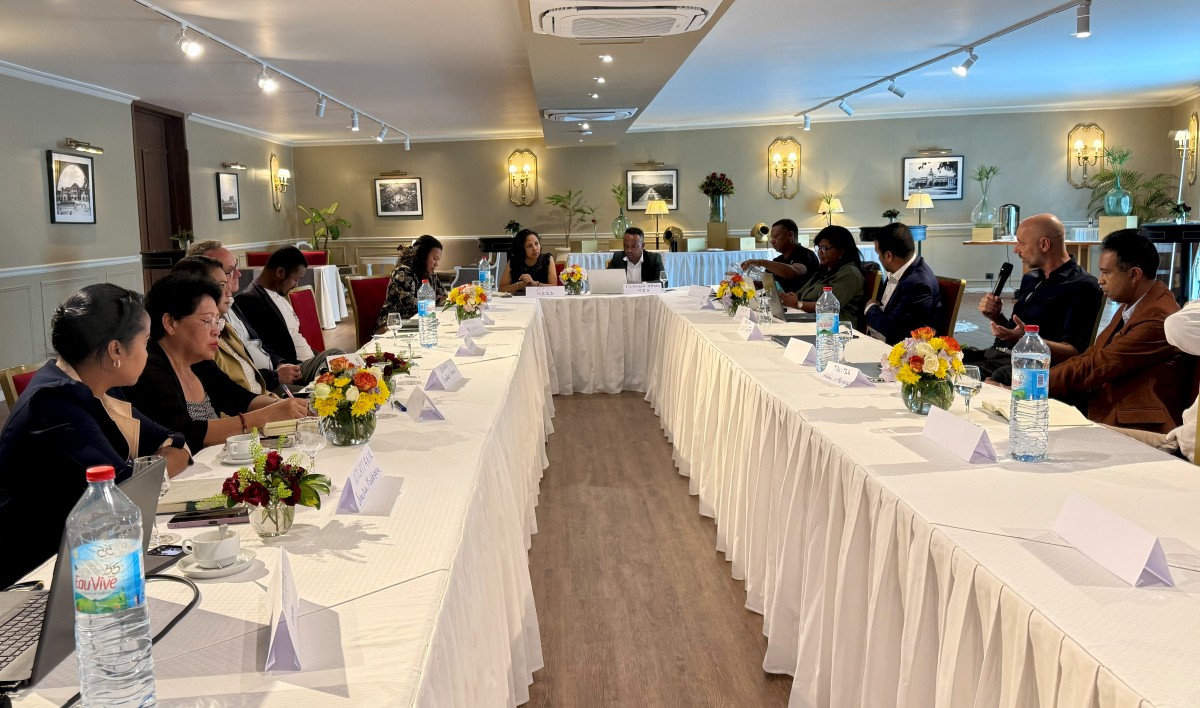
For someone actually planning to collect, the Protocol translates into a sequence of practical obligations, and into a set of misconceptions worth clearing early. A recent compliance review aimed at working scientists identifies the most common ones (Faggionato et al., 2026). The belief that non-commercial or academic research is exempt is widespread and wrong: most national ABS laws cover academic collecting, though many offer simplified procedures for it. The provider country is where the material was originally collected in situ, not where a culture collection later held it. National researchers are often covered by their own country's ABS law. And researchers from states that never joined the Protocol, the United States among them, must still comply with the provider country's rules, because it is the provider's law that governs access.
The single most expensive mistake in ABS is sequencing first and asking afterwards. Terms agreed after value has been created are negotiated from the weakest possible position, and material accessed without consent may be unusable and unpublishable: many journals and funders now ask for evidence of ABS compliance. The working rule is the Protocol's own: consent, then terms, then permit, then collection. In that order.
Criticisms and implementation gaps
An honest account has to include what the system has not yet delivered. More than a decade in, four criticisms recur in the implementation literature (Faggionato et al., 2026).
Fragmentation. Nagoya is a framework, not a single rulebook. Well over a hundred national ABS regimes now exist, with different definitions, procedures and timelines, and a multi-country study can mean a year of parallel permit processes in several languages. Capacity. The countries with the most biodiversity often have the least-resourced permitting authorities, so applications stall, which punishes the compliant and rewards those who never ask. Chilling effects. Researchers report abandoning taxonomy, conservation genetics and pathogen surveillance projects rather than face the uncertainty, an outcome that serves neither science nor the provider countries the rules exist to protect. Thin monetary flows. Benefit-sharing to date has been mostly non-monetary; the large revenues some provider countries expected in 2010 have largely not arrived.
The largest gap was structural. Nagoya was drafted around physical material, and modern bioscience increasingly uses digital sequence information instead: download the genome, skip the specimen, and arguably skip the obligation with it. At COP15 in 2022 governments agreed in principle that benefits from such data should be shared multilaterally, and at COP16 in Cali in 2024, decision 16/2 built the mechanism. The Cali Fund, launched in February 2025, expects large companies that benefit commercially from sequence data, in pharmaceuticals, cosmetics, breeding and biotechnology, to contribute. The decision's indicative rate, the Fund's own published figure, is 0.1 per cent of revenue or 1 per cent of profits, for companies exceeding two of three thresholds: 20 million dollars in assets, 50 million in sales, 5 million in profit. Half of the Fund's resources are allocated to the self-identified needs of indigenous peoples and local communities, including women and youth (CBD decision 16/2; CBD Secretariat, 2025). The principle now follows the data, not just the specimen.
Where IsoGentiX stands
IsoGentiX works inside this architecture, not around it. Access is arranged with sovereign governments through their own law; community consent comes first, on the FPIC terms set out above; every record carries its provenance so that it is always clear where material and data came from and under what agreement. And the knowledge returns: the flora record is delivered digitally under national authority, which matters in a country where, on the IsoGentiX dataset, 1,656 endemic species have a preserved specimen only outside Madagascar and 537 endemics are known from a single specimen anywhere on Earth, within a national record of 13,685 recorded plant names. The mission is the reason the compliance is not a burden: we gather the plant world's data, decode it into knowledge, and enable action that protects our environment and serves its people. Decode:Protect.
Common questions
What is the Nagoya Protocol?
An international agreement under the Convention on Biological Diversity, adopted in 2010 and in force from 12 October 2014, setting out how access to a country's genetic resources must be agreed in advance and how the benefits from using them must be shared fairly. It has 143 ratifications as of 2026 (CBD Secretariat).
What are prior informed consent (PIC) and mutually agreed terms (MAT)?
PIC is the permission of the provider country's designated authority, and of any community concerned, granted before access on the basis of full information about what is planned. MAT is the negotiated contract fixing permitted uses and the benefits, monetary or non-monetary, that will flow back. Both must be in place before collection.
Does the Nagoya Protocol apply to academic research?
Yes. The belief that non-commercial research is exempt is a common misconception: most national ABS laws cover academic collecting, though many offer simplified procedures. Researchers from non-Party states such as the United States must still follow the provider country's law (Faggionato et al., 2026).
Does benefit-sharing cover digital sequence data as well as physical samples?
Increasingly, yes. At COP16 in 2024, governments agreed a multilateral mechanism for digital sequence information and launched the Cali Fund in 2025. Under decision 16/2, large companies benefiting commercially from such data are expected to contribute 0.1 per cent of revenue or 1 per cent of profits as an indicative rate, with half the fund allocated to indigenous peoples and local communities.
Sources and further reading
- Convention on Biological Diversity (1992). Text of the Convention, including Article 15 on access to genetic resources. Secretariat of the CBD. cbd.int/convention/text
- Secretariat of the CBD. The Nagoya Protocol on Access and Benefit-sharing: text, background and status of ratifications. cbd.int/abs and cbd.int/abs/nagoya-protocol/signatories, entry into force 12 October 2014; 143 ratifications as of 2026; Madagascar signed 22 September 2011, ratified 3 July 2014, Party from 12 October 2014.
- CBD COP decision 16/2 (2024). Digital sequence information on genetic resources, establishing the multilateral mechanism and the Cali Fund, with the indicative contribution rates and thresholds. cbd.int (PDF)
- Secretariat of the CBD (2025). The Cali Fund launches in the margins of the resumed session of COP16. cbd.int, launch date and the 50 per cent allocation to indigenous peoples and local communities.
- Faggionato, D. et al. (2026). Policy in Practice: How to do the Nagoya Protocol: common misconceptions, challenges and best practices for access and benefit-sharing compliance. Sustainable Microbiology, 3(2), qvag007. academic.oup.com
- Duffin, J. (2000). Poisoning the spindle: serendipity and discovery of the anti-tumour properties of the Vinca alkaloids. Canadian Bulletin of Medical History, 17(1–2), 155–192. pubmed.ncbi.nlm.nih.gov, the periwinkle discovery story.
- Carroll, S.R. et al. (2020). The CARE Principles for Indigenous Data Governance. Data Science Journal, 19(1), 43. datascience.codata.org
- Razafindraibe, M. et al. (2013). Medicinal plants used by women from Agnalazaha littoral forest (southeastern Madagascar). Journal of Ethnobiology and Ethnomedicine, 9, 73. ethnobiomed.biomedcentral.com
- Rakotoarivelo, N. et al. (2015). Medicinal plants used to treat the most frequent diseases encountered in Ambalabe rural community, eastern Madagascar. Journal of Ethnobiology and Ethnomedicine, 11, 68. ethnobiomed.biomedcentral.com
- Antonelli, A. et al. (2022). Madagascar's extraordinary biodiversity: evolution, distribution, and use. Science, 378(6623), eabf0869. science.org