The Flora Portal
One searchable window onto Madagascar's and selected other nations' flora. A consolidated, sourced record, more complete than any single public database or herbarium holds anywhere in the world.
Freely available for anyone to access. The full record is open to search, at no cost, for Malagasy scientists, students and institutions, and for anyone in the world.
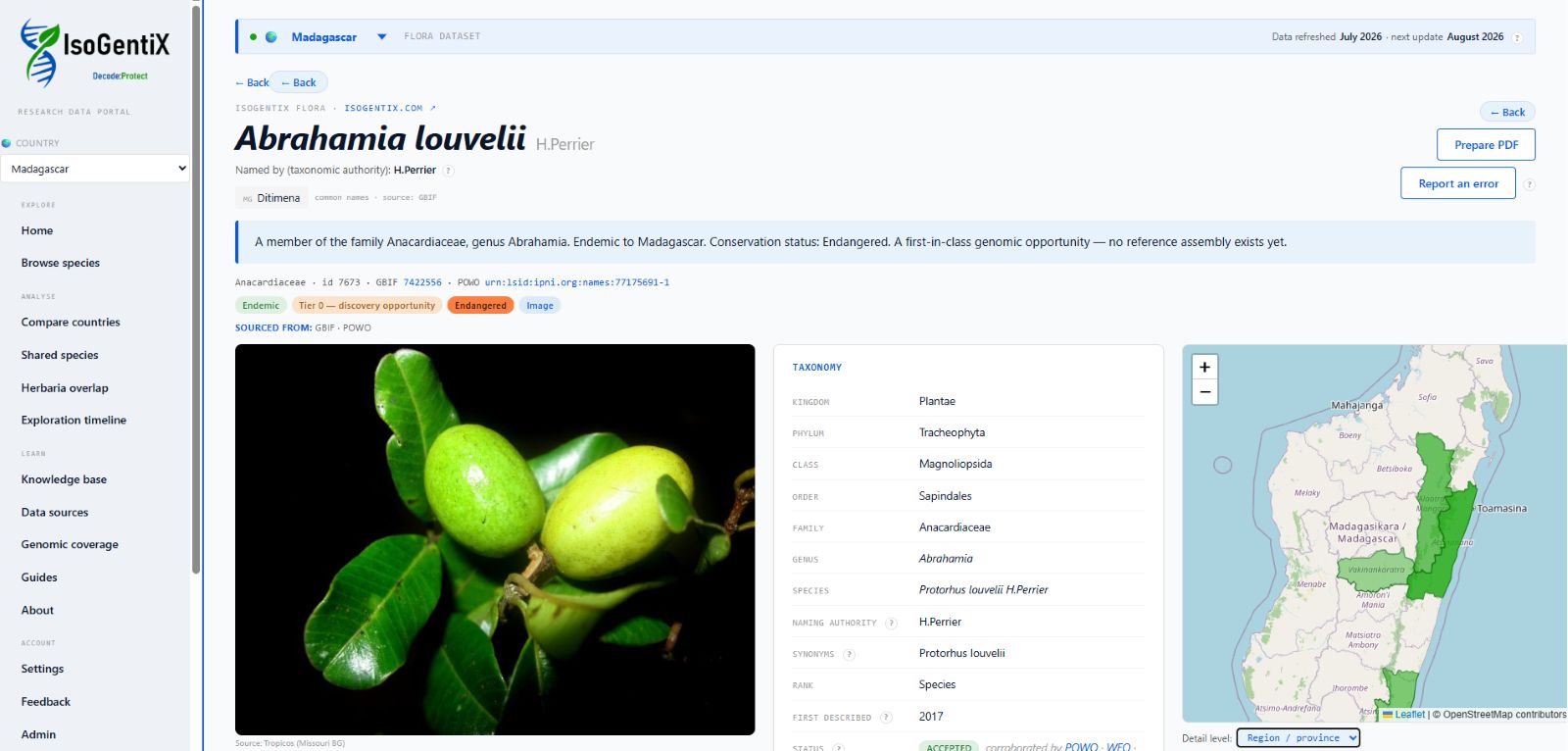
What the record makes visible.
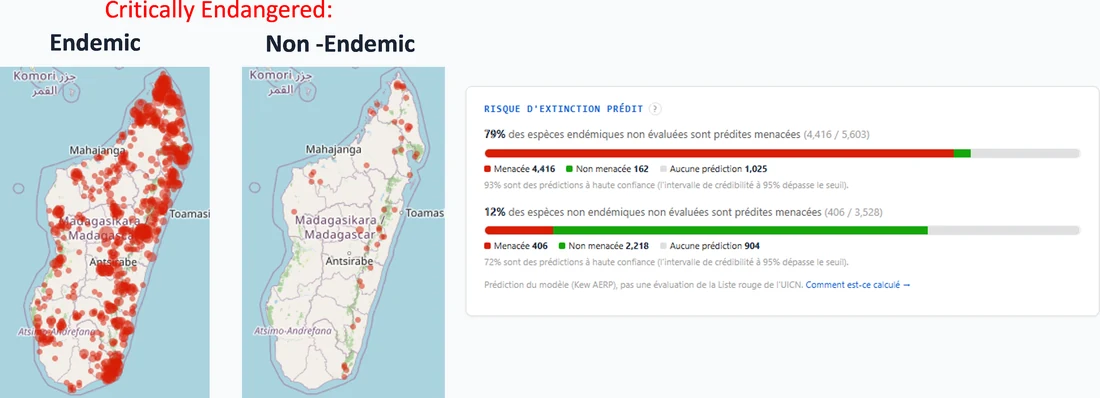
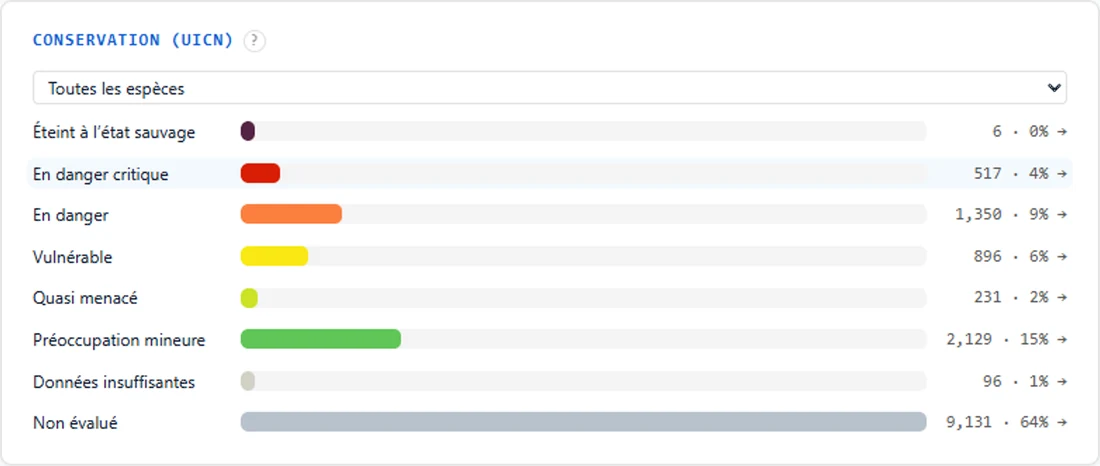
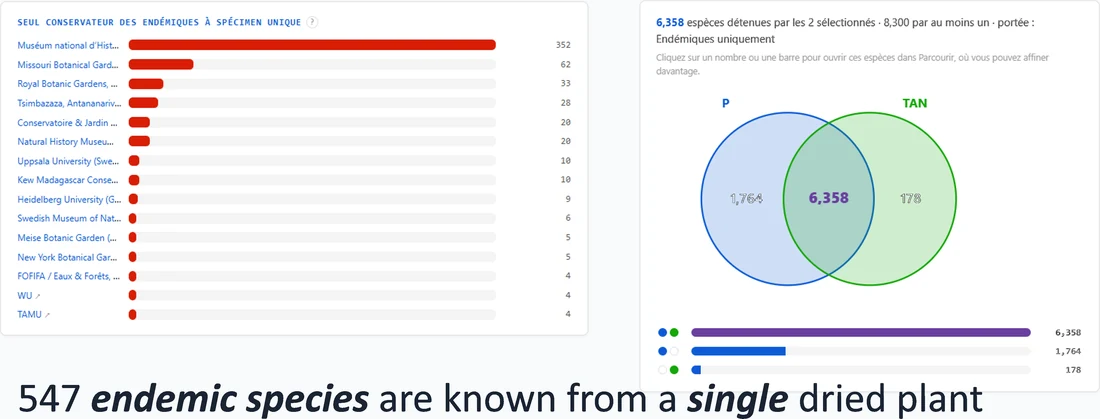
Every fact in the portal is traceable to its source.
* Figures from the IsoGentiX Flora database, refreshed monthly. How they update →
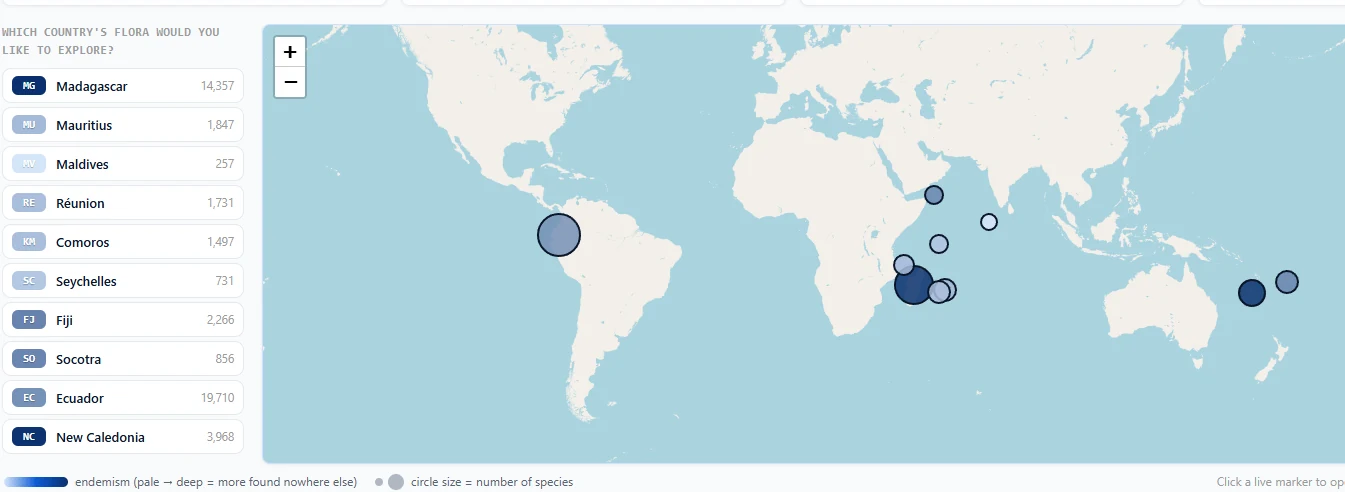
Any two nations, side by side.
The same consolidated record for every country we cover. Madagascar and Mauritius, at a glance:
* At-a-glance figures from the IsoGentiX Flora Portal, current as of 3 August 2026.
13,685 species. No one holds them all.
Madagascar's flora has been documented for generations, but the record is scattered across dozens of herbaria, databases and languages, much of it reachable only by specialists in overseas institutions.
The portal draws these fragments into a single consolidated view: names, images, occurrence points and provenance, cross-checked and reconciled. It is a national knowledge base of the recorded flora, held in one place for the first time.
The irreplaceable ones — where they reside
- Endemic species known from a single preserved specimen on Earth537
- of those held in foreign herbaria499
- in Paris (MNHN) alone332
- held at Tsimbazaza, the national herbarium38
- endemics held only abroad, in no Antananarivo institution1,656
Examples of endemics on the record include Catharanthus roseus, Adansonia grandidieri, Pachypodium rosulatum, Alluaudia procera and Ravenala madagascariensis. The portal names and locates each specimen, in digital form, under Malagasy authority.
* Figures from the IsoGentiX Flora database, refreshed monthly. How they update →
Built from open knowledge, held in common.
The record is assembled from the world's open biodiversity sources, under Creative Commons and public data licences, with every value tagged to where it came from.
Documented over generations
Madagascar's flora has been described for more than two centuries. The consolidated record builds on the work of Malagasy and international institutions.
The consolidated Flora Portal is offered as a resource to enable a country to better understand its flora - as a service to the nation, its scientific institutions and its people, and to anyone who wants to understand the country's living heritage. Value is created from new scientific knowledge. The consolidated record is made available under a Creative Commons licence.
What you can explore.
Every recorded species
Search 50,128 species across every flora in the portal by name, family, region, endemism, imagery and genomic coverage, with sourced detail on each.
Where each plant occurs
Hundreds of thousands of georeferenced occurrence points, mapped across a nation's locations, biomes and ecoregions.
Which institutions hold what
See which herbaria hold specimens of a species, where the gaps are, and which records exist only overseas.
The portal holds its own in-depth knowledge base.
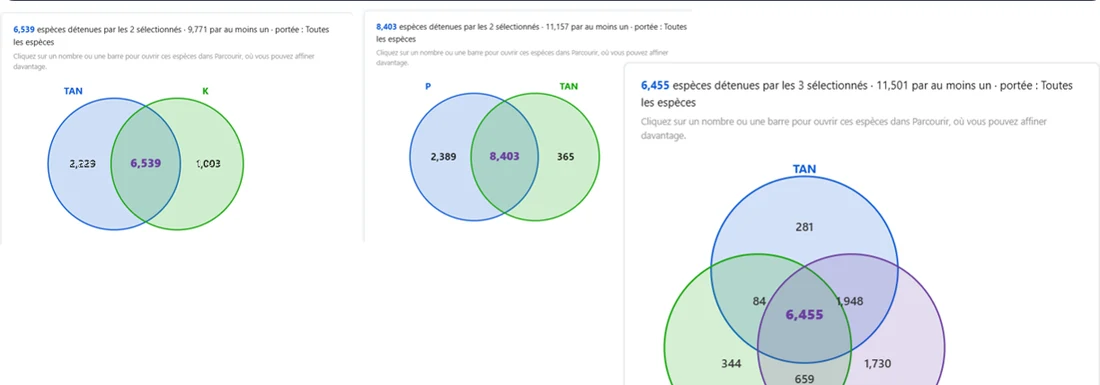
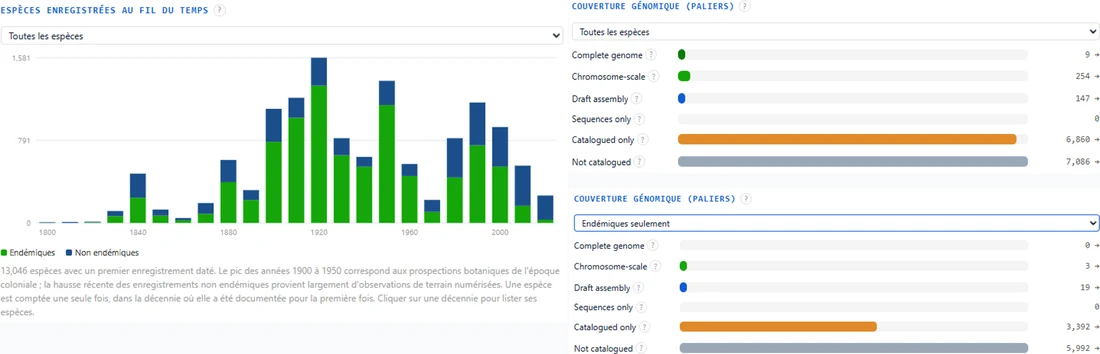
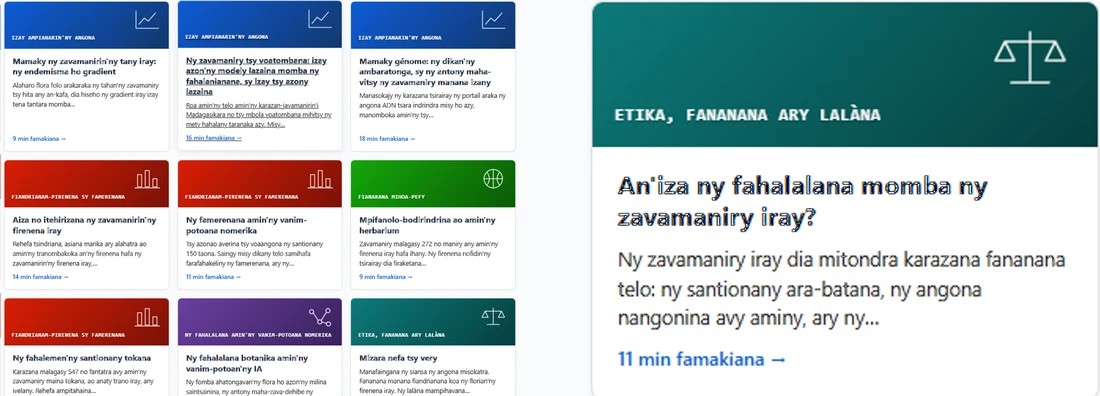
Beyond browsing 50,128 species, the portal carries a research-grade knowledge base of its own: in-depth articles on what the data teaches, a detailed FAQ, and data insights, alongside tools to compare countries side by side, trace herbaria overlap, follow the exploration timeline and read genomic coverage.
Enter the Flora Portal.
The record is freely available for anyone to search. Scientists, institutions and partners can request additional detail.