Fair benefit-sharing
"Fair and equitable" is easy to say and hard to do. A cheque can be fair and still leave a country exactly where it was. Here is what benefit-sharing means beyond payments, and why the benefits that last are the ones that build a nation's own ability to study its flora.
- The Nagoya Protocol's Annex lists 10 monetary and 17 non-monetary benefit types, from royalties to training, technology transfer and institutional capacity-building (CBD, Nagoya Protocol Annex).
- The Protocol was adopted in Nagoya in 2010 and entered into force in October 2014; benefits are settled case by case in mutually agreed terms (CBD).
- Madagascar's rosy periwinkle produced the anti-cancer drugs vincristine and vinblastine, and no benefit returned to Madagascar under the legal order of the time (Duffin, 2000).
- The Cali Fund, launched in February 2025, extends benefit-sharing to digital sequence information; the COP16 decision gives indicative company contributions of 1% of profits or 0.1% of revenue, with at least half the fund for indigenous peoples and local communities (CBD).
- 1,656 Madagascar endemics have a preserved specimen only outside the country (IsoGentiX dataset): a measure of how much capability past collecting failed to leave behind.
Start with a question that sounds simple. A research team collects plants in a country rich in biodiversity, studies them abroad, and something valuable eventually results: a paper, a dataset, perhaps one day a product. What does the country get back?
For most of scientific history the honest answer was: nothing. Specimens left, knowledge accumulated elsewhere, and the places the plants came from were left with neither the material, nor the data, nor the skills to produce either. The international system built since 1992 to correct this, access and benefit-sharing under the Convention on Biological Diversity and its Nagoya Protocol, is usually discussed as if the correction were a payment. It is not. The most careful thing the Nagoya Protocol did was to write down, in its Annex, how many kinds of benefit there are, and how few of them are money.
Annex counts: Nagoya Protocol, Annex (CBD). Cali Fund allocation: CBD, launch announcement, February 2025. Custody figure: computed from the IsoGentiX Flora dataset. How the figures update →
The fortune that never came home
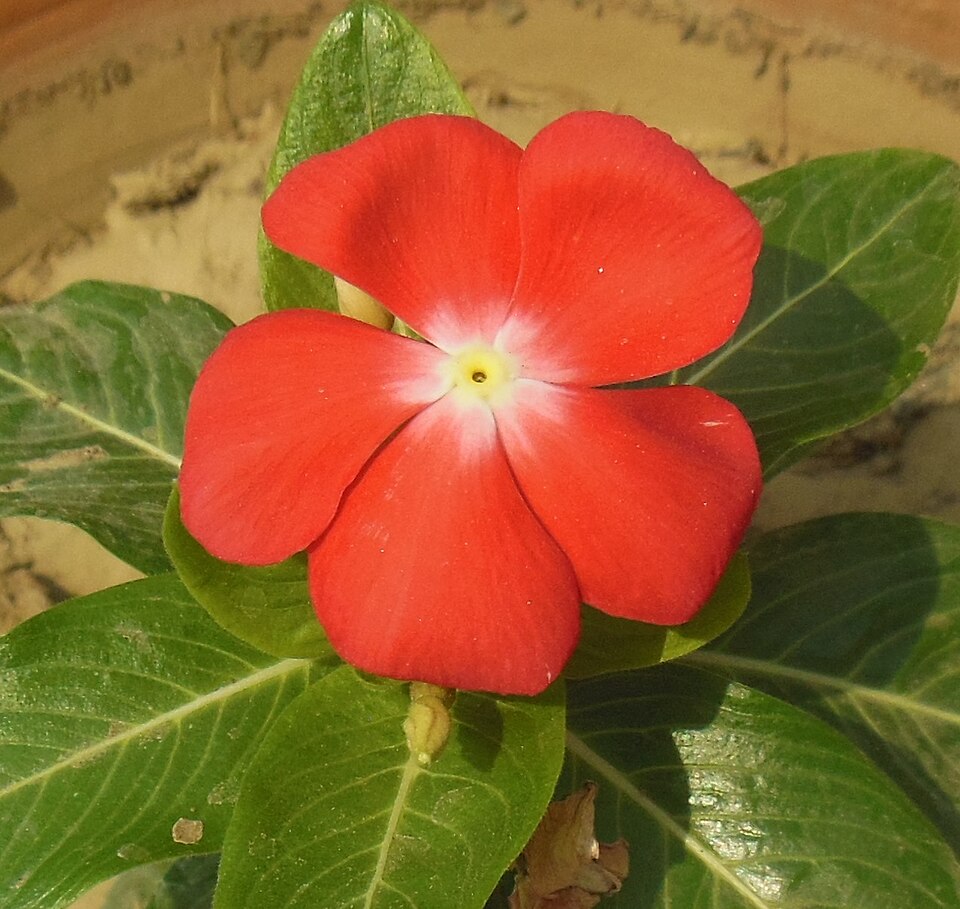
The case every ABS lecture reaches for is Madagascar's own. The rosy periwinkle, Catharanthus roseus, a small plant of open sandy ground, was investigated in the 1950s by two research groups, one in Canada and one in the United States, both following leads from its traditional use. Neither found what it was looking for. What they found instead, by a route the historian Jacqueline Duffin has reconstructed in detail as genuine serendipity, was that periwinkle extracts destroyed white blood cells (Duffin, 2000). Out of that accident came vinblastine and vincristine, the alkaloids that turned childhood leukaemia from a death sentence into a largely curable disease, and that remain on the WHO's list of essential medicines today.
The drugs earned their manufacturer a fortune over the following decades. Madagascar received nothing: no royalty, no laboratory, no training programme, not even the systematic return of data about its own plant. There was no wrongdoing by the standards of the day. Before the Convention on Biological Diversity, genetic resources were treated as the common heritage of humankind, free for whoever could collect and use them. The periwinkle is not a scandal so much as a measurement: it shows exactly what the old legal order delivered to the country of origin, which was nothing at all, even when the plant in question saved hundreds of thousands of lives.
What the law now asks
The Convention on Biological Diversity, agreed at Rio in 1992, replaced common heritage with national sovereignty: a country owns its genetic resources and may set the terms of access to them. The Nagoya Protocol, adopted in 2010 and in force since October 2014, turned that principle into machinery. Access requires the prior informed consent of the provider country. The terms, including what flows back, are set out in mutually agreed terms, a negotiated contract between provider and user. And benefits arising from use must be shared fairly and equitably.
The Protocol deliberately does not fix what those benefits are. Its Annex instead offers a menu. On the monetary side: access fees, up-front payments, milestone payments, royalties, licence fees, contributions to conservation trust funds, research funding, joint ventures and joint ownership of intellectual property. On the non-monetary side, a longer list of seventeen: sharing of research and development results, collaborative research conducted in the provider country, participation in product development, education and training, admittance to ex situ collections and databases, technology transfer, institutional capacity-building, access to scientific information, contributions to the local economy, research directed at priority needs such as health and food security, food and livelihood security benefits, social recognition, and more.
Read the two lists side by side and the design is visible. The drafters understood that money is the rarer and less reliable currency. Most collected organisms never yield a product; most products take decades; royalty clauses on a discovery that never happens pay nothing. The non-monetary list is longer because those benefits can flow from the science itself, immediately, whether or not a molecule ever reaches a market.
| Monetary benefits | Non-monetary benefits | |
|---|---|---|
| Examples (Nagoya Annex) | Access fees, up-front and milestone payments, royalties, licence fees, research funding, conservation trust contributions | Shared research results, in-country collaborative research, training, technology transfer, institutional capacity-building, database access |
| When they arrive | Mostly late, and only if commercialisation succeeds | From the first field season onward, regardless of commercial outcome |
| Who receives them | Whoever the contract names; funds can stall in transmission | Institutions and people in the provider country directly |
| What remains in 20 years | A spent sum, unless invested deliberately | Trained scientists, working laboratories, national datasets, institutions that outlast any one agreement |
Benefit types from the Annex to the Nagoya Protocol (CBD); comparison follows the analysis in Laird et al. (2020).
Why a cheque is not capability
Here is the argument this article exists to make. Imagine a one-off payment negotiated in good faith, delivered in full, spent honestly. It can still fail the fairness test in a way that matters more than its size: the day after it is spent, the country is no more able to study its own biodiversity than it was before the collectors arrived. The specimens are abroad. The sequence data sits on a server abroad. The taxonomic expertise, the bioinformatics pipeline, the mass spectrometers, the trained careers, all abroad. The country has been paid for its resources and left without the means to know what it has.
The measurable trace of that failure is in the herbarium record. In the IsoGentiX dataset, 1,656 of Madagascar's endemic plant species have a preserved specimen somewhere in the world but none in any Madagascar institution, and 537 endemics are known from a single specimen anywhere on Earth. Two centuries of collecting moved the evidence of the flora out of the country that grew it. No retrospective payment fixes that. What fixes it is capability: digitised and returned data, in-country training, working institutions, and the ability to answer the next question at home.
Scholars of ABS have been making a version of this point for years. Laird, Wynberg and colleagues, writing in Science, warn that treating benefit-sharing as a hunt for royalty income has yielded little of either money or conservation, and that the durable gains lie in research collaboration and capacity in provider countries (Laird et al., 2020). The CARE Principles for Indigenous Data Governance push the same logic to data: collective benefit, authority to control, responsibility and ethics, so that communities are participants in and beneficiaries of data about their world, not subjects of it (Carroll et al., 2020).
A payment compensates for the past. Capability changes the future. Fair benefit-sharing needs both, and only one of them compounds.
How value can flow back
Set out as a process, benefit-sharing is a loop rather than a transaction. Access is granted under consent and national law; research turns material and knowledge into value; that value returns along two channels at once; and the non-monetary channel, if it is designed seriously, raises the country's own capability, which strengthens its position in every agreement that follows.
Then the data left the specimen
Just as the Nagoya machinery settled in, the thing being shared changed. A genome sequenced once can be uploaded, copied and used anywhere, indefinitely, without anyone touching another specimen. This digital sequence information, DSI in the negotiations, threatened to hollow out the bilateral system: why negotiate access to a plant when its sequence is already in a public database?
The answer the world's governments reached at COP15 and COP16 was a multilateral one. Rather than tracing every use of every sequence back to a source country, companies in sectors that depend on DSI are expected to pay into a common fund. The Cali Fund, launched in Rome in February 2025, is that mechanism. The COP16 decision that created it sets indicative contribution rates, as the decision's own figures, of 1% of profits or 0.1% of revenue for companies above defined size thresholds, and directs at least half of the fund's resources to the self-identified needs of indigenous peoples and local communities. Academic research and public databases are exempt from monetary contribution, which protects open science while asking commerce to pay. The mechanics, and what they mean for a country like Madagascar, are covered in the DSI and Cali Fund article.
What IsoGentiX takes from all this
IsoGentiX's mission is: We gather the plant world's data, decode it into knowledge, and enable action that protects our environment and serves its people. The benefit-sharing lessons above are built into how it works, as principles rather than percentages.
Consent comes first. Communities agree to any collection before it happens, understanding what it involves, in their own language and on their own terms. It comes first, always. Free, prior and informed consent is not a signature hunted at the end of a planning process; it is the start of the process, and it has its own article.
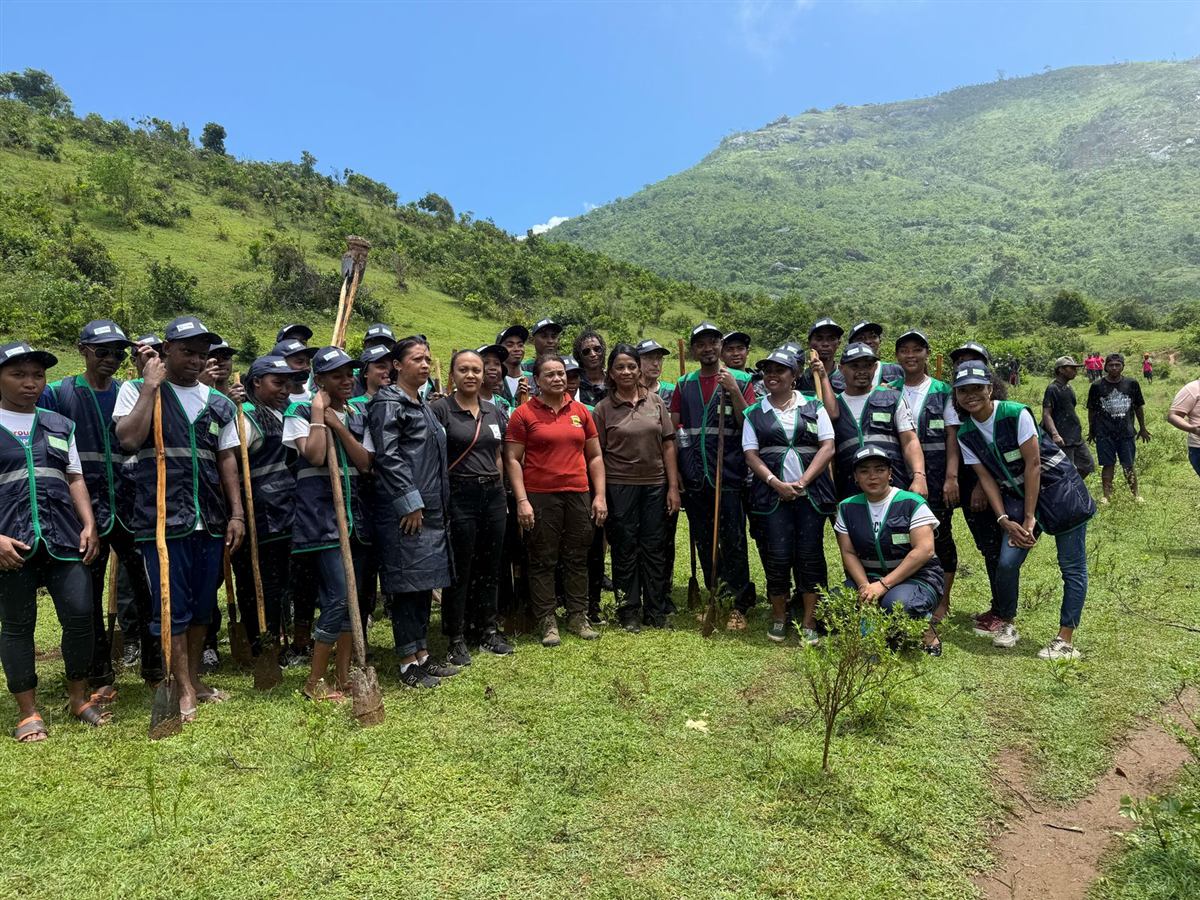
Knowledge returns digitally, under national authority. The record of a country's flora, assembled, reconciled and analysable, is returned in digital form to be held under the authority of the nation it describes. For Madagascar that means confronting the custody gap directly: the 13,685 recorded plant names, and the 1,656 endemics whose only specimens sit abroad, brought together where the country's own scientists, students and decision-makers can use them.
Benefits are designed to outlast agreements. Training, co-authorship, equipment that stays, careers that continue, institutions that strengthen: the non-monetary half of the Nagoya Annex, taken as the main event rather than the garnish. Capacity-building in practice is the subject of a companion article.
The test that matters
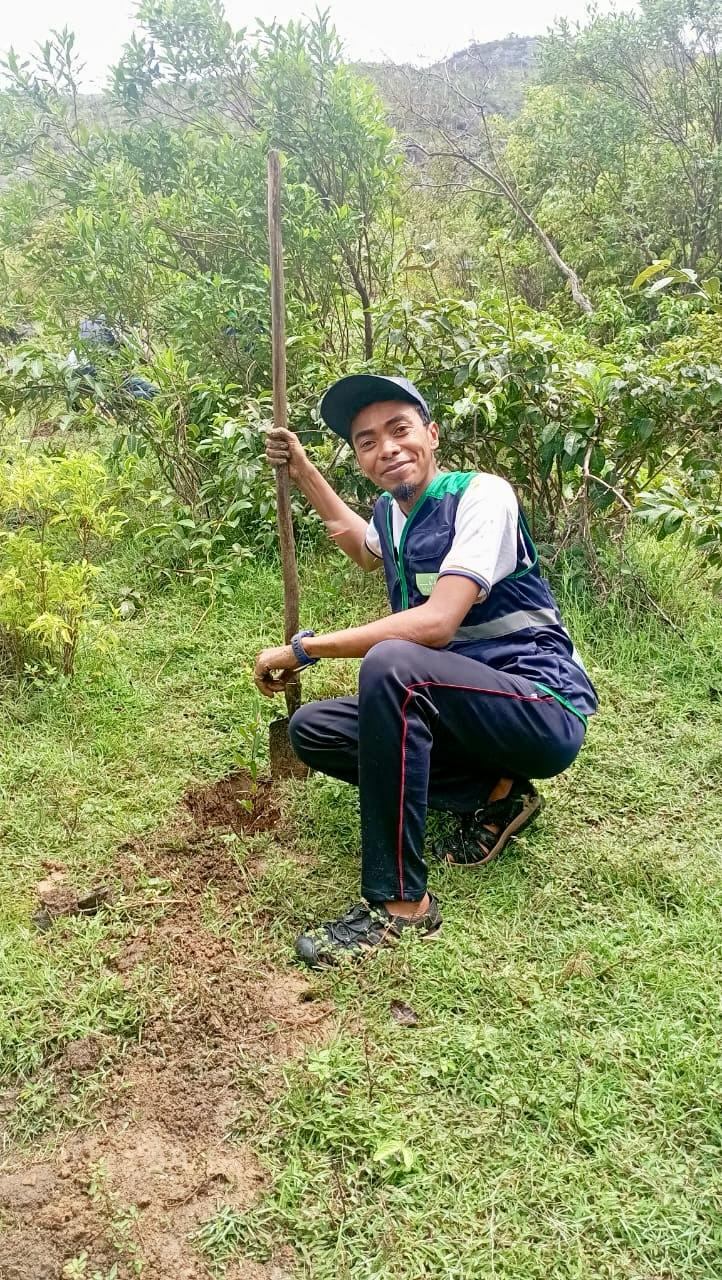
There is a simple way to audit any benefit-sharing arrangement, and it is not to read the recitals. Come back in twenty years and ask: what is still here? If the answer is a payment long spent and a folder of correspondence, the arrangement transferred money. If the answer is a generation of scientists trained, a national dataset in national hands, laboratories that answer their own government's questions, and communities that were asked first and paid attention to afterwards, the arrangement transferred capability. The periwinkle fortune of the 1960s left Madagascar neither. The point of everything built since Rio, and the point of doing this work by consent now, is that the next discovery of that size leaves both. Decode:Protect.
Common questions
What counts as a benefit under the Nagoya Protocol?
The Protocol's Annex lists ten monetary benefit types, including access fees, up-front and milestone payments, royalties and research funding, and seventeen non-monetary types, including sharing of research results, technology transfer, training, institutional capacity-building and access to databases. Which apply in a given case is settled in the mutually agreed terms negotiated between provider and user.
Why are non-monetary benefits often worth more than payments?
Most genetic resources never produce a commercial product, so royalty streams are rare and slow. Training, equipment, data return and institutional capacity arrive regardless of commercial outcome, and they compound: a country that gains the ability to study its own biodiversity keeps that ability for every future question, not just one contract.
What is the Cali Fund?
A multilateral fund launched in February 2025 under the Convention on Biological Diversity, into which companies that use digital sequence information commercially are expected to contribute. The COP16 decision that created it gives indicative rates of 1% of profits or 0.1% of revenue, and at least half of the fund's resources are allocated to the self-identified needs of indigenous peoples and local communities.
Does IsoGentiX publish a benefit-sharing rate?
No. The share of any value that enters a benefit-sharing arrangement is a matter for negotiation with the national authority of each country IsoGentiX works in, under that country's Nagoya framework. What IsoGentiX commits to in principle is consent before collection, work under national authority, digital return of knowledge, and benefits designed to build lasting in-country capability.
Sources and further reading
- Secretariat of the Convention on Biological Diversity. The Nagoya Protocol on Access and Benefit-sharing: text and Annex (monetary and non-monetary benefits). cbd.int. the Annex's lists of 10 monetary and 17 non-monetary benefit types.
- Secretariat of the Convention on Biological Diversity. The Nagoya Protocol on Access and Benefit-sharing (overview and factsheet). cbd.int/abs
- Duffin, J. (2000). Poisoning the spindle: serendipity and discovery of the anti-tumor properties of the Vinca alkaloids. Canadian Bulletin of Medical History, 17(1–2), 155–192. pubmed.ncbi.nlm.nih.gov. the periwinkle discovery as documented serendipity.
- Laird, S., Wynberg, R., Rourke, M., Humphries, F., Ruiz Muller, M. & Lawson, C. (2020). Rethink the expansion of access and benefit sharing. Science, 367(6483), 1200–1202. science.org. the case that royalty-chasing ABS has underdelivered and durable benefits lie in research capacity.
- Carroll, S.R. et al. (2020). The CARE Principles for Indigenous Data Governance. Data Science Journal, 19(1), 43. datascience.codata.org
- Convention on Biological Diversity, COP16 (2024). Decision 16/2: Policy and capacity-building measures and the multilateral mechanism for benefit-sharing from the use of digital sequence information on genetic resources. cbd.int. establishes the Cali Fund and its indicative contribution rates.
- Convention on Biological Diversity (2025). The Cali Fund launches in the margins of the resumed session of COP16. cbd.int. launch, Rome, February 2025; at least 50% for indigenous peoples and local communities.
- Razafindraibe, M. et al. (2013). Medicinal plants used by women from Agnalazaha littoral forest (southeastern Madagascar). Journal of Ethnobiology and Ethnomedicine, 9, 73. ethnobiomed.biomedcentral.com
- Rakotoarivelo, N. et al. (2015). Medicinal plants used to treat the most frequent diseases encountered in Ambalabe rural community, eastern Madagascar. Journal of Ethnobiology and Ethnomedicine, 11, 68. ethnobiomed.biomedcentral.com
- Antonelli, A. et al. (2022). Madagascar's extraordinary biodiversity: evolution, distribution, and use. Science, 378(6623), eabf0869. science.org. includes the modern case for equitable research partnerships in Madagascar.