Building capacity in Madagascar
A payment is spent once. The benefit that outlasts every cheque is people and institutions: Malagasy botanists, data scientists, laboratories and national databases able to study the island's flora on their own terms. Here is why capacity is the deepest form of benefit-sharing, and how it is being built.
- 1,656 Madagascar endemics have a preserved specimen somewhere in the world but none in any Madagascar institution, and 537 endemics are known from a single specimen anywhere on Earth (IsoGentiX dataset).
- An estimated 40 to 50 percent of the ~300,000 collections ever made in Madagascar are available only at institutions in Europe and North America; the most comprehensive single collection is in Paris (Vorontsova et al., 2021).
- In 2022 Patrice Antilahimena became the first Malagasy botanist to pass 10,000 numbered field collections (Missouri Botanical Garden, 2022).
- Madagascar hosts the Missouri Botanical Garden's largest international research programme, with more than 200 local staff; Kew's Madagascar Conservation Centre is likewise a predominantly Malagasy team (MBG, 2023; RBG Kew).
- The Nagoya Protocol treats capacity building and technology transfer as core, non-monetary forms of benefit-sharing (CBD, Nagoya Protocol, Articles 22 and 23).
- Multiple plant species now carry the names of Malagasy collectors, including Capurodendron antilahimenae and Dalbergia razakamalalae.
There is a question that cuts through most debates about biodiversity and fairness, and it is worth asking of every project, agreement and press release: when this is over, what can the country do that it could not do before? Money matters, and the case for fair benefit-sharing is made elsewhere in this Knowledge Base. But a payment, however fair, can leave a country no more able to study its own flora than it was the day before. Skill cannot be spent. An institution does not run out. A trained botanist trains others. That is why the benefit that outlasts every payment is capacity, and why building it in Madagascar is not charity but the correction of a very old imbalance.
Where the record lives
Start with an uncomfortable fact. A great part of the scientific record of Madagascar's flora, assembled over more than two centuries, does not live in Madagascar. Researchers who traced the fate of the island's collections estimate that Madagascar's own two largest herbaria hold material of only 50 to 60 percent of the roughly 300,000 plant collections ever made there; the remainder, some 40 to 50 percent, is available only at institutions in Europe and North America (Vorontsova et al., 2021). The most comprehensive collection of the island's plants is held at the Paris herbarium, and for the grasses, the group those authors examined in detail, the national herbarium at Tsimbazaza in Antananarivo holds just 17 percent of the world's collections.
The IsoGentiX dataset puts hard edges on what that means for the endemic flora as a whole. Of Madagascar's endemic plant species, 1,656 have a preserved specimen somewhere in the world but none in any institution inside the country. A further 537 endemics are known from a single specimen anywhere on Earth, and of those single specimens, 332 sit in Paris while only 38 are at Tsimbazaza. For those species, a Malagasy botanist who wants to examine the only physical evidence that the plant exists must apply for a visa, fund a flight to Europe, and hope the sheet can be found.
Custody figures are computed from the IsoGentiX Flora dataset (reconciled to the WCVP backbone). Collection and staffing figures: Missouri Botanical Garden (2022, 2023). How the figures update →
None of this happened by accident, and little of it happened in bad faith by today's standards. For most of the collecting era there was no national herbarium to deposit in, and the institutions that did the collecting also did the preserving, often to a very high standard. The Paris collections survived wars and a century of humidity that would have destroyed unprotected sheets. But the effect, whatever the intent, is that the deepest expertise in Madagascar's plants grew up around the specimens, which is to say, abroad. Generations of taxonomists learned the flora in London, Paris and St Louis because that is where the flora, pressed and labelled, could actually be seen. Knowledge follows the record, and the record left.
Knowledge follows the record. For two centuries the record of Madagascar's flora has lived abroad. Capacity building is the work of bringing the knowledge home.
What capacity actually means
Capacity building is a phrase that has been worn smooth by overuse, so it is worth being concrete. In the context of a national flora it decomposes into a handful of specific, checkable things.
| Dimension | What it looks like | What it changes |
|---|---|---|
| People | Training Malagasy botanists, technicians, parataxonomists and data scientists, in the field, the lab and the archive | Expertise lives in the country and reproduces itself |
| Equipment | Herbarium cabinets, dryers, GPS units, imaging rigs, sequencing access, reliable computing | Work that once required a foreign lab can be done at home |
| The record | Digital repatriation: specimen images, label data and localities from overseas herbaria, returned in usable form | A student in Antananarivo can study a type specimen held in Paris |
| Institutions | National databases and collections run under national authority, with stable funding and careers | The knowledge has a permanent home that does not depend on any one project |
| Credit | Co-authorship and naming, so Malagasy researchers are partners in the science, not providers of material | Careers, reputations and the incentive to stay in the field |
Each row matters because each has failed somewhere before. Projects have trained people and then left them without equipment. Donors have shipped equipment that no one was trained to maintain. Databases have been built on project funding and gone dark when the project ended. The lesson of forty years of conservation investment in Madagascar is that the rows only work together: people, tools, data and institutions, with credit flowing to the people doing the work. The Nagoya Protocol recognises this explicitly. Alongside monetary benefit-sharing, its Articles 22 and 23 commit parties to build the capacity of provider countries and to transfer technology to them, not as a courtesy but as part of the bargain of access itself (CBD, Nagoya Protocol).
The rise of the Malagasy collector
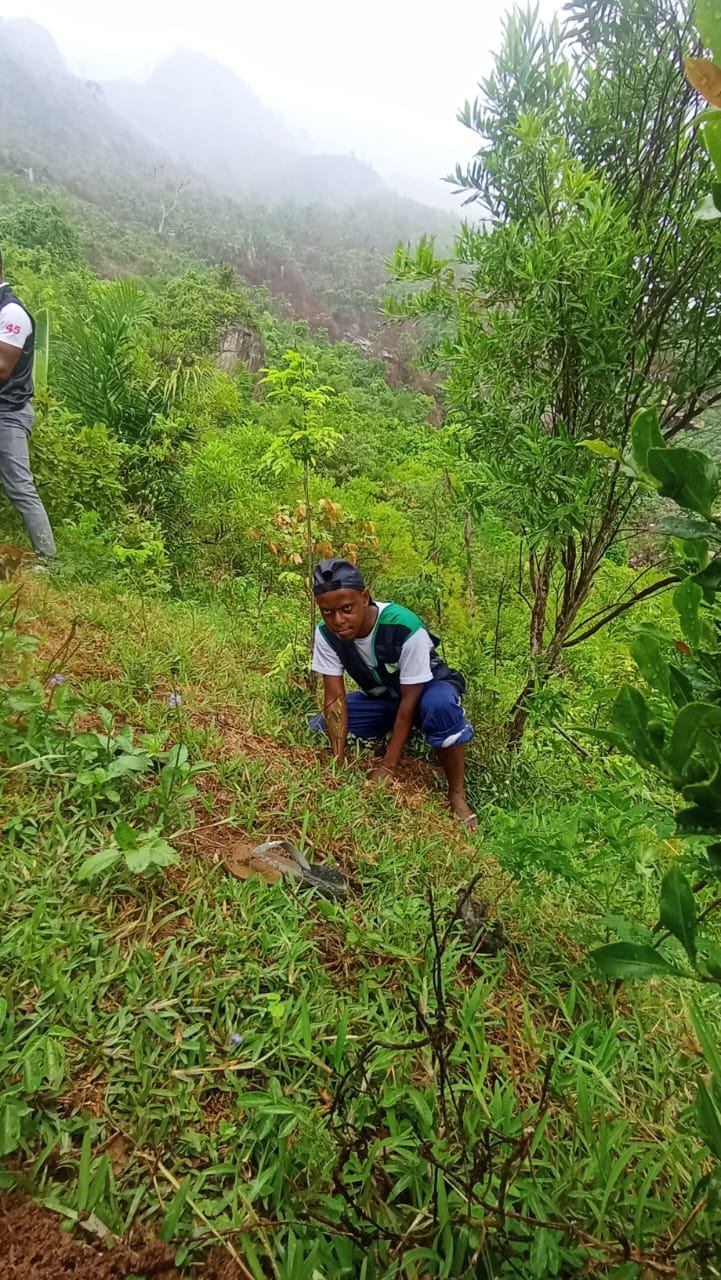
The clearest sign that capacity building works is that the most productive plant collectors in Madagascar today are Malagasy. That is a reversal of the whole colonial pattern, and it did not happen by itself. The Missouri Botanical Garden has run a research programme in Madagascar since the 1980s, building on field work that began in the 1970s; it is now the Garden's largest international programme, with more than 200 local staff working in botany, conservation and the support roles around them (MBG, 2023). Kew's Madagascar Conservation Centre in Antananarivo, with teams in Ambanja, Bongolava, Morondava and Itremo, is likewise built around Malagasy botanists with deep field knowledge of the island's flora (RBG Kew).
Out of those programmes have come careers that now belong to the history of botany. Patrice Antilahimena joined the Missouri Botanical Garden's Madagascar programme in the 1990s and in 2022 became the first Malagasy botanist to pass 10,000 numbered field collections, a milestone very few botanists of any nationality ever reach (MBG, 2022). His colleague Richard Razakamalala is among the most prolific collectors in the country's history, with thousands of numbered collections cited across the taxonomic literature and a string of new species to his name as collector and co-author, including a new wild relative of the rosy periwinkle, Catharanthus makayensis, described in 2015 from the Makay massif.
Taxonomy has begun to repay the debt in its own currency: names. Multiple plant species now carry the epithet antilahimenae, among them Capurodendron antilahimenae, Psychotria antilahimenae and Plukenetia antilahimenae. Razakamalala has, among others, Eugenia razakamalalae (Snow et al., 2015) and the rosewood Dalbergia razakamalalae (Crameri et al., 2022). When a species is named for the Malagasy botanist who found it, rather than for a distant patron, something has genuinely changed in who owns the science.
Parataxonomists and the communities around the forest
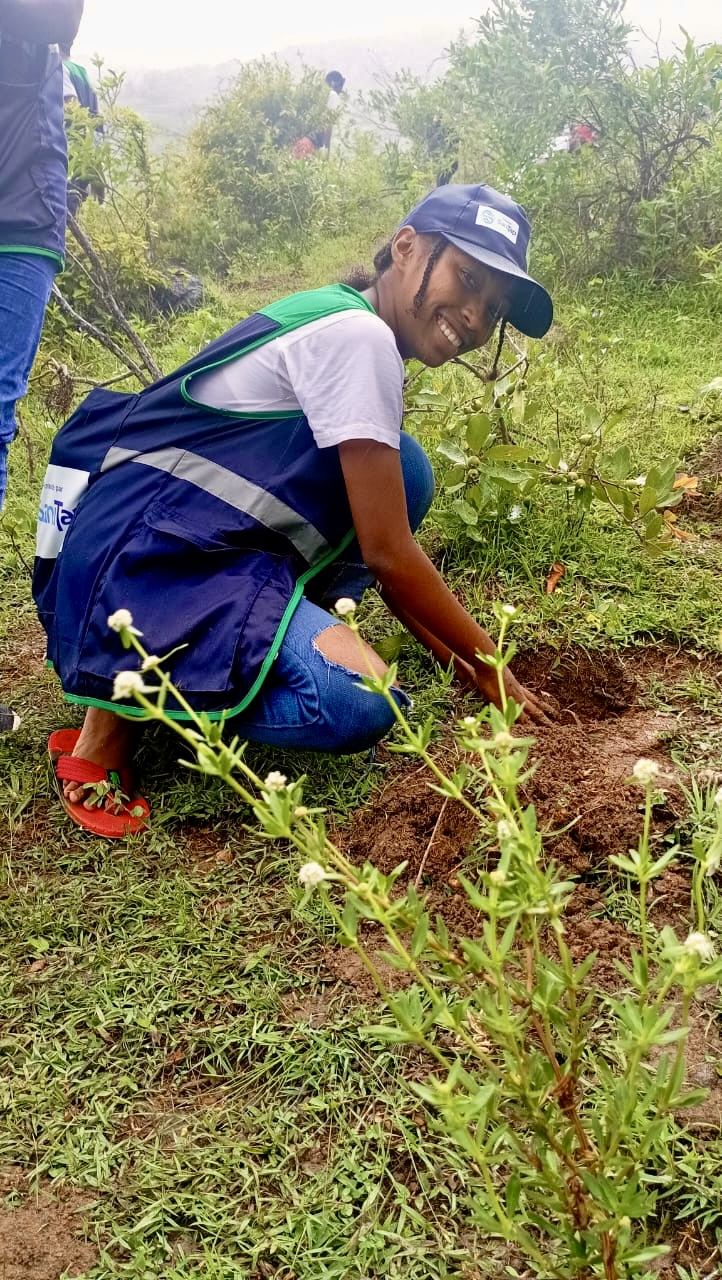
Professional botanists are one layer of capacity. Another, just as important, is the layer between the research station and the village: parataxonomists, local guides, nursery workers and community patrol members who are trained to recognise, record and propagate the plants of their own forests. The Missouri Botanical Garden's conservation sites and Kew's regional teams both depend on locally recruited staff of this kind, and much of what science knows about the uses of Malagasy plants rests on the knowledge of rural communities in the first place. Ethnobotanical studies from Agnalazaha in the southeast and Ambalabe in the east have documented dozens to hundreds of medicinal plant species in active local use, knowledge held largely by women and elders and transmitted orally (Razafindraibe et al., 2013; Rakotoarivelo et al., 2015).
Working with that knowledge carries obligations. The consent principle IsoGentiX applies is simple: communities agree to any collection before it happens, understanding what it involves, in their own language and on their own terms. It comes first, always. The same logic extends to data. The CARE Principles for Indigenous Data Governance argue that data about communities and their knowledge should return collective benefit, be subject to the community's authority, and be handled responsibly and ethically (Carroll et al., 2020). Capacity building at the community level means training and paying local people as skilled contributors, and it also means making sure the resulting record does not simply leave, as the specimens once did. The full picture of how consent works is set out in the article on free, prior and informed consent.
From dependence to capability
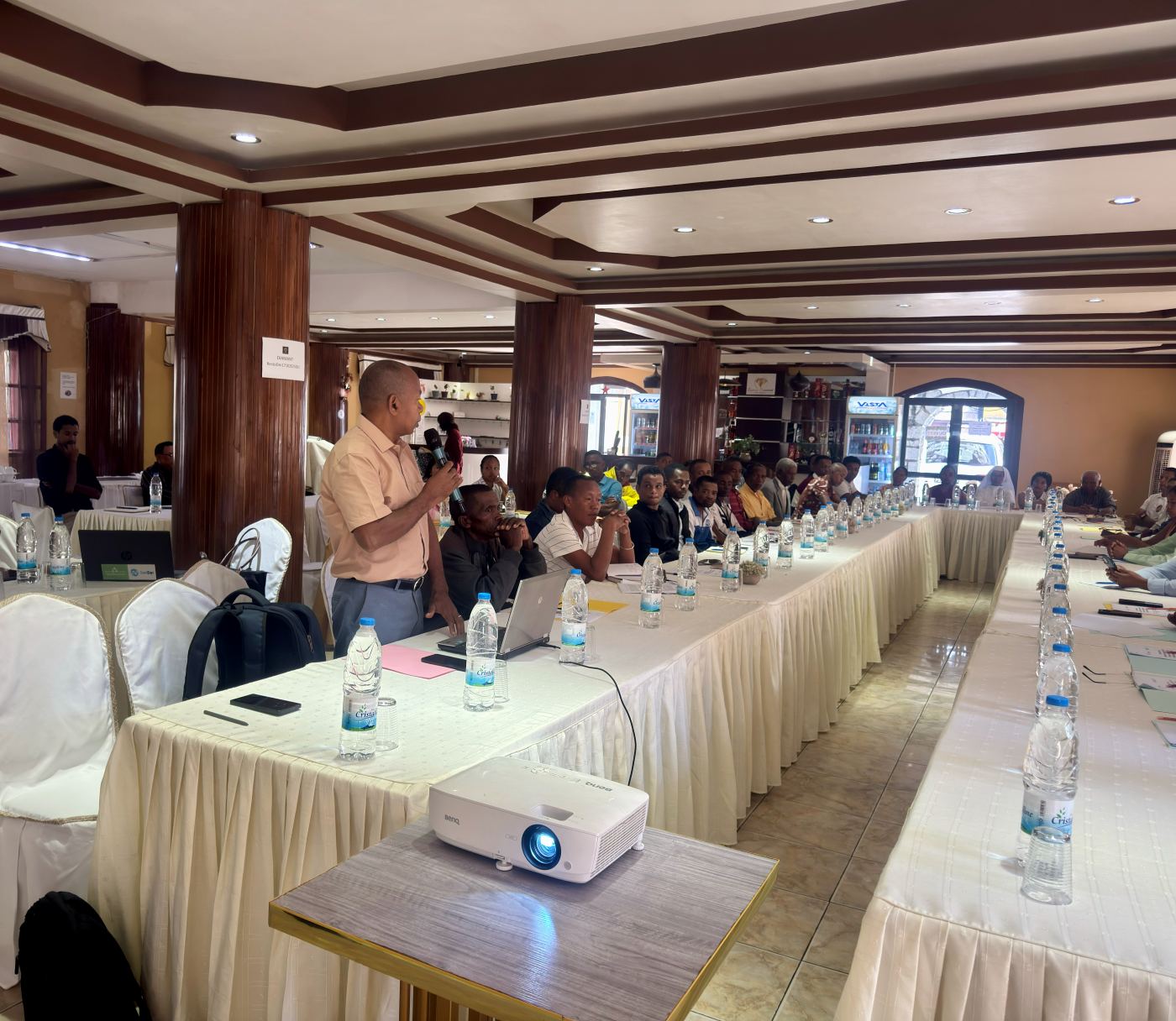
Put the pieces together and a sequence emerges. It is the path any country takes from being a source of specimens to being a centre of expertise in its own flora, and Madagascar is partway along it.
Step two is where IsoGentiX has placed its effort. The physical sheets in Paris and St Louis are not going to move, and arguably should not: they are safe, curated and embedded in working research collections. What can move is everything the sheets know. A digitised specimen carries its image, its name, its collector, its date and its place, and once those are assembled into a single georeferenced database, a researcher in Antananarivo can do with the record most of what once required an air fare. IsoGentiX gathers that record, reconciles it against Kew's World Checklist backbone, adds what modern data science can extract from it, and returns it digitally under national authority, so that the institutions of Madagascar hold and govern the assembled knowledge of their own flora. The mission in full: we gather the plant world's data, decode it into knowledge, and enable action that protects our environment and serves its people.
The best test of any benefit-sharing arrangement is not the size of the payment but the answer to the opening question: what can the country do afterwards that it could not do before? Can a Malagasy masters student examine the type specimen of an endemic species without leaving the country? Can a national agency query its own flora when a mining permit is decided? Capacity is the benefit that compounds. Everything else depreciates.
There is also a hard scientific reason to hurry, beyond fairness. Madagascar's flora is disappearing faster than it is being documented, and the researchers who quantified the knowledge gap warned that extinctions are going unrecorded precisely because the record is thin and far away (Vorontsova et al., 2021; Antonelli et al., 2022). Every year in which the island's own institutions are better equipped to find, name and monitor plants is a year in which fewer species vanish unnoticed. Capacity building is usually argued as ethics. It is also simply the fastest way to get the science done, by the people closest to the plants.
Common questions
Why does it matter where Madagascar's plant specimens are held?
A specimen is the physical evidence that a species exists, and often the only key to its identity. Of the roughly 300,000 collections ever made in Madagascar, an estimated 40 to 50 percent are available only at institutions in Europe and North America, and 1,656 endemic species have a preserved specimen somewhere in the world but none in any Madagascar institution. A Malagasy botanist who wants to study those species must travel abroad or work from photographs, which slows science and keeps expertise offshore.
What does capacity building mean in practice?
Concrete things: training Malagasy botanists, technicians and data scientists; equipment and laboratory access in the country; co-authorship so Malagasy researchers are credited partners; digital repatriation of specimen records held overseas; and national databases run under national authority, so the knowledge has a permanent home in Madagascar.
Who are Antilahimena and Razakamalala?
Patrice Antilahimena and Richard Razakamalala are Malagasy field botanists with the Missouri Botanical Garden's Madagascar programme. In 2022 Antilahimena became the first Malagasy botanist to pass 10,000 numbered field collections, and both men have multiple plant species named in their honour, including Capurodendron antilahimenae and Dalbergia razakamalalae.
What is digital repatriation?
Returning the information held in overseas collections to the country of origin in digital form: high-resolution specimen images, label data, localities and names, assembled into databases that national institutions control. The physical sheets stay where they are curated; the knowledge they carry comes home.
Sources and further reading
- Vorontsova, M.S. et al. (2021). Inequality in plant diversity knowledge and unrecorded plant extinctions: an example from the grasses of Madagascar. Plants, People, Planet, 3(1), 45–60. onlinelibrary.wiley.com, source for the custody figures on the ~300,000 collections (an estimated 40–50% available only at institutions abroad) and the case that thin, distant records let extinctions go unrecorded.
- Missouri Botanical Garden (2022). Making the Mark. Discover + Share. discoverandshare.org, Patrice Antilahimena's 10,000th collection, the first Malagasy botanist to reach the milestone.
- Missouri Botanical Garden (2023). Meet the Missouri Botanical Garden Madagascar Team. Discover + Share. discoverandshare.org, the Garden's largest international research programme, more than 200 local staff.
- Royal Botanic Gardens, Kew. Kew Madagascar Conservation Centre. kew.org, a predominantly Malagasy team based in Antananarivo with regional teams in Ambanja, Bongolava, Morondava and Itremo.
- Carroll, S.R. et al. (2020). The CARE Principles for Indigenous Data Governance. Data Science Journal, 19(1), 43. datascience.codata.org
- Secretariat of the Convention on Biological Diversity. The Nagoya Protocol on Access and Benefit-sharing. cbd.int/abs, Articles 22 and 23 address capacity building and technology transfer as elements of benefit-sharing.
- Snow, N., Callmander, M.W. & Phillipson, P.B. (2015). Studies of Malagasy Eugenia – IV: Seventeen new endemic species, a new combination, and three lectotypifications. PhytoKeys, 49, 59–121. phytokeys.pensoft.net, describes Eugenia razakamalalae, the species named for Richard Razakamalala.
- Crameri, S., Phillipson, P.B., Rakotonirina, N., Wilding, N., Andriamiarisoa, R.L., Lowry, P.P. II & Widmer, A. (2022). Taxonomic Studies on Malagasy Dalbergia (Fabaceae). III. Two New Species from Southeastern Madagascar and an Emended Description of the Rosewood Species Dalbergia maritima. Systematic Botany, 47(2). bioone.org, describes Dalbergia razakamalalae.
- Razafindraibe, M. et al. (2013). Medicinal plants used by women from Agnalazaha littoral forest (southeastern Madagascar). Journal of Ethnobiology and Ethnomedicine, 9, 73. ethnobiomed.biomedcentral.com
- Rakotoarivelo, N. et al. (2015). Medicinal plants used to treat the most frequent diseases encountered in Ambalabe rural community, eastern Madagascar. Journal of Ethnobiology and Ethnomedicine, 11, 68. ethnobiomed.biomedcentral.com
- Antonelli, A. et al. (2022). Madagascar's extraordinary biodiversity: evolution, distribution, and use. Science, 378(6623), eabf0869. science.org