Free, prior and informed consent
Communities agree to any collection before it happens, understanding what it involves, in their own language and on their own terms. It comes first, always. Here is where that principle comes from, what each word demands, and what it looks like in a Malagasy village.
- FPIC entered international law through ILO Convention 169 (adopted 1989, in force 1991), the binding treaty on Indigenous and tribal peoples' rights (ILO/OHCHR).
- The UN Declaration on the Rights of Indigenous Peoples (2007) names free, prior and informed consent explicitly, in Articles 10, 19, 29 and 32 (UN General Assembly, 2007).
- The Nagoya Protocol carries consent into biodiversity law: access involving Indigenous peoples' and local communities' genetic resources or traditional knowledge requires their prior informed consent or approval and involvement (Articles 6.2 and 7).
- Each word is a test: free (no coercion), prior (before anything happens), informed (genuinely understood, in the community's own language), consent (a real right to say no).
- FAO's practitioner manual (2016) sets out FPIC as a six-step process, from identifying rights-holders to participatory review after the work.
- The CARE Principles (Carroll et al., 2020) extend the same logic to the data that collection produces.
Strip away the acronym and FPIC is a short sentence: communities agree to any collection before it happens, understanding what it involves, in their own language and on their own terms. It comes first, always. Everything else in this article, the treaties, the declarations, the step-by-step process, is machinery for making that sentence true in practice, and for making sure it cannot be quietly hollowed out.
The principle matters to botany because plants do not grow in a legal vacuum. A medicinal shrub on a hillside in south-eastern Madagascar stands on land a community has farmed, grazed and managed for generations, and the knowledge of what that shrub treats, how it is prepared and when it may be cut often lives in that community and nowhere else. Ethnobotanical surveys in Malagasy villages routinely document scores or hundreds of medicinal species in active local use (Razafindraibe et al., 2013; Rakotoarivelo et al., 2015). To collect the plant, or record the knowledge, without asking the people who hold both is not a shortcut. It is a taking.
Where the principle comes from
FPIC did not begin in conservation. It began in Indigenous rights law, as a response to a long history of decisions made about Indigenous peoples' lands and lives without them. The first binding instrument was the International Labour Organization's Indigenous and Tribal Peoples Convention, No. 169, adopted in 1989 and in force from 1991. It replaced an older convention built on the assumption that Indigenous peoples would eventually assimilate, and put in its place a duty of good-faith consultation, "with the objective of achieving agreement or consent", together with recognised rights to land, natural resources and self-defined development. Only around two dozen states have ratified it, most of them in Latin America, but its influence runs far beyond its signatories.
The decisive moment came on 13 September 2007, when the UN General Assembly adopted the Declaration on the Rights of Indigenous Peoples, by an overwhelming majority with only four votes against, and all four of those states later reversed their positions. UNDRIP names free, prior and informed consent explicitly and repeatedly: before relocation (Article 10), before legislative or administrative measures that affect Indigenous peoples (Article 19), before hazardous materials are stored on their lands (Article 29), and before projects affecting their lands, territories and resources, particularly the development of natural resources (Article 32). A declaration is not a treaty, but UNDRIP is the most widely endorsed statement of Indigenous rights ever made, and FPIC is one of its load-bearing ideas.
From there the principle moved into environmental practice. The Convention on Biological Diversity had already recognised, in its Article 8(j), the value of the knowledge held by Indigenous peoples and local communities. The Nagoya Protocol, agreed in 2010 and in force from October 2014, made the connection operational: where communities have an established right over genetic resources, access requires their prior informed consent or their approval and involvement (Article 6.2), and access to traditional knowledge associated with genetic resources requires the same from the communities that hold it (Article 7), with national law giving these duties their teeth. Development institutions built working methods on the same foundation: the UN-REDD Programme published FPIC guidelines for forest projects in 2013, and FAO's 2016 manual for project practitioners distilled the process into six practical steps. What began as a human-rights claim is now standard machinery in conservation, development and access and benefit-sharing alike.
Dates: ILO (Convention No. 169, in force 1991); UN General Assembly (13 September 2007); CBD Secretariat (Nagoya Protocol, in force 12 October 2014); FAO (2016). Full references below.
Four words, four tests
The strength of FPIC is that each of its words closes a loophole. Treat them as four tests that every consent process either passes or fails.
Free means without coercion, intimidation, manipulation or inducement. Consent extracted by pressure is not consent, and neither is consent bought with gifts timed to the decision. It also means free in a quieter sense: the community sets the pace and the venue, and can pause the process to deliberate among themselves, without the visitors in the room.
Prior means before anything happens. Before a specimen is cut, before a photograph of a sacred site is taken, before a use of traditional knowledge is recorded. Consent sought after the fact is not consent; it is an apology with paperwork. Prior also implies time: enough of it for the community to consult its own members, including those who are absent when the visitors first arrive.
Informed means genuinely understood, not merely disclosed. The FAO manual is blunt on this point: information must reach people in a language and a form they can actually follow. In rural Madagascar that means Malagasy or the regional dialect, spoken aloud as well as written, with plain illustrated materials, because a technical document in French or English handed to a village assembly informs nobody. Informed covers the whole picture: what will be collected, by whom, what will happen to it, what data will be created, what benefits may or may not follow, and what the risks are.
Consent means a real decision with a real right to say no. This is the test that separates FPIC from consultation. A consultation can be listened to and overridden; consent cannot. A community may agree, refuse, agree with conditions, or agree and later withdraw. If "no" is not a possible outcome, the other three words are decoration.
A form signed without understanding is not consent. If "no" is not a possible outcome, the other three words are decoration.
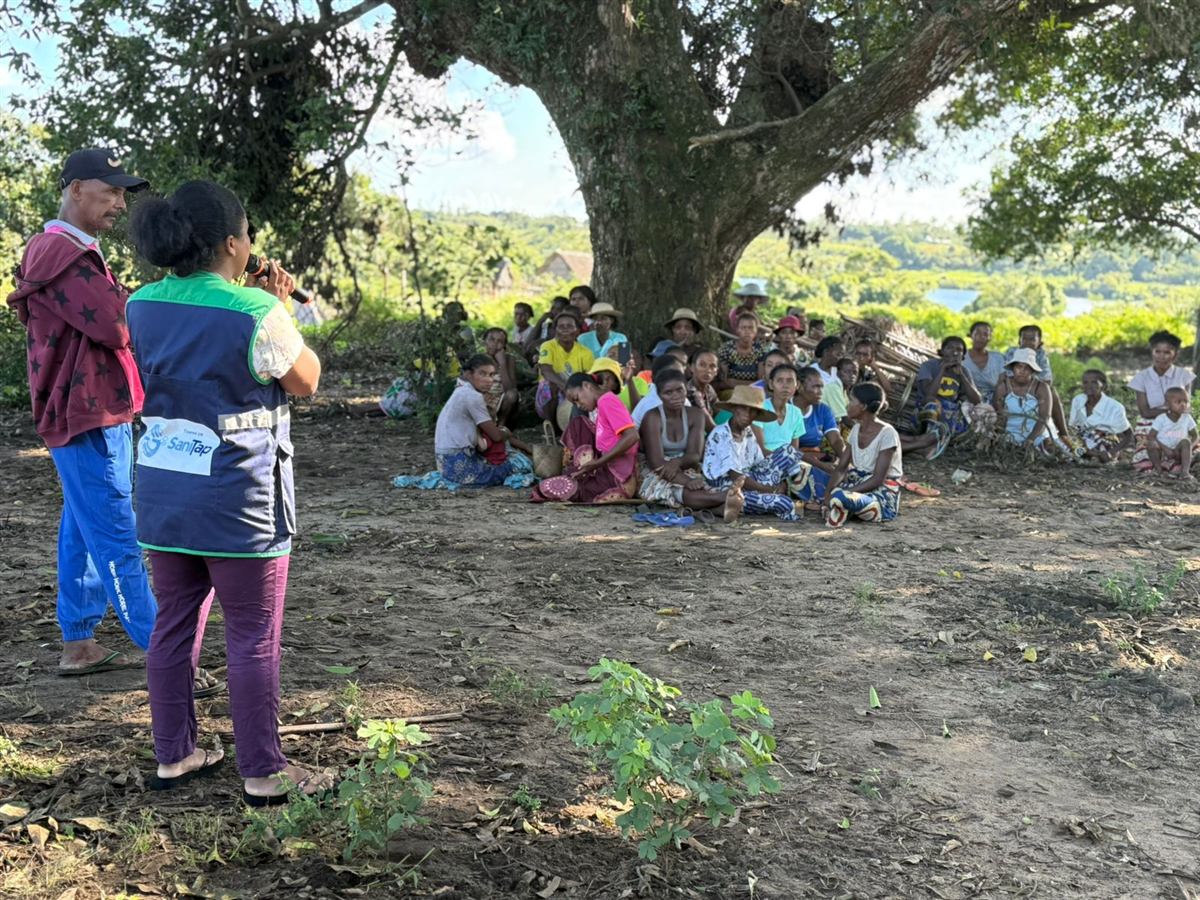
How it works in Madagascar
Principles travel; process is local. In Madagascar the natural unit of decision is old and well defined. The fokonolona, the community assembly, has governed village affairs for centuries, and its modern administrative shell, the fokontany, is the smallest unit of the Malagasy state. Communities regulate shared life through dina, collective conventions with real force, and daily conduct is shaped by fady, the system of taboos that can protect a forest grove, a burial site or a species absolutely, because some things are simply not done. Any consent process that ignores this architecture is not consulting the community; it is consulting whoever happened to be standing nearest the road.
So the work starts long before a field team arrives, with listening. Which communities have ties to the area? Who genuinely speaks for them, and who is left out when only the loudest speak? Elected officials matter, the mayor of the commune and the president of the fokontany, but so do the elders, the women's associations, and the ombiasy, the traditional healers and diviners who hold much of the plant knowledge in question and whose standing in the community no outsider can confer or replace. And it must be learned early what is sensitive: which forests are sacred, which places are fady, which knowledge is not for sharing at any price.
Then comes conversation, in Malagasy or the local dialect, with plain and illustrated materials, across as many meetings as it takes. The goal is real understanding, not a signature. Questions are answered honestly, including the uncomfortable ones about who benefits and what happens if a plant proves valuable. The community then decides through its own institutions, an assembly vote, a council of elders, whatever is right for that place, and the decision is recorded properly, including any conditions attached. An independent ethics process, with Malagasy academic and research representation, reviews how consent was obtained before collection begins in any new area. And a "no" is accepted as a complete answer. That is the point of asking.
Condensed from the six steps of FAO's manual for project practitioners (2016) and the UN-REDD Programme guidelines (2013).
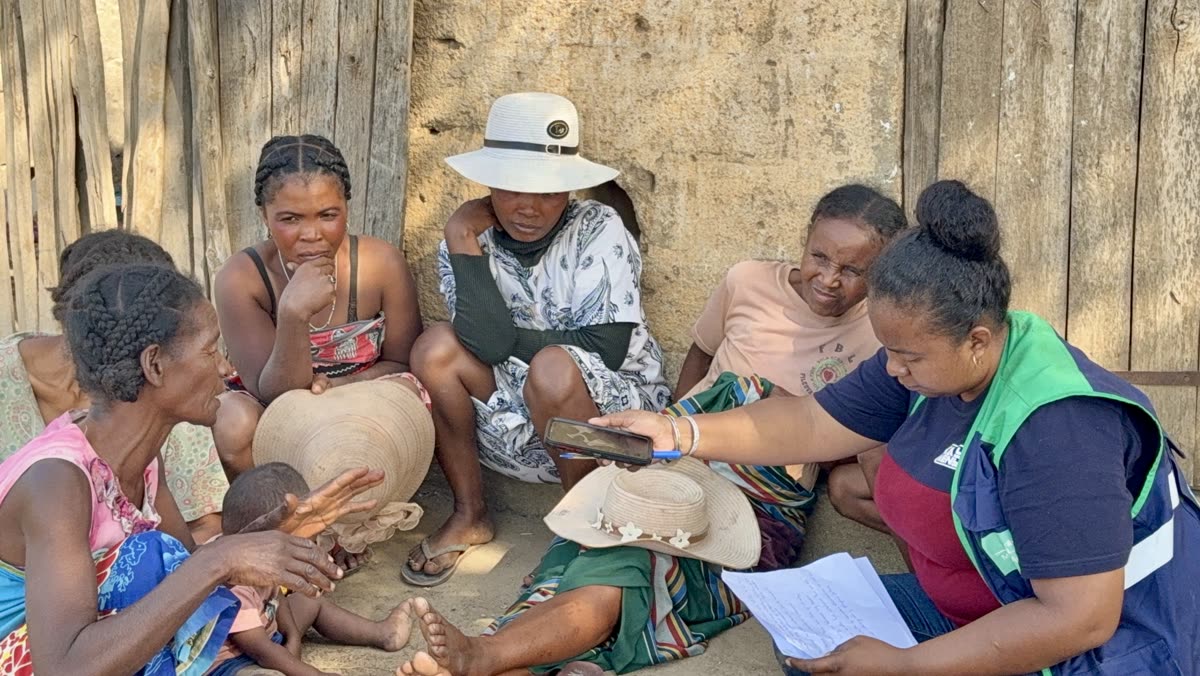
Consent at two levels: community and state
FPIC is sometimes confused with the permits a state issues under the Nagoya Protocol. They are different consents, at different levels, and both are needed. The state, as sovereign over its genetic resources, grants access at national level through its competent authority, with permits and mutually agreed terms; that framework is set out in the article on the Nagoya Protocol. FPIC operates below and before that: it is the agreement of the particular people whose land holds the plants and whose knowledge often guides the science. A national permit does not silence a village, and a village's welcome does not replace a permit. IsoGentiX works inside both, by consent under national authority, because respecting sovereignty and respecting communities are the same discipline applied at two scales.
Ask first. Explain honestly. Take no for an answer. Keep the relationship afterwards. That is what FPIC means in practice.
After the field: consent and the data
Collection is no longer the end of the story, because the sample becomes data, and data travels further and lives longer than any specimen. A genome sequenced from one consented collection can be copied, reanalysed and recombined indefinitely. If consent stops at the forest edge, it stops too soon.
The CARE Principles for Indigenous Data Governance (Carroll et al., 2020) were written for exactly this gap. Where the open-data FAIR principles ask whether data can move, CARE asks whether it should, and on whose terms: Collective benefit, data should work for the communities it came from; Authority to control, communities have a say in how data about their lands and knowledge is governed; Responsibility, those who hold the data owe something back; and Ethics, the community's rights and wellbeing come first at every stage. For IsoGentiX this is not an abstraction. The digital record of a flora is returned under national authority, and knowledge that communities share is treated as theirs throughout its digital life, not merely at the moment of collection. What the resulting benefits look like is the subject of the companion article on fair benefit-sharing.
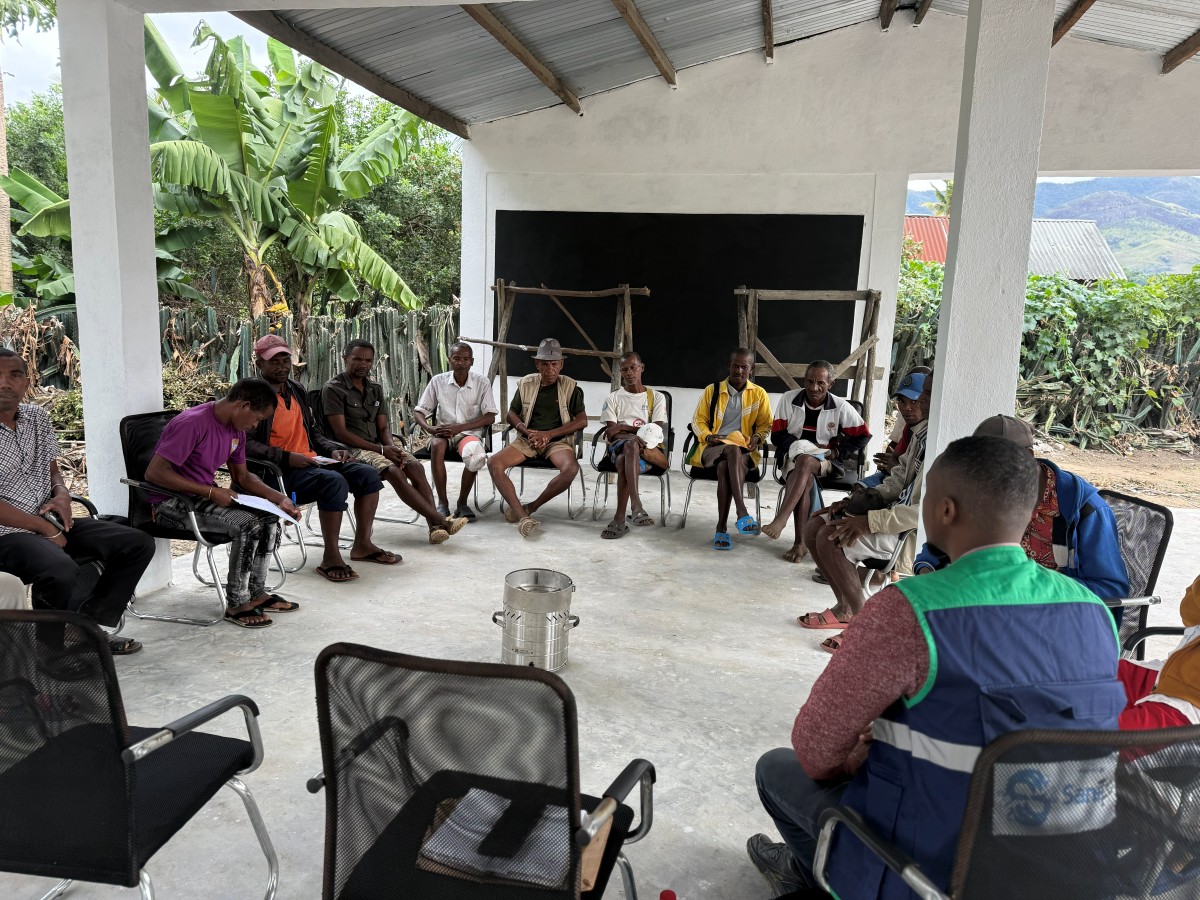
Why asking first is also good science
It is tempting to file FPIC under compliance, a hurdle before the real work. The field experience is the opposite. The consultations are where a team learns which forest is intact and which is exhausted, which plant the village actually uses for fever as opposed to the one in the literature, and which places may not be entered at all. The Malagasy ethnobotanical record was built exactly this way, village by village, with local agreement, and it is among the richest documentation of plant use anywhere (Razafindraibe et al., 2013; Rakotoarivelo et al., 2015). A community that has said yes, and meant it, is a partner for decades. A community that was bypassed is a closed door for everyone who comes after, including its own scientists. Consent is not the price of the knowledge. It is the beginning of it.
Common questions
What does FPIC stand for and what does it mean?
Free, prior and informed consent. A community agrees to an activity on its lands, or involving its knowledge, before that activity begins: freely, without pressure; before anything happens; with real understanding, in its own language; and with a genuine right to say no.
Is FPIC legally binding?
It depends on the instrument and the country. ILO Convention 169 (1989) binds the states that have ratified it. UNDRIP (2007) is a declaration rather than a treaty, but it is the most widely endorsed statement of the principle. The Nagoya Protocol (in force 2014) makes consent obligations part of binding access and benefit-sharing law where national legislation implements them.
What happens if a community says no?
Then the collection does not happen there. The right to refuse is what makes consent real; without it, consultation is only notification. A community can also consent with conditions, for example excluding sacred sites, or withdraw consent later.
How is FPIC different from a government permit?
A state grants access to genetic resources at national level under the Nagoya Protocol, through permits and mutually agreed terms. FPIC operates at community level: the agreement of the people whose land holds the plants and whose knowledge often guides the science. Ethical fieldwork needs both, and one can never substitute for the other.
Sources and further reading
- UN General Assembly (2007). United Nations Declaration on the Rights of Indigenous Peoples, adopted 13 September 2007. un.org, the declaration text; FPIC appears in Articles 10, 19, 29 and 32.
- OHCHR. UN Declaration on the Rights of Indigenous Peoples: background and adoption. ohchr.org
- International Labour Organization (1989). Indigenous and Tribal Peoples Convention, No. 169 (in force 5 September 1991). Text via OHCHR. ohchr.org, the binding treaty behind consultation and consent.
- FAO (2016). Free Prior and Informed Consent: an indigenous peoples' right and a good practice for local communities. Manual for project practitioners. fao.org, the six-step process this article condenses.
- UN-REDD Programme (2013). Guidelines on Free, Prior and Informed Consent. un-redd.org
- CBD Secretariat. The Nagoya Protocol on Access and Benefit-sharing (adopted 2010, in force 12 October 2014). cbd.int, Articles 6.2 and 7 on community consent for genetic resources and traditional knowledge.
- Carroll, S.R. et al. (2020). The CARE Principles for Indigenous Data Governance. Data Science Journal, 19(1), 43. datascience.codata.org
- Razafindraibe, M. et al. (2013). Medicinal plants used by women from Agnalazaha littoral forest (southeastern Madagascar). Journal of Ethnobiology and Ethnomedicine, 9, 73. ethnobiomed.biomedcentral.com
- Rakotoarivelo, N. et al. (2015). Medicinal plants used to treat the most frequent diseases encountered in Ambalabe rural community, eastern Madagascar. Journal of Ethnobiology and Ethnomedicine, 11, 68. ethnobiomed.biomedcentral.com