Madagascar's metal-rich soils
Ground so loaded with nickel and chromium that it poisons an ordinary crop. On Madagascar's ultramafic outcrops a few endemic specialists tolerate the metal, and some draw it into their leaves in quantities high enough to be called a green ore.
- Ultramafic (serpentine) soils weather from peridotite and serpentinite: high in magnesium, nickel and chromium, low in calcium, phosphorus and nitrogen (van der Ent et al., 2013).
- The chemistry is toxic to most plants, so these outcrops carry a distinct, often endemic flora found nowhere off the metal, a pattern called edaphic endemism.
- Nickel hyperaccumulators store more than 1,000 µg g⁻¹ nickel in their dry leaf tissue, about a thousand times a normal plant; roughly 450 to 500 species are known worldwide (Reeves et al., 2018).
- Madagascar's largest ultramafic outcrop is the Ambatovy complex on the eastern escarpment, a lateritic nickel and cobalt deposit that is also a working mine (Phillipson et al., 2010).
- Harvesting and burning hyperaccumulator biomass leaves a metal-rich ash, the basis of phytomining, or agromining (van der Ent et al., 2015).
Most of the soil chemistry a plant meets is a question of degree: a little more or less water, acid, nitrogen or phosphorus. Ultramafic soil is a different order of problem. It is rich in the wrong things and poor in the right ones, and the imbalance is severe enough that a field of wheat sown on it would fail. Yet these outcrops are not bare. They carry their own flora, much of it found on the metal and nowhere else, and a handful of those plants do something stranger still. They pull nickel out of the ground and pack it into their leaves at levels that would kill almost anything else. This is a story about a soil that most plants cannot use, and the few that have made a living from its poison.
What makes a soil ultramafic
Ultramafic rocks, peridotite and its altered form serpentinite, come from deep in the Earth's mantle. They are unusually low in silica and aluminium and unusually high in iron and magnesium, and they carry trace metals, chiefly nickel, chromium and cobalt, at concentrations far above ordinary crust. When these rocks weather, the soil inherits that signature. The result is a set of problems that ecologists group together as the "serpentine syndrome".
Three things make the ground hostile. First, the balance of nutrient cations is wrong: magnesium is abundant while calcium is scarce, and the low calcium-to-magnesium ratio disturbs the uptake and function of both. Second, the major plant nutrients, phosphorus, potassium and nitrogen, are in short supply, so even a plant that tolerates the metal is left hungry. Third, the trace metals themselves are toxic. Nickel in particular is freely available to roots and interferes with enzymes and membranes at concentrations that would never trouble a plant on granite or limestone (van der Ent et al., 2013; Garnica-Díaz et al., 2023). Add thin, easily eroded soils and, on tropical outcrops, heavy leaching, and the ground becomes a filter that only specialists pass.
Threshold and species totals follow van der Ent et al. (2013) and the global hyperaccumulator database of Reeves et al. (2018). The 1,000 µg g⁻¹ figure is the agreed leaf-nickel threshold for calling a plant a hyperaccumulator; some species run an order of magnitude higher.
Edaphic endemism: plants tied to the metal
Because so few plants can grow on ultramafic ground, an outcrop behaves like an island. Its flora is drawn from the small pool of species that tolerate the chemistry, and over time some of those diverge into forms restricted to the metal. Botanists call this edaphic endemism, endemism driven by soil rather than by climate or distance. It is the same island logic that shaped Madagascar's flora as a whole (set out in why Madagascar's flora is like nowhere else), and the same logic that isolates the plants of the limestone tsingy, but here the barrier is chemical.
Madagascar's ultramafic outcrops are scattered and small, and the flora on them is still thinly studied. The most surveyed is the Ambatovy complex on the eastern escarpment, a lateritic nickel and cobalt deposit at around 1,000 m that is now a major mine. The botanical inventory there recorded hundreds of woody species across the humid ultramafic forest, and singled out the plants restricted to the mine footprint as species of concern, the ones with most to lose from disturbance (Phillipson et al., 2010). Comparative work on tropical ultramafic ecosystems finds that Madagascar's outcrops share plant lineages with the ultramafic floras of Cuba and New Caledonia, a hint that similar chemistry has selected for similar families across the tropics (Garnica-Díaz et al., 2023).
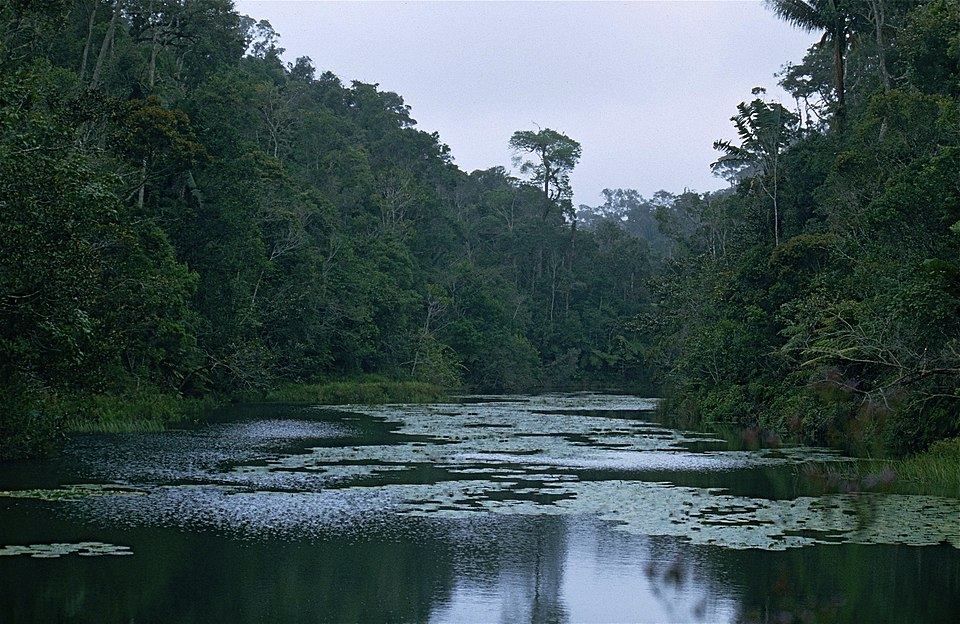
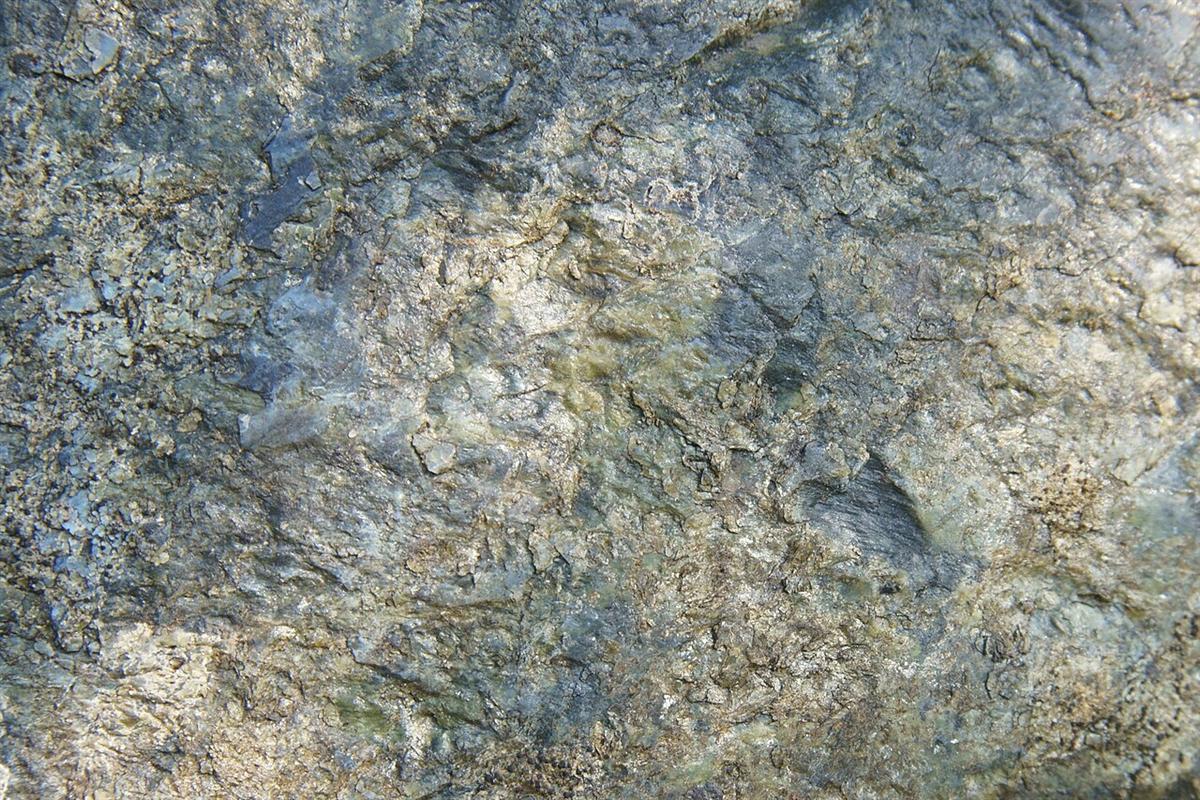
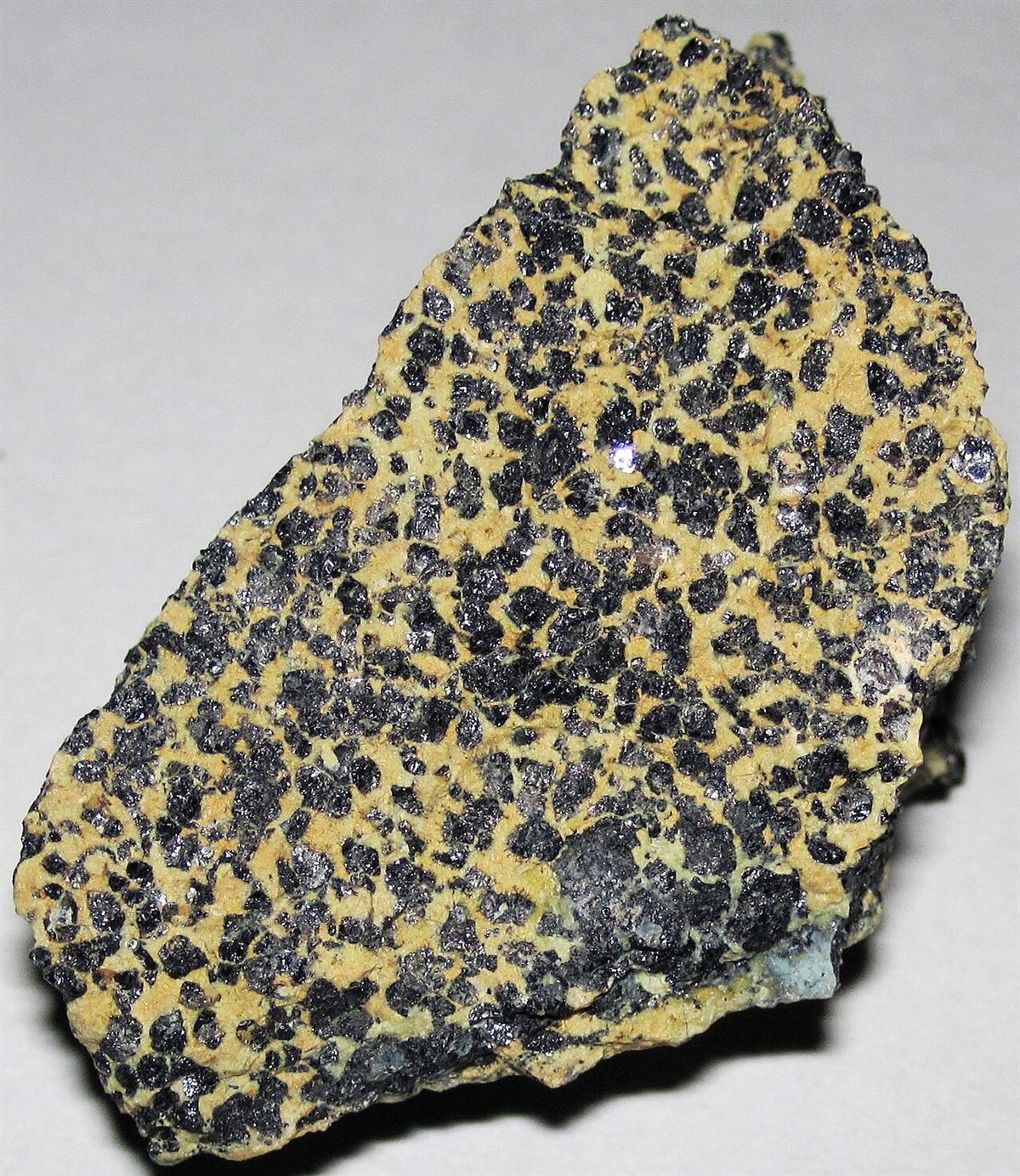
The soil is a filter. Almost nothing passes, and what does has had to solve a chemistry problem the rest of the plant kingdom never faces.
Hyperaccumulation: a leaf full of metal
Tolerating the metal is one thing. A small number of plants go much further and hoard it. A hyperaccumulator is defined by a threshold: for nickel, more than 1,000 micrograms per gram of dry leaf tissue, where an ordinary plant carries around one (van der Ent et al., 2013). That is roughly a thousandfold difference, and the extreme cases go higher again. The blue-green latex of the New Caledonian tree Pycnandra acuminata, the discovery that opened this whole field, runs to around a quarter nickel by dry weight, the highest concentration of the metal ever measured in living material (Jaffré et al., 1976; Jaffré et al., 2018).
None of this happens by accident. Moving that much nickel and surviving it takes an active, energy-hungry machinery. Roots have to take the metal up, load it into the transpiration stream, and carry it to the leaves, where it is bound by organic acids, chiefly citrate, malate and histidine, that keep it soluble but locked away from the enzymes it would otherwise poison. The bound metal is then parked in places where it does least harm, mostly the vacuoles of leaf epidermal cells (van der Ent et al., 2013; Garnica-Díaz et al., 2023). The plant is not passively soaking up nickel. It is running a transport and storage system built for the purpose.
Why a plant would build such a system is still argued. The best supported explanation is defence: a leaf loaded with nickel is poison to chewing insects and to many fungal and bacterial pathogens, which turns the soil's toxin into the plant's shield (this is the "elemental defence" hypothesis). Other ideas, not mutually exclusive, include tolerance of drought, interference with neighbouring plants, and simple disposal of a metal the roots cannot avoid taking up. Whatever the driver, the trait has evolved many times over, in unrelated families on ultramafic ground across the tropics and the Mediterranean, which is itself a sign of how strong the selection pressure on these soils must be.
Phytomining, and why Madagascar matters
If a plant will concentrate nickel to per-cent levels in its tissue, you can farm it. Grow a hyperaccumulator crop on metal-rich or mine-degraded ground, cut it, dry it and burn it, and the ash is a bio-ore rich enough to feed into normal metal refining. The approach, phytomining or agromining, has moved from curiosity to field trials, mostly using temperate Odontarrhena (formerly Alyssum) species, and is proposed as a use for land too contaminated or too poor for food crops (van der Ent et al., 2015). It will never rival conventional mining at scale, but on the right ground it can recover metal and revegetate a hostile site at the same time.
Madagascar's ultramafic flora is barely inventoried, and its metal-handling plants are barely characterised. Very few Malagasy species have been screened for nickel content, so the island's hyperaccumulators, and any that might be useful for phytomining or for restoring mined ground, are largely unknown. The plants that could matter most sit on small, fragile outcrops, some inside an active mining footprint, and the basic record of what grows there is thin.
The scarcity of nickel screening for Malagasy species is noted in the tropical ultramafic reviews (Garnica-Díaz et al., 2023) and reflected in the Ambatovy floristic inventory, which records species presence rather than tissue chemistry (Phillipson et al., 2010).
This is where documentation becomes protection. A plant restricted to a nickel outcrop, screened for its metal content, georeferenced and assessed for extinction risk, can be argued for when land use is decided and studied for what it might teach us about metal tolerance. One known only as an unlabelled herbarium sheet cannot. The custody problem that runs through Madagascar's flora is acute here: across the island, 1,656 endemic species have a preserved specimen somewhere in the world but none in any national institution, and 537 are known from a single specimen anywhere on Earth. For an edaphic endemic clinging to one small outcrop, the digital record may be the only form in which Madagascar can study its own plant. Mapping which species live on which metal, and returning that record in a form its own scientists can use, is the work the IsoGentiX Flora Portal exists to do. Decode:Protect.
| Property | Ordinary soil | Ultramafic soil |
|---|---|---|
| Calcium-to-magnesium ratio | High (calcium abundant) | Low (magnesium dominates) |
| Nitrogen, phosphorus, potassium | Adequate to rich | Poor |
| Nickel, chromium, cobalt | Trace | Elevated, often toxic |
| Typical flora | Broad, competitive | Sparse, specialised, often endemic |
| Leaf nickel in specialists | ≈1 µg g⁻¹ | Up to 10,000+ µg g⁻¹ in hyperaccumulators |
Common questions
What are ultramafic or serpentine soils?
Soils that weather from ultramafic rocks such as peridotite and serpentinite. They are rich in magnesium, nickel and chromium, and poor in calcium, phosphorus, potassium and nitrogen. The low calcium-to-magnesium ratio and the metal load make them toxic to most plants, so they carry a specialised, often endemic flora.
What is a nickel hyperaccumulator?
A plant that takes nickel out of the soil and stores it in its living tissue above 1,000 micrograms per gram of dry leaf, about a thousand times the level in an ordinary plant. Roughly 450 to 500 nickel hyperaccumulators are known worldwide, concentrated on ultramafic ground.
Why do plants accumulate so much metal?
The best supported idea is defence: leaf tissue loaded with nickel deters chewing insects and pathogens. Other suggestions include drought tolerance and relief from competition. The trait needs active metal transporters and organic acids that bind the nickel and store it safely, usually in the leaf epidermis and vacuoles.
What is phytomining?
Growing hyperaccumulator plants on metal-rich soil, then harvesting and burning the biomass to leave a metal-rich ash, or bio-ore, that can be refined. For nickel the idea, also called agromining, is being tested on degraded ultramafic land, though few Malagasy species have been assessed for it.
Sources and further reading
- van der Ent, A., Baker, A.J.M., Reeves, R.D., Pollard, A.J. & Schat, H. (2013). Hyperaccumulators of metal and metalloid trace elements: facts and fiction. Plant and Soil, 362, 319–334. link.springer.com. sets the hyperaccumulation thresholds and the physiology.
- Reeves, R.D. et al. (2018). A global database for plants that hyperaccumulate metal and metalloid trace elements. New Phytologist, 218(2), 407–411. nph.onlinelibrary.wiley.com. the count of known nickel hyperaccumulators.
- Jaffré, T., Brooks, R.R., Lee, J. & Reeves, R.D. (1976). Sebertia acuminata: a hyperaccumulator of nickel from New Caledonia. Science, 193(4253), 579–580. science.org. the original nickel-rich latex discovery.
- Jaffré, T., Reeves, R.D., Baker, A.J.M., Schat, H. & van der Ent, A. (2018). The discovery of nickel hyperaccumulation in the New Caledonian tree Pycnandra acuminata 40 years on: an introduction to a Virtual Issue. New Phytologist, 218(2), 397–400. nph.onlinelibrary.wiley.com
- van der Ent, A. et al. (2015). Agromining: farming for metals in the future? Environmental Science & Technology, 49(8), 4773–4780. pubs.acs.org. phytomining and agromining as a use for metal-rich ground.
- Garnica-Díaz, C. et al. (2023). Global plant ecology of tropical ultramafic ecosystems. The Botanical Review, 89, 115–157. link.springer.com. tropical ultramafic floras, including Madagascar's links to Cuba and New Caledonia.
- Phillipson, P.B., Lowry, P.P., Andriamahefarivo, L., Antilahimena, P. & Birkinshaw, C. (2010). Floristic inventory of the Ambatovy-Analamay mine site and comparison to other sites in Madagascar. Malagasy Nature, 3, 44–76. protectedareas.mg. the flora of Madagascar's largest ultramafic outcrop.
- Antonelli, A. et al. (2022). Madagascar's extraordinary biodiversity: evolution, distribution, and use. Science, 378(6623), eabf0869. science.org
- Callmander, M.W. et al. (2011). The endemic and non-endemic vascular flora of Madagascar updated. Plant Ecology and Evolution, 144(2), 121–125. plecevo.eu
- Govaerts, R. et al. World Checklist of Vascular Plants (WCVP). Royal Botanic Gardens, Kew. powo.science.kew.org