Does DNA make traditional taxonomy obsolete?
Sequencing keeps finding species that eyes and rulers missed, from the world's ninth baobab to palms misfiled for thirty years. So is 250 years of pressing, describing and naming finished? No, and the reasons why not explain both how species science really works and why the world's flora needs sequencing urgently, before the record closes.
- Modern botanical naming began with Linnaeus's Species Plantarum in 1753. Around 350,000 vascular plant species have been named since, and an estimated 100,000 more await description (RBG Kew, 2023).
- DNA methods have moved from single-gene barcodes (Hebert et al., 2003) to phylogenomics: Kew's Plant & Fungal Trees of Life platform already samples all 64 flowering-plant orders and 96% of families (Baker et al., 2022).
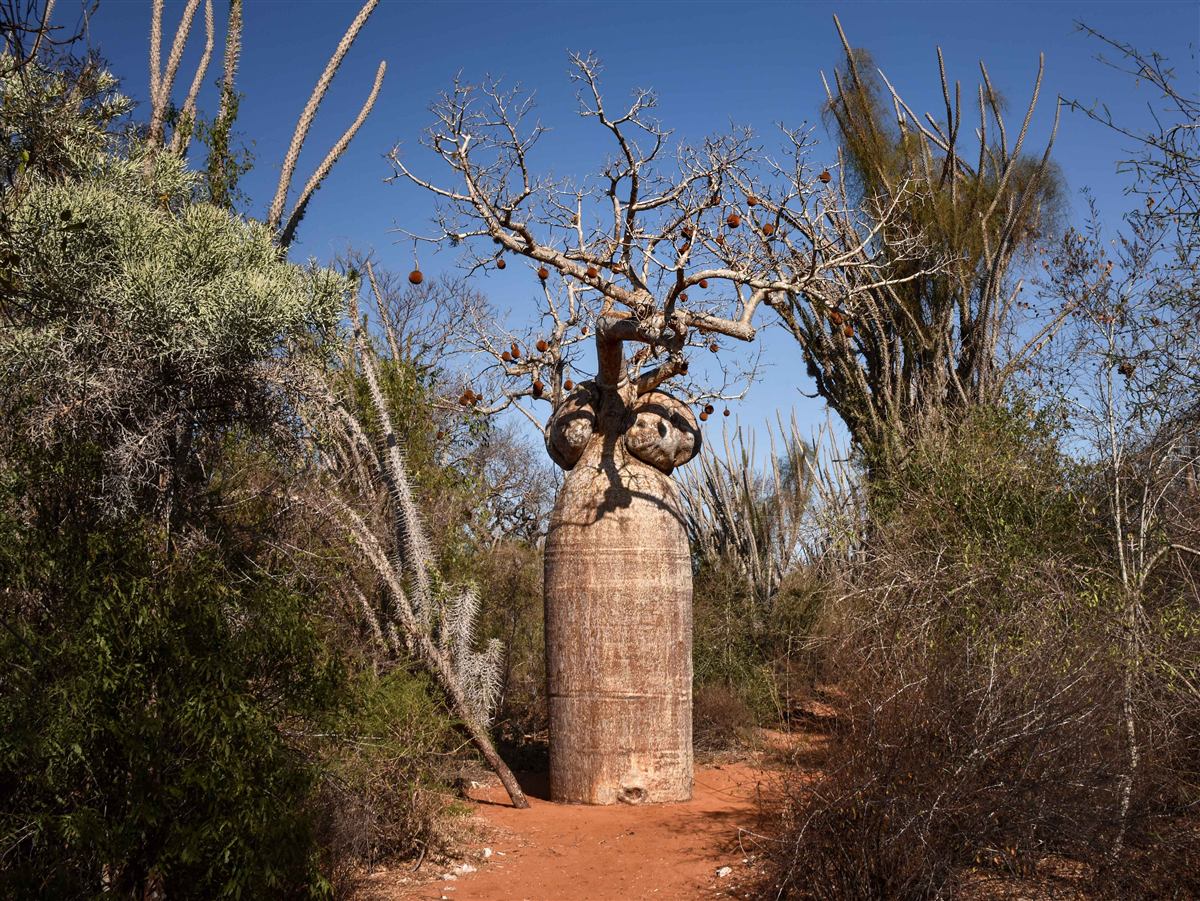
- Sequencing keeps exposing cryptic species: the world's ninth baobab and Madagascar's seventh endemic, Adansonia bozy, was confirmed in 2026 by targeted capture of hundreds of genes (Karimi et al., 2026).
- Yet A. bozy was not new. Its name was resurrected from a description made long before DNA evidence existed. The genomics vindicated the old taxonomy rather than replacing it.
- The deeper bottleneck is people, not method: the "taxonomic impediment" is a global shortage of trained taxonomists (Engel et al., 2021).
- The clock is real: almost 600 seed plant species are documented extinct in modern times, at a rate above background (Humphreys et al., 2019), and an estimated 45% of flowering plants are threatened (RBG Kew, 2023).
In August 2026 botanists announced that the world has a ninth baobab species, and that it grows only in Madagascar, the island's seventh endemic. Nobody had hacked through unexplored forest to find it; the trees were already known and photographed. What changed was the evidence: targeted sequencing of hundreds of genes showed that populations long filed under Adansonia za are a distinct lineage, now recognised as Adansonia bozy (Karimi et al., 2026). "You can't conserve anything if you don't know how to describe and name them," said lead author Nisa Karimi of the Missouri Botanical Garden, who carried out the work with colleagues including David Baum at the University of Wisconsin-Madison.
Results like this arrive so regularly now that a fair question follows: if DNA can split species that trained eyes could not, is the older craft, the pressed specimens, the keys, the Latin descriptions, simply obsolete? Funding decisions, careers and museum budgets turn on the answer.
The balanced answer is that sequencing is transforming taxonomy, deeply and permanently, but not replacing it. The baobab itself is the proof: the name bozy was not invented in 2026. It was resurrected from a description written from morphology alone, long before anyone imagined reading a genome. The DNA confirmed that the old work had been right all along.
Named and undescribed species estimates: Royal Botanic Gardens, Kew, State of the World's Plants and Fungi (2023). Single-specimen count: computed from the IsoGentiX Flora dataset. How the figures update →
What traditional taxonomy actually does
Taxonomy is often caricatured as stamp collecting. It is closer to a legal system. Since 1753, when Linnaeus published Species Plantarum and gave botany its two-part names, the discipline has run on a few load-bearing institutions. A new species is described: its distinguishing characters written down in a form other botanists can test. The description is anchored to a type specimen, a single pressed plant in a named herbarium that fixes, physically and permanently, what the name refers to. Names compete under priority: the earliest validly published name stands, which is why old literature never stops mattering. And identification is made repeatable through keys, branching sequences of observable characters that let a stranger, decades later, name a plant its describer never saw.
The raw material of all this is morphology, held in herbaria as dried, labelled specimens: hundreds of millions of sheets worldwide, each a dated, located, physical record of a plant growing at a point on the Earth. That archive is what makes botany cumulative. When the palm Ravenea latisecta was rediscovered in 2024 after nearly a century without a record, the confirmation came from matching living flowers against a description written in 1927 from a single specimen. Without that sheet there would have been nothing to rediscover against.
The limits are real, though. Characters converge: unrelated plants in similar environments evolve similar forms. Characters vary: one species can look different on different soils. And some genuine evolutionary splits leave almost no visible trace. Taxonomists have always known this, which is why identifications are treated as claims, revisable under better evidence. For two and a half centuries, better evidence mostly meant more morphology.
What sequencing changed
DNA entered routine species work through barcoding. In 2003 Paul Hebert and colleagues proposed that a single short gene region could serve as a universal identifier for animal species, a supermarket barcode for life (Hebert et al., 2003). Plants proved less obliging, their standard barcode regions separate close relatives poorly, but the idea reframed the field: identity could be read from tissue, not just from form.
What barcoding started, phylogenomics has industrialised. Targeted sequence capture, the method behind the baobab result, fishes a standard panel of hundreds of genes out of a DNA extract and sequences them all. Kew's Plant & Fungal Trees of Life project (PAFTOL) built such a panel for flowering plants, the Angiosperms353 kit, and by its first data release had sequenced more than 3,000 validated samples spanning all 64 orders of flowering plants, 96 percent of families and 17 percent of genera (Baker et al., 2022). One shared toolkit now lets any lab place any flowering plant onto one common evolutionary tree.
The gains are concrete. Sequencing detects cryptic species, real lineages hiding inside a single name, as with A. bozy. It exposes misidentifications: the record of Ravenea latisecta looked continuous until re-examination showed that specimens collected in 1992 under that name belonged to other species. It reads relatedness directly, even from a seedling or a sterile branch no key could name. And it scales, with output that does not depend on which characters a particular botanist thought to measure. That is the case for speed and objectivity, and much of it is true.
DNA can tell you two populations are different. It cannot tell you what either of them is called.
The answer: transformed, not replaced
Here is why the strong version of the claim fails. A phylogenomic analysis ends with clusters and branch points: this population is distinct from that one. What it cannot do, even in principle, is say what the clusters are called, because names are not properties of DNA. They are anchored in type specimens, publications and priority. When Karimi and colleagues found their distinct baobab lineage, the decisive taxonomic act was not the sequencing but the archival work of showing that it matched a species described generations earlier and later sunk, wrongly as it turns out, into A. za. Without the old description, a nameless cluster; without the sequencing, an unrecognised species. Each needed the other.
Objectivity claims also need qualifying. Sequencing moves judgement rather than removing it: someone must still decide how much divergence counts as a species boundary, and different analytical choices can return different answers from the same data. The baobab study itself found admixed populations, trees carrying ancestry from more than one lineage, exactly the kind of biological mess where a tree diagram alone cannot settle the question and morphology, geography and ecology must be weighed alongside it (Karimi et al., 2026).
The synthesis has a name: integrative taxonomy, delimiting species from multiple, complementary lines of evidence, genetic, morphological, ecological, geographic, rather than crowning any one of them (Dayrat, 2005). That is how serious plant taxonomy now works in practice. The method war, such as it was, is largely over.
What is not over is the staffing crisis. In 2021, more than seventy systematists signed an editorial arguing that the real "taxonomic impediment" is a shortage of taxonomists, not a lack of technical approaches, and that the hunt for technological shortcuts has distracted from the collapse in training, posts and funding for the people who do the describing (Engel et al., 2021). A sequencer cannot write a description, choose a type, or judge whether a character matters. That gap will decide how much of the flora gets documented, far more than any argument about method.
| Task | Morphology and specimens | DNA sequence |
|---|---|---|
| Fixing what a name means | Type specimens and descriptions anchor names permanently | No role: names attach to specimens, not sequences |
| Detecting hidden lineages | Weak where divergence leaves no visible trace | Strong: cryptic species and admixture read directly |
| Identifying sterile or fragmentary material | Often impossible without flowers or fruit | Strong: a leaf fragment can be placed on the tree |
| Using two centuries of old records | Strong: keys and descriptions connect all past work | Partial: old specimens can yield DNA, but most records are morphological |
The case for sequencing every plant
If DNA and taxonomy need each other, the practical question becomes pace, and here the ambition has gone global. The Earth BioGenome Project, proposed in 2018, aims at reference genomes for all of the roughly 1.5 million known eukaryotic species, in phases over about a decade, at an estimated cost of some 4.7 billion US dollars, less, its authors noted, than the inflation-adjusted cost of the first human genome (Lewin et al., 2018). Within botany, the 10KP plan set out to sequence more than 10,000 genomes spanning every major clade of plants and their algal relatives (Cheng et al., 2018), and Kew's PAFTOL platform is filling in the flowering-plant tree genus by genus (Baker et al., 2022). These are not fringe proposals. They are the field's stated direction.
Set against them is the clock. Almost 600 seed plant species are documented as extinct in modern times, at a rate above background, and the true number is certainly higher because a species must be known before its loss can be recorded (Humphreys et al., 2019). Kew's 2023 assessment estimated that 45 percent of flowering plants are threatened, and that of the roughly 100,000 species still awaiting description, about three in four are likely to be threatened already: more than 77 percent of species described in 2020 met the criteria (RBG Kew, 2023). Extinction is outpacing description, which means it is comfortably outpacing sequencing.
Madagascar shows the endgame of that race. In the IsoGentiX dataset, 537 of the island's endemic plants are known from a single preserved specimen anywhere on Earth, and 1,656 endemics have no specimen in any Madagascar institution at all. For such species, a genome sequenced now may be the only genetic record that ever exists. A species that disappears unsequenced takes its entire genome with it, and unlike a lost population, a lost genome cannot be resurveyed later.
Which genomes first: the case for special chemistry
If everything cannot be sequenced at once, priority matters, and there is a strong argument for starting with plants whose genomes encode capabilities found almost nowhere else. A genome is not just an identity record. It is the instruction set for every molecule the plant can make, and some plants have spent millions of years inventing biochemistry no laboratory has matched.
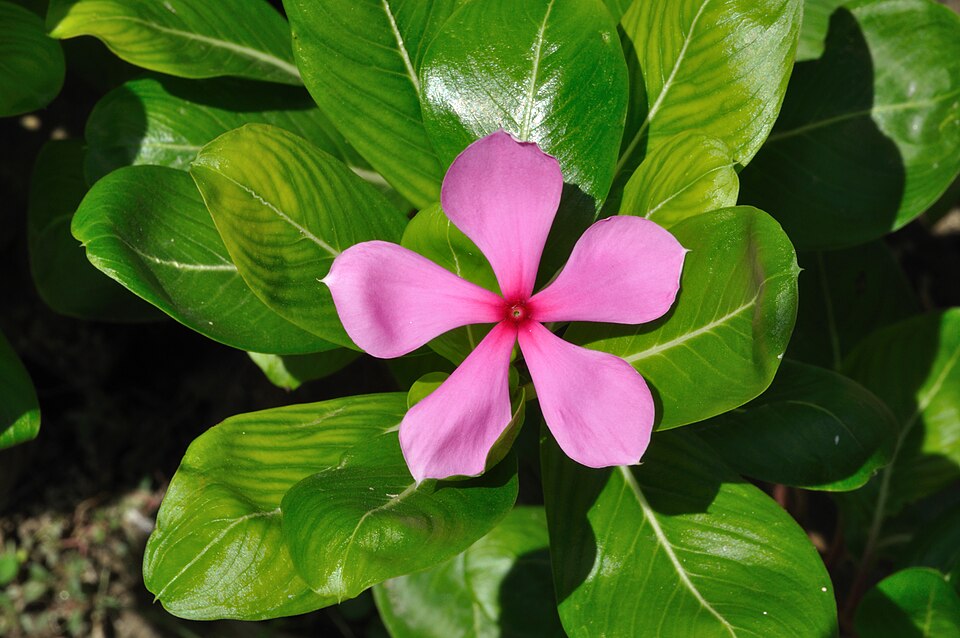
Consider three groups. First, the metal specialists. A global database of hyperaccumulator plants lists 721 species able to load extreme concentrations of metals into their tissues, 523 of them accumulating nickel, many confined to the harsh ultramafic soils where that chemistry evolved (Reeves et al., 2018). Their genomes encode tolerance machinery relevant to soil remediation and to recovering metals through plants, and many grow on small, mineable outcrops that could be destroyed in a season. Second, the medicine makers. Madagascar's rosy periwinkle (Catharanthus roseus) produces vincristine and vinblastine, alkaloids that transformed childhood leukaemia treatment; nobody predicted that chemistry from the plant's appearance. Third, the crop wild relatives, wild cousins of cultivated species whose genomes hold drought tolerance and disease resistance that breeding programmes draw on.
The common thread is irreplaceability. A unique genome is an archive of biochemical invention that exists in one lineage and can be read from nowhere else. And this is where sequencing feeds straight back into taxonomy: you cannot prioritise, protect or legally attribute what has not been delimited and named. Specimen-level records that bind a name, a place, a voucher and a genome together, the approach described in our article on specimen-level multi-omics, are what make a national flora usable at this level.
A genome is a genetic resource, and under the Convention on Biological Diversity and the Nagoya Protocol it falls under the sovereignty of the country it comes from: access requires prior informed consent, and benefits must be shared. Since 2022 that framework has extended to the data itself. CBD COP15 agreed a multilateral mechanism for sharing benefits from digital sequence information (DSI), and COP16 in Cali in 2024 established the Cali Fund to receive contributions from companies that profit from sequence data. Any programme that aims to sequence a nation's flora must be built on these rules from the start, by consent and returning benefit, not retrofitted after the data has left. See our article on DSI and the Cali Fund.
Decoding is protecting
The question in the title dissolves once the pieces are laid out. Sequencing finds lineages that morphology missed; types, names and specimens anchor those lineages to everything ever recorded about them; together, as integrative taxonomy, they produce species boundaries solid enough to hang a Red List assessment, a protected area or a benefit-sharing agreement on. The old craft is not obsolete. It is the reason the new data means anything. What deserves the urgency is neither method but the object itself: a world flora losing species faster than either approach can document them, including plants whose genomes hold chemistry evolved once in the history of life. Reading that record while it still exists, by consent, under national authority, with the benefits returning to the countries and communities the plants belong to, is the work. Decode:Protect.
Common questions
Has DNA sequencing replaced traditional taxonomy?
No. DNA can reveal that two populations are distinct lineages, but only the apparatus of traditional taxonomy, type specimens, formal descriptions and the priority of names, can say what those lineages are called and connect them to 250 years of accumulated knowledge. The working synthesis is integrative taxonomy, which weighs genetic, morphological, ecological and geographic evidence together (Dayrat, 2005).
What is a cryptic species?
A species that is genetically distinct but difficult or impossible to separate from its relatives by appearance alone. The world's ninth baobab, Adansonia bozy, Madagascar's seventh endemic species, is an example: its populations had long been treated within Adansonia za, but targeted sequencing of hundreds of genes showed a separate lineage, confirming a species description made long before DNA evidence existed (Karimi et al., 2026).
Why sequence plants that have not even been fully described yet?
Because extinction is outpacing description. Around 100,000 vascular plant species are estimated to await formal naming, and roughly three in four of them are predicted to be threatened already (RBG Kew, 2023). A genome sequenced now, tied to a vouchered specimen, preserves a species' genetic record even if the species is later lost, and often supplies the evidence needed to recognise the species in the first place.
Who owns a plant's DNA sequence data?
Under the Convention on Biological Diversity and the Nagoya Protocol, genetic resources fall under the sovereignty of the country they come from, and access requires consent and benefit-sharing. Since 2022 the CBD has extended this to digital sequence information: COP15 agreed a multilateral benefit-sharing mechanism, and COP16 in 2024 established the Cali Fund to receive payments from commercial users of sequence data.
Sources and further reading
- Karimi, N. et al. (2026). Phylogenomic analysis of Madagascar's baobabs reveals admixed populations and supports resurrection of a previously described species. TAXON. onlinelibrary.wiley.com, the Adansonia bozy paper: targeted sequence capture, admixture, and the resurrection under priority.
- Phys.org (August 2026). Genetic analysis reveals new species of endangered baobab tree in Madagascar. phys.org, news report with comments from Nisa Karimi and David Baum.
- Hebert, P.D.N., Cywinska, A., Ball, S.L. & deWaard, J.R. (2003). Biological identifications through DNA barcodes. Proceedings of the Royal Society B, 270(1512), 313–321. pmc.ncbi.nlm.nih.gov, the founding barcoding proposal.
- Dayrat, B. (2005). Towards integrative taxonomy. Biological Journal of the Linnean Society, 85(3), 407–417. academic.oup.com, the framework for combining lines of evidence in species delimitation.
- Engel, M.S. et al. (2021). The taxonomic impediment: a shortage of taxonomists, not the lack of technical approaches. Zoological Journal of the Linnean Society, 193(2), 381–387. academic.oup.com, the case that people, not methods, are the bottleneck.
- Baker, W.J. et al. (2022). A comprehensive phylogenomic platform for exploring the angiosperm tree of life. Systematic Biology, 71(2), 301–319. academic.oup.com, Kew's PAFTOL project and the Angiosperms353 toolkit.
- Lewin, H.A. et al. (2018). Earth BioGenome Project: Sequencing life for the future of life. PNAS, 115(17), 4325–4333. pmc.ncbi.nlm.nih.gov, the proposal to sequence all ~1.5 million known eukaryotes.
- Cheng, S. et al. (2018). 10KP: A phylodiverse genome sequencing plan. GigaScience, 7(3), giy013. academic.oup.com, the plan for 10,000+ plant and protist genomes.
- Humphreys, A.M. et al. (2019). Global dataset shows geography and life form predict modern plant extinction and rediscovery. Nature Ecology & Evolution, 3, 1043–1047. nature.com, almost 600 documented seed plant extinctions, above background rate.
- Royal Botanic Gardens, Kew (2023). State of the World's Plants and Fungi 2023. Reported by Phys.org. phys.org, ~350,000 named vascular plants, ~100,000 undescribed, 45% of flowering plants and 3 in 4 undescribed species estimated threatened.
- Reeves, R.D. et al. (2018). A global database for plants that hyperaccumulate metal and metalloid trace elements. New Phytologist, 218(2), 407–411. nph.onlinelibrary.wiley.com, 721 hyperaccumulator species, 523 of them for nickel.
- Convention on Biological Diversity. Digital sequence information on genetic resources. cbd.int, the COP15 multilateral mechanism and the COP16 decision establishing the Cali Fund.