A ninth baobab: the hidden species genetics found
For a century, some of the baobabs of north-western Madagascar were filed under the wrong name. In 2026 a genetic study showed they are a species of their own, resurrected as Adansonia bozy. Here is what was found, how the method works, why a tree over 30 metres tall stayed hidden inside a known species, and the honest argument about whether the split matters.
- A 2026 phylogenomic study showed that northern populations of Adansonia za are genetically closer to two other northern baobabs, A. perrieri and A. madagascariensis, than to southern A. za (Karimi et al., 2026).
- Rather than coin a new name, the team resurrected Adansonia bozy, an epithet first applied by Jumelle and Perrier de la Bâthie in 1910 and later sunk into A. za.
- The world now has nine baobab species: one in mainland Africa and Arabia, one in Australia, and seven endemic to Madagascar.
- The evidence came from targeted sequence capture: hundreds of genes sequenced from leaf tissue collected across the island, then analysed for relationships and admixture.
- A. bozy is confined to the Sambirano region of the north-west; the describing team's preliminary assessment is Critically Endangered (Missouri Botanical Garden, 2026).
- Lead author Nisa Karimi (Missouri Botanical Garden) did the work with David Baum (University of Wisconsin-Madison), who has studied baobabs for over 40 years, and colleagues at Iowa State University.
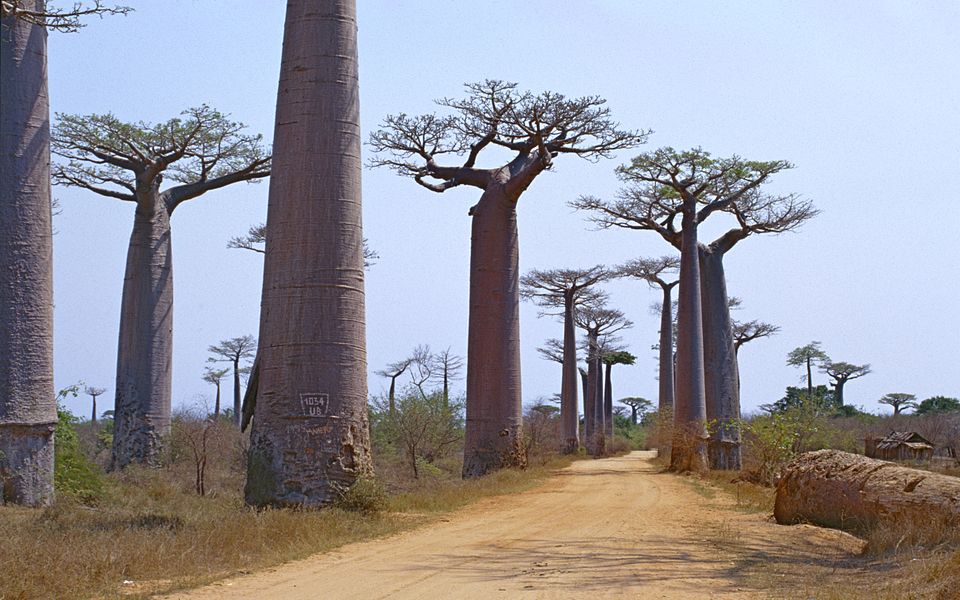
A baobab is not a subtle tree. The Malagasy species can stand over 30 metres tall, more than 100 feet, with trunks broad enough to be landmarks and lifespans measured in centuries. They are photographed, mapped, climbed and argued over more than almost any other plants on the island. It would seem a safe bet that, whatever remains to be discovered in Madagascar's flora, the baobabs at least were settled.
In July 2026 that bet failed. A study in the journal TAXON, led by Nisa Karimi of the Missouri Botanical Garden, showed that trees long recorded as Adansonia za in the north-west of the island are not A. za at all. Genetically, they sit closer to two other northern species than to the southern populations that carry the name. The team concluded they are a species in their own right and resurrected an old name for them: Adansonia bozy. The world's count of baobab species rose from eight to nine, and Madagascar's endemic share rose from six to seven (Karimi et al., 2026; Phys.org, 2026).
It is a good headline. It is a better case study, because everything that makes it interesting, the method, the century of misfiling, the conservation consequences, and the genuine argument about whether splitting species helps or hurts, generalises far beyond one tree.
Species counts and the resurrection of the 1910 name: Karimi et al. (2026), TAXON, open access. Flowering window and fieldwork details: University of Wisconsin-Madison Department of Biology (2026) and Phys.org (2026).
What was actually found
Adansonia za was, until this year, the most widespread of Madagascar's baobabs, recorded from the far south up the western side of the island into the north. The new work shows that this apparent range concealed a seam. When the team compared DNA across the species' populations, the northern trees, centred on the relatively moist Sambirano river basin in Antsiranana province, did not group with the southern ones. They shared more of their genome with A. perrieri and A. madagascariensis, the two baobabs of the far north, than with the A. za of the south and west (Karimi et al., 2026; Sci.News, 2026).
That pattern matters because of the basic rule of modern classification. As David Baum put it to the University of Wisconsin-Madison's news service, a named group should contain organisms more closely related to each other than to anything outside the group. Keeping the northern trees inside A. za would have broken that rule. The choices were to lump several species together or to split the northern populations out, and the data supported the split.
The team then did something taxonomically careful. Rather than invent a new name, they searched the historical record and found that the botanists Henri Jumelle and Henri Perrier de la Bâthie had already noticed these northern trees, applying the epithet bozy to them in 1910. The name had long since been sunk into A. za as a synonym. Resurrecting it means the species carries the name the first describers gave it, with more than a century of priority behind it. Once separated, the differences begin to show: the study and its reporting note distinctions in leaf structure, fruit stalks and petal colour between A. bozy and southern A. za, characters real enough to see once the genetics said where to look, but never loud enough on their own to force a split (Sci.News, 2026).
Who did the work
The study is a collaboration with a long fuse. Nisa Karimi, now a research associate at the Missouri Botanical Garden, began the work during her PhD in the University of Wisconsin-Madison's botany department, collecting tissue across Madagascar and learning industrial rope techniques to reach flowers and leaves in the crowns. Her co-author David Baum has worked on baobabs for over 40 years; his 1995 monograph in the Annals of the Missouri Botanical Garden set the eight-species classification that stood until this study revised it (Baum, 1995). Colleagues at Iowa State University completed the team. The paper was published open access in TAXON, the journal of record for plant classification, and the finding was reported by Phys.org and the University of Wisconsin-Madison, whose accounts this article draws on with credit (Karimi et al., 2026; Phys.org, 2026).
There is a quiet symmetry in the institutions. The Missouri Botanical Garden has worked on Madagascar's flora for decades and co-produces the island's standard plant catalogue. A revision that corrects the record of the island's most famous trees, led from the same institution, is the normal machinery of botany doing its job: classifications are hypotheses, and hypotheses get tested.
How the method works
The tool that found the hidden species is called targeted sequence capture, and it is worth understanding, because it is rapidly becoming the standard way plant relationships are resolved. Sequencing entire genomes for every sample remains expensive, and most of a genome is not needed to work out a family tree. Instead, researchers design short molecular "baits", synthetic DNA fragments matching hundreds of chosen genes. Extracted DNA from each sample is broken up, the baits fish out the fragments that match the target genes, and only that enriched fraction is sequenced. The result is the same set of several hundred genes, read deeply and cleanly, from every tree in the study.
With those alignments in hand, two kinds of analysis follow. Phylogenetic analysis builds evolutionary trees, gene by gene and in combination, showing which populations share the most recent common ancestors. Admixture analysis asks a different question: whether individual trees carry mixtures of ancestry from more than one source, the signature of hybridisation. Both mattered here. The trees placed northern "A. za" with A. perrieri and A. madagascariensis; the admixture results, flagged in the paper's own title, showed that Madagascar's baobabs also exchange genes where their ranges meet, which is part of why their boundaries have been so hard to read. Earlier genomic work had already documented extensive gene flow between A. za and A. perrieri (Wan et al., 2024). A group that hybridises is exactly the kind of group where morphology blurs and only many genes, sampled across many populations, can recover the underlying structure.
Hidden in plain sight
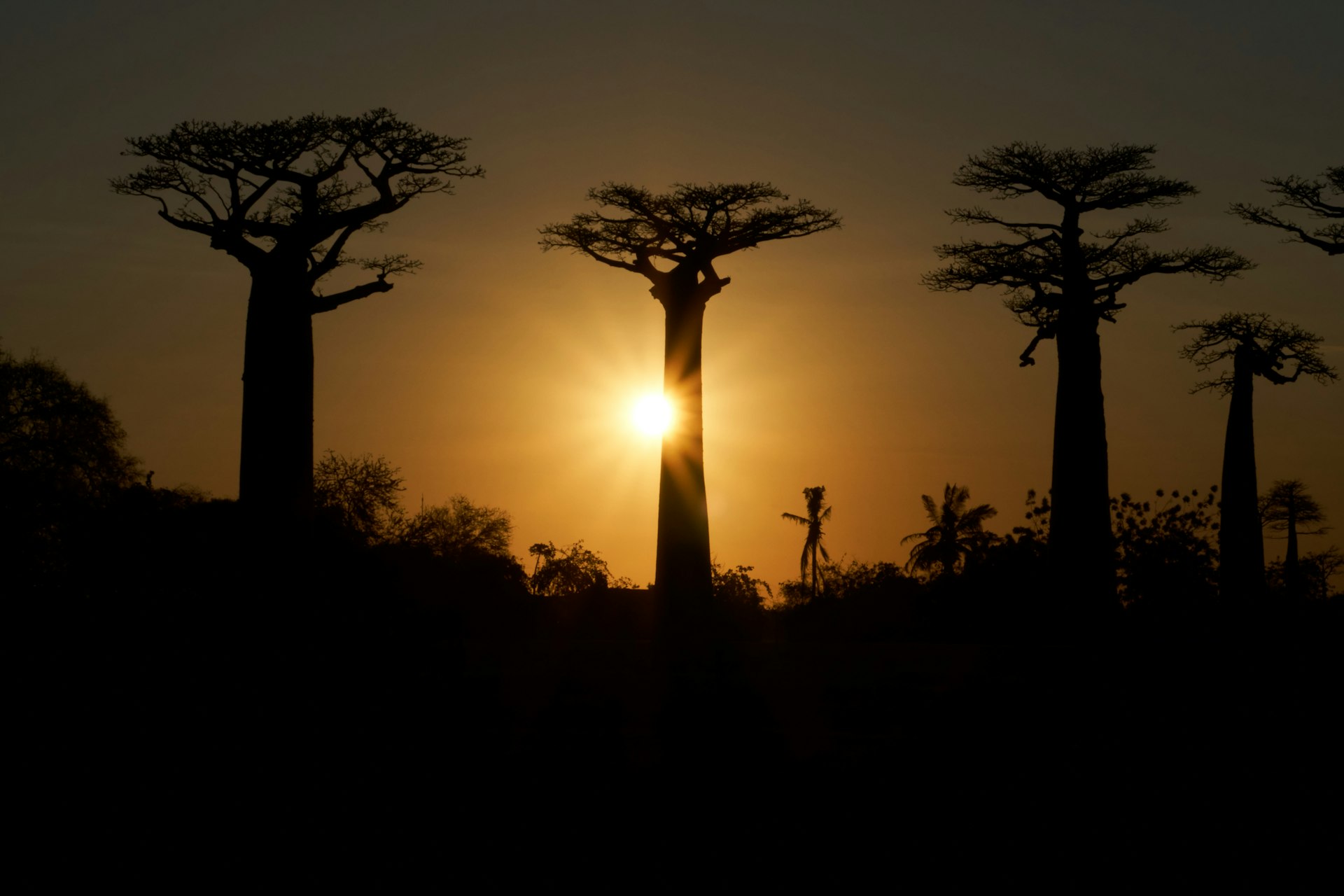
The obvious question is how a tree this size, in a genus this famous, stayed misfiled for so long. The answer is that "hidden" does not mean unseen. The Sambirano trees were seen constantly. They were collected, photographed and recorded, always under the name A. za, because that is what they look like. Jumelle and Perrier's 1910 name shows the distinction was once suspected on morphology alone, and the century in synonymy shows the morphological case was never strong enough to stick. Species produced by recent divergence, with occasional hybridisation across their boundaries, are exactly the ones that appearance fails on.
This is the pattern taxonomists call cryptic or near-cryptic diversity, and Madagascar should expect more of it. The same study suggests that Adansonia rubrostipa, another widespread western baobab, may also contain more than one species (Phys.org, 2026). If that is true of the best-studied trees on the island, it will be true many times over among the thousands of less charismatic endemics, a point this Knowledge Base's account of a palm lost for a century makes from the other direction: Madagascar's plant record still contains large surprises, and finding them is mostly a matter of who looks, with what tools.
The trees were never lost. The boundary between them was, and it took several hundred genes to find it.
What a name changes for conservation
Species are the unit almost all conservation machinery runs on. IUCN Red List assessments are made species by species; funding programmes, national protections and seed-banking priorities follow the assessments. Redraw a species boundary and the numbers that drive all of it change, because range size and population size are counted within the boundary.
That is precisely what happened here. The old, combined A. za was assessed as Least Concern: a single species spread across much of western Madagascar looked reasonably safe. Split it, and both daughters are smaller than the parent. A. bozy holds a restricted range in the Sambirano, a landscape losing forest to cacao plantations and slash-and-burn cultivation (Sci.News, 2026), and the describing team's preliminary assessment places it as Critically Endangered (Missouri Botanical Garden, 2026). The remaining A. za, now shorn of its northern populations, has a smaller range and population than the ones its Least Concern listing was based on, and the authors note its status needs revisiting. Nothing on the ground changed in July 2026. What changed is that the record now shows two units of risk where it showed one unit of safety.
Karimi's own summary of why this matters is hard to better: "You can't conserve anything if you don't know how to describe and name them," she told reporters (Phys.org, 2026). A recognised name is what unlocks the practical steps: a formal Red List assessment, eligibility for threatened-species funding, weight in environmental decisions about the Sambirano's forests, and targeted seed collection so that the species exists in banks as well as on hillsides. The wider context makes the stakes plain. Madagascar lost around 44 percent of its natural forest between 1953 and 2014 (Vieilledent et al., 2018), and among its baobabs A. perrieri is already Critically Endangered and A. grandidieri and A. suarezensis Endangered, with modelling cited in the genomic work projecting severe habitat loss for A. suarezensis as the climate changes (Wan et al., 2024).
| Species | Range | Status |
|---|---|---|
| Adansonia grandidieri | South-west | Endangered |
| Adansonia suarezensis | Far north | Endangered; uplisting to Critically Endangered proposed |
| Adansonia perrieri | Far north | Critically Endangered |
| Adansonia madagascariensis | North and north-west | Least Concern, populations declining |
| Adansonia rubrostipa | West | Least Concern; study suggests it may contain more than one species |
| Adansonia za | South and west (as now redefined) | Least Concern as the old combined species; reassessment needed |
| Adansonia bozy | Sambirano, north-west | Preliminarily Critically Endangered (authors' assessment) |
Statuses as reported on the IUCN Red List and summarised in Wan et al. (2024), with the proposed A. suarezensis uplisting from the same paper; A. bozy and the A. za/A. rubrostipa caveats follow Karimi et al. (2026) and its institutional reporting. The two non-Malagasy species, A. digitata of Africa and Arabia and A. gregorii of Australia, complete the nine.
Does it really matter? The case against splitting
It would be dishonest to present the split as pure gain, because there is a serious argument on the other side, and it deserves a fair hearing. Conservation scientists have long worried about what Isaac, Mallet and Mace called taxonomic inflation: the tendency for species counts to rise not because new organisms are discovered but because existing ones are re-divided under changing species concepts. Their concern was practical. Species lists are load-bearing infrastructure for macroecology and conservation, and instability in the lists propagates into everything built on them. Splitting can multiply the number of threatened taxa without any change in the world, spread fixed conservation budgets across more units, destabilise decades of literature attached to the old names, and produce narrow-range "species" that critics regard as populations with paperwork (Isaac et al., 2004).
Applied here, the sceptic's case runs: the Sambirano trees were already inside a named, assessed species; their forests gain no hectare of protection from a name change; and a Critically Endangered listing for A. bozy arrives at the cost of making the remaining A. za look, on paper, like a different and smaller thing than the literature describes. If every admixed population is promoted, where does it end?
The answer, in this case, is that the objection cuts less deeply than it seems. Taxonomic inflation is at its most troubling when subspecies are elevated wholesale on thin evidence or a fashionable species concept. That is not what happened here: the split rests on a genome-scale dataset showing the northern trees are closer to two other species than to their supposed conspecifics, which means the old A. za was not a natural unit under any mainstream concept. And the practical objection inverts on inspection. Conservation planned for the old A. za would have treated the Sambirano populations as a periphery of a safe, widespread species; no assessment would have flagged them, no programme would have banked their seed separately, and their loss would have registered as a range contraction rather than an extinction. Unit boundaries change real decisions: which sites are prioritised, which populations are sampled for ex situ collections, and what, precisely, the extinction accounts say the world stands to lose. Where lineages are real, the risk of ignoring them is larger than the cost of naming them. The right response to inflation worries is evidence standards, not a freeze on recognising what the data show.
Decoding is protecting
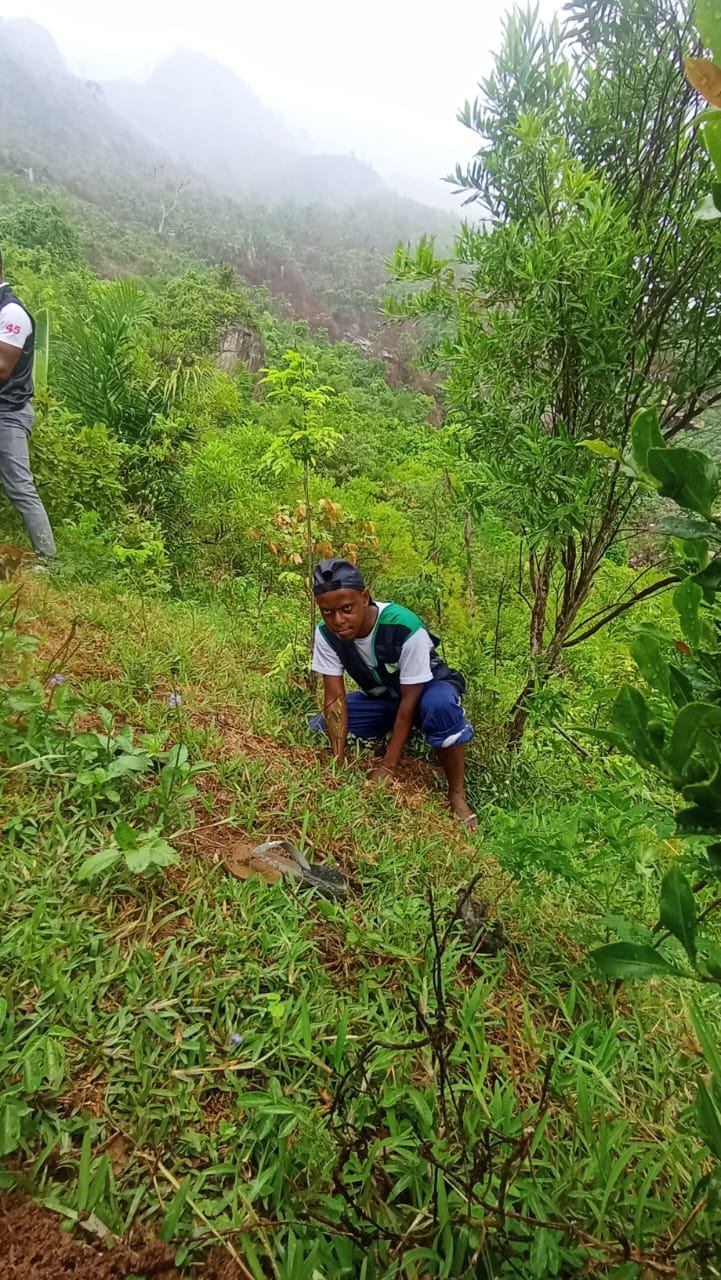
The A. bozy story is the IsoGentiX argument in miniature. A country's flora is not fully known until its boundaries are tested against evidence, and every retest changes the ledger: what exists, where it exists, and how much danger it is in. The raw material for the next such finding, the specimens, the tissue, the sequences and the records that tie them to places, is exactly what the IsoGentiX Flora Portal assembles for Madagascar, digitised, reconciled to a single taxonomic backbone and returned in usable form under national authority, with the science done by consent. A hidden species can only be found in data that exists, and can only be protected once it has a name. That is the whole of the purpose: Decode:Protect.
Common questions
What is Adansonia bozy?
A baobab species from the Sambirano region of north-western Madagascar. Its populations were long classified within Adansonia za, but the 2026 phylogenomic study showed they are genetically closer to A. perrieri and A. madagascariensis than to southern A. za, and the 1910 name bozy was resurrected for them (Karimi et al., 2026).
How many baobab species are there now?
Nine. One grows in mainland Africa and Arabia (A. digitata), one in north-western Australia (A. gregorii), and seven, with the recognition of A. bozy, are endemic to Madagascar.
How was the new species found?
By targeted sequence capture: hundreds of specific genes were enriched and sequenced from leaf tissue collected across the island, then analysed with phylogenetic and admixture methods. The northern A. za populations grouped with other northern species, a split that leaf and flower characters alone had not revealed.
Is Adansonia bozy endangered?
The describing team's preliminary assessment places it as Critically Endangered, based on its small population and restricted range in the Sambirano, where forest is being cleared for cacao and slash-and-burn cultivation. This is the authors' recommendation rather than a completed IUCN Red List listing, and the status of the now-smaller A. za also needs reassessment.
Sources and further reading
- Karimi, N. et al. (2026). Phylogenomic analysis of Madagascar's baobabs reveals admixed populations and supports resurrection of a previously described species. TAXON. Open access. onlinelibrary.wiley.com, the study: targeted sequence capture, admixture, and the resurrection of Adansonia bozy.
- Phys.org (August 2026). Genetic analysis reveals new species of endangered baobab tree in Madagascar. phys.org, news report on the finding, drawn on here with credit.
- University of Wisconsin-Madison, Department of Biology (2026). Research differentiates new species of endangered baobab tree in Madagascar. biology.wisc.edu, institutional report with the Karimi and Baum quotations used above.
- Missouri Botanical Garden, Discover + Share (31 July 2026). Missouri Botanical Garden researcher leads description of new species of baobab, one of the oldest living trees. discoverandshare.org, source for the preliminary Critically Endangered assessment and Karimi's role.
- Sci.News (2026). New baobab species identified in Madagascar. sci.news, details of the Sambirano range, the 1910 naming, and threats from cacao and slash-and-burn clearance.
- Baum, D.A. (1995). A systematic revision of Adansonia (Bombacaceae). Annals of the Missouri Botanical Garden, 82(3), 440–471. biodiversitylibrary.org, the monograph that set the eight-species classification revised in 2026.
- Wan, J.-N. et al. (2024). The rise of baobab trees in Madagascar. Nature, 629, 1091–1099. nature.com, whole-genome study: Madagascar as centre of origin, gene flow between A. za and A. perrieri, statuses, and the proposed A. suarezensis uplisting.
- Isaac, N.J.B., Mallet, J. & Mace, G.M. (2004). Taxonomic inflation: its influence on macroecology and conservation. Trends in Ecology & Evolution, 19(9), 464–469. cell.com, the classic statement of the case against splitting, given its hearing above.
- Antonelli, A. et al. (2022). Madagascar's extraordinary biodiversity: evolution, distribution, and use. Science, 378(6623), eabf0869. science.org, the island-wide context for endemism and threat.
- Vieilledent, G. et al. (2018). Combining global tree cover loss data with historical national forest-cover maps to look at six decades of deforestation and forest fragmentation in Madagascar. Biological Conservation, 222, 189–197. sciencedirect.com, the ~44% forest-loss figure.
- IUCN Red List of Threatened Species. iucnredlist.org, where the formal assessments of the Adansonia species are published and updated.
- Govaerts, R. et al. World Checklist of Vascular Plants (WCVP). Royal Botanic Gardens, Kew. powo.science.kew.org, the taxonomic backbone the IsoGentiX figures reconcile to.